Florida Plants for Landscaping: Build a Yard That Works With Florida

The best Florida plants for landscaping are not necessarily the plants with the flashiest flowers or the longest tags at the garden center. They are the plants that fit the actual conditions in your yard.
That matters more in Florida than it might initially seem. One part of a property can bake in full sun on fast-draining sandy soil while another stays damp after summer rain. A coastal front yard may deal with salt spray and wind. A backyard under mature trees may be bright but shaded for much of the day. And a plant that thrives in North Florida may not be the right choice for South Florida, or vice versa.
A good landscape works with those differences instead of fighting them.
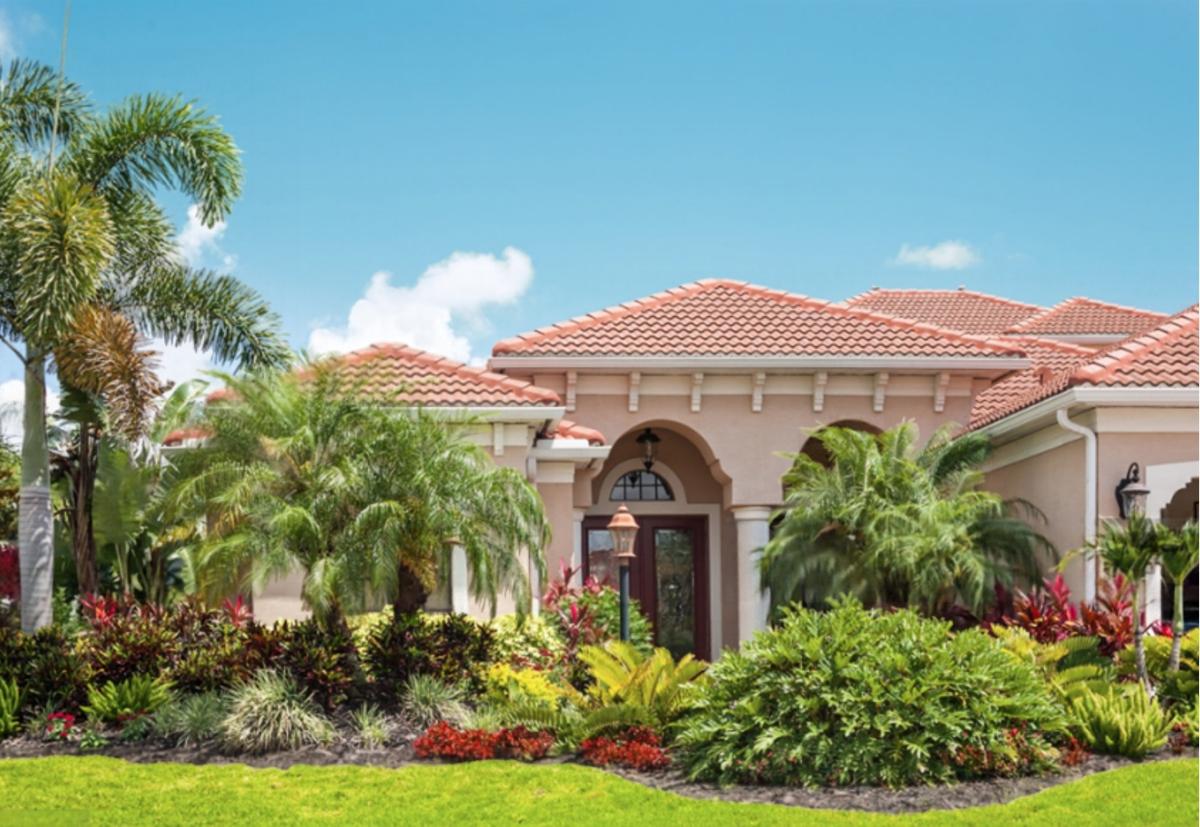
Florida native plants give you a particularly strong starting point because many are adapted to local rainfall patterns, heat, soils, and wildlife relationships. The goal is not simply to replace every ornamental with a native species. It is to use the right plant in the right place, then arrange those plants so the result feels like a designed landscape rather than a collection of individual specimens.
Start Building a Florida Landscape That Fits Your Yard
Make sure Florida is selected as your location, then browse native flowers, grasses, shrubs, and trees available for your area.
The Best Florida Landscaping Starts With “Right Plant, Right Place”
Before thinking about individual species, think about the job the landscape needs to do.
Do you need shade? Screening? Flowers for pollinators? A lower-growing alternative to turf? Something that can handle a dry strip beside the driveway? A shrub that looks good year-round?
Then look at the conditions.
The University of Florida’s right plant, right place approach asks gardeners to consider light, soil, moisture, mature size, wind, salt exposure, and the function of a plant before installing it. That sounds obvious, but it prevents a huge share of landscape problems.
A plant that naturally prefers moisture will require constant watering in a dry bed. A drought-tolerant plant may rot if it sits in poorly drained soil. A large spreading shrub will create years of pruning if it is wedged into a three-foot space.
Good landscaping begins by avoiding those mismatches.
Read the Water Patterns in Your Yard
Florida landscapes often experience two opposite conditions: intense rain and stretches of dry weather.
That makes drainage one of the most useful things to observe before planting.
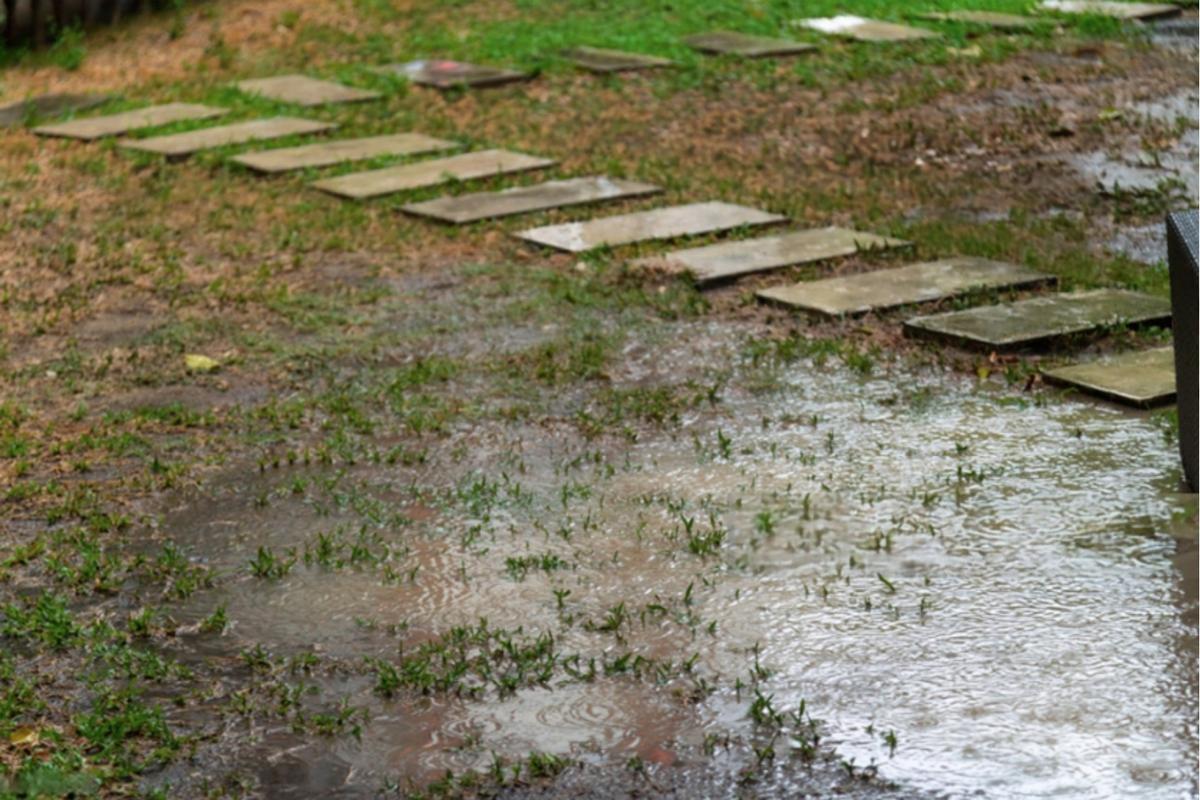
After a strong rain, notice where water disappears quickly and where it lingers. Those areas are telling you something.
A high, sandy section may dry rapidly even after a downpour. A low area near a downspout may stay moist for days. Planting the same species in both places simply because they are twenty feet apart is often a recipe for extra irrigation or plant failure.
Grouping plants with similar water needs also makes the landscape easier to manage.
If one bed contains plants adapted to dry soil mixed with species that demand regular moisture, there is no irrigation schedule that truly suits both.
Use Native Plants as the Framework, Not Just the Decoration
A native landscape becomes much easier to design when you stop thinking of native plants only as flowers.
Florida native plants include ground covers, ornamental grasses, vines, evergreen shrubs, spreading shrubs, small trees, palms, and large canopy trees.
Those structural plants are what make a garden feel finished.
Flowers provide moments of color. Shrubs give mass. Grasses create rhythm. Trees establish scale. Ground covers connect the spaces in between.
That layered approach is especially useful if you are replacing a conventional landscape. You do not have to turn the yard into a meadow. You can use native species to fill the same design roles traditional landscaping plants fill.
Muhly Grass Gives Florida Landscapes Movement
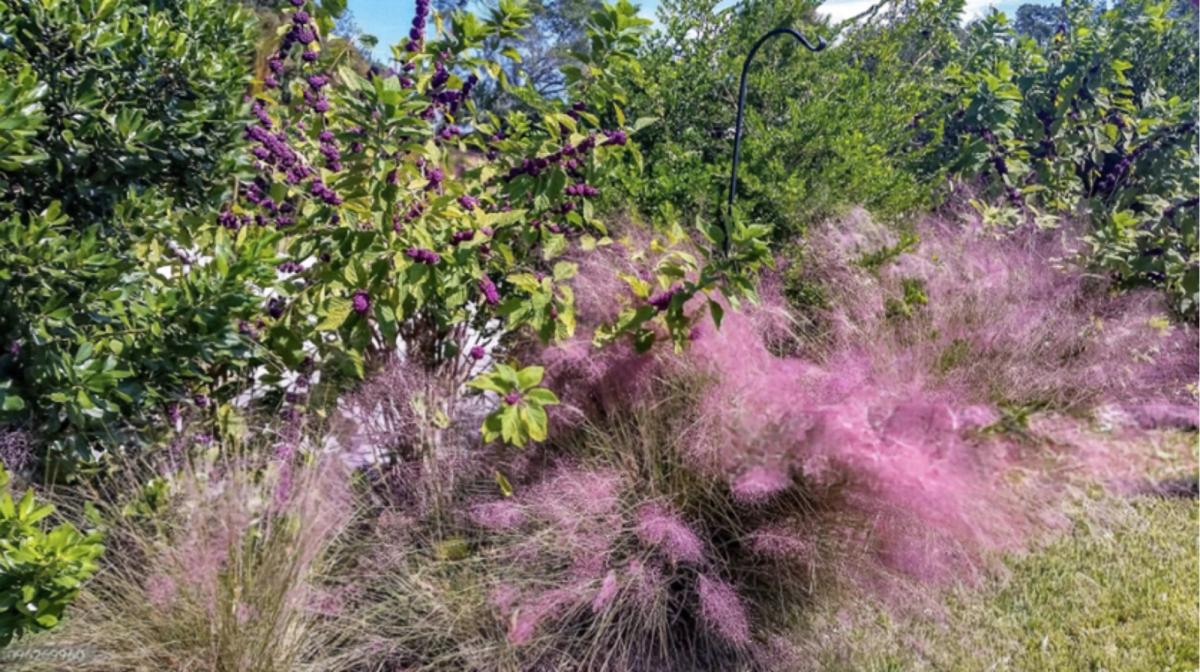
Muhly grass and Purple Lovegrass are strong examples of native plants that work as landscaping first and habitat second while doing both well.
For much of the year, their fine foliage forms a clean, grassy mound. Later in the season, these plants produce airy pink to purplish plumes that can transform an otherwise simple planting.
The design trick is repetition. One muhly grass can look like an accent. Five or seven repeated along a walkway or through a mixed bed create a visual rhythm.
Muhly grass and Purple Lovegrass also pair well with flowering perennials because their fine texture provides a calmer background around more colorful plants.
Browse Native Grasses and Sedges →
Dune Sunflower Can Cover Ground With Color
In the right part of Florida, dune sunflower can function very differently from a traditional upright perennial.
Its spreading habit and bright yellow flowers make it useful where you want a lower, informal mass of vegetation rather than individual specimen plants.
That can include sunny coastal landscapes, broad bed edges, and spaces where a conventional ground cover might otherwise be used.
This is also where regional suitability matters. A plant associated with coastal habitats should not automatically be treated as a statewide answer.
Use native range and site conditions together.
The Florida Native Plant Society database is useful here because it allows gardeners to search by county, soil, moisture, light, wildlife value, and other conditions.
External link: Florida Native Plant Society Plant Database
Firebush Brings Color and Wildlife Into the Shrub Layer
Where it is regionally appropriate, firebush can be one of the most dynamic shrubs in a Florida landscape.
Its orange-red tubular flowers attract butterflies and hummingbirds, while the plant itself can create enough mass to function as a real landscape shrub rather than simply a pollinator accent.
That makes it useful behind shorter perennials or in mixed shrub borders.
Firebush also illustrates an important landscaping principle: wildlife plants do not have to look “wild.”
A shrub can provide nectar, cover, structure, and strong garden color simultaneously.
Wild Coffee Works Where the Landscape Gets Shadier
Sunny Florida gardens get most of the attention, but many yards have substantial partial shade beneath mature trees or around the north side of a house.
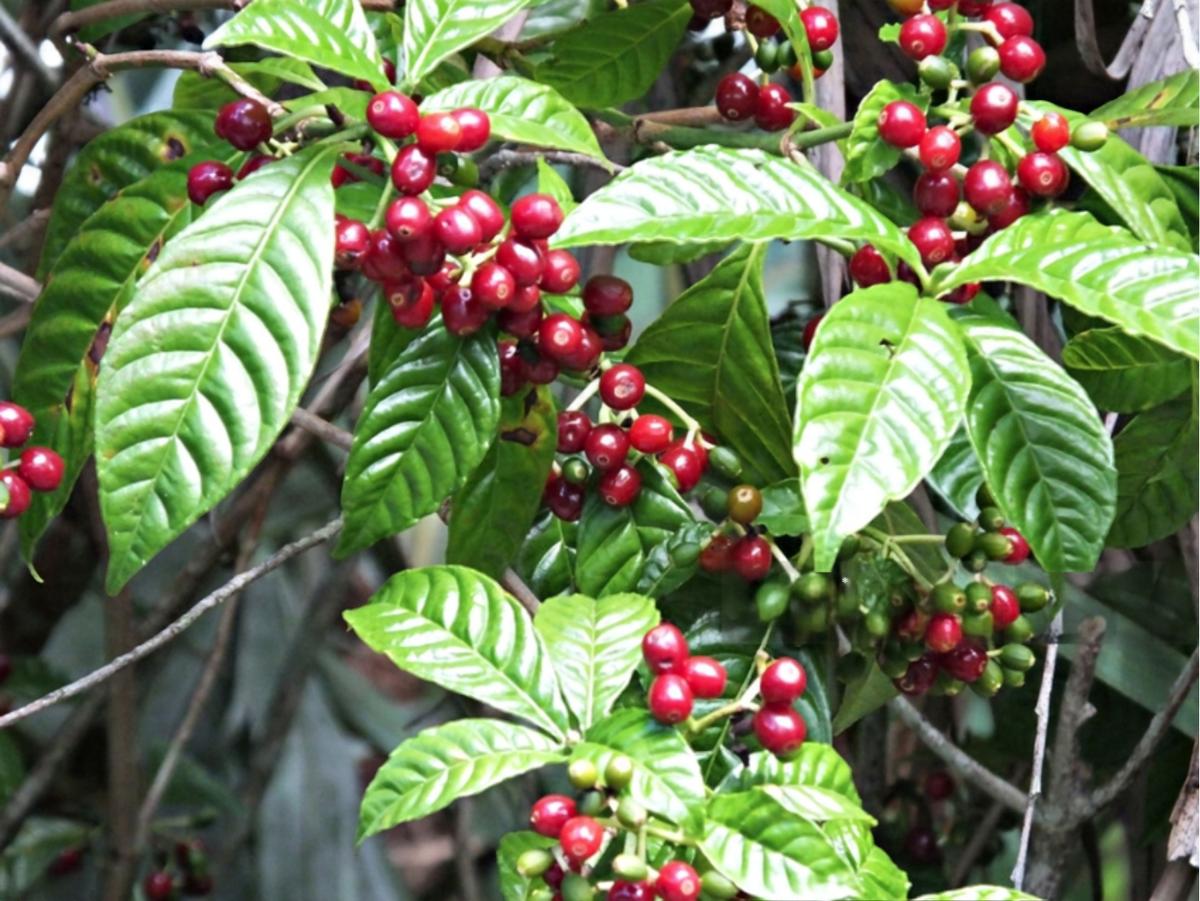
Wild coffee can help fill that landscape niche in appropriate parts of Central and South Florida.
Its dark green leaves give it a more evergreen, foliage-driven look than many flowering perennials. Small flowers are followed by colorful fruit, and the overall plant can work naturally within a shaded shrub layer.
That makes it especially useful when the design needs visual weight without another bright mass of flowers.
The contrast between wild coffee and sun-loving species also reinforces why Florida landscaping should begin with micro-habitats rather than one master plant list.
Virginia Willow Can Fill the Moisture-Loving Shrub Role
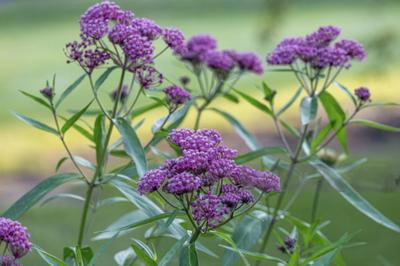
Not every Florida landscape is dry. Where soils stay reliably moist, a plant such as Virginia willow can fill a shrub niche that would be a poor fit for dry-site species.
Its flowers add seasonal interest, but the bigger landscaping lesson is that wetter zones deserve their own plant palette.
Trying to make a wet corner behave like the rest of the yard usually means drainage work, constant plant replacement, or both.
Sometimes the easier solution is simply to use plants adapted to moisture.
Coral Honeysuckle Adds Flowers Without Taking Up Much Ground
Vertical space is often underused in residential landscapes.
Coral honeysuckle can climb a fence, trellis, arbor, or other support while producing tubular flowers that attract hummingbirds and butterflies.
That makes it particularly useful in small yards.
Instead of using another shrub that consumes several feet of bed depth, a vine can move the visual interest upward.
In landscaping terms, this gives you another layer without requiring much additional ground area.
Blue Porterweed and Florida Greeneyes Add Pollinator Color
Florida’s native plant palette includes plenty of species that can carry the flower layer of a landscape.
Blue porterweed brings blue-purple flowering interest and can attract butterflies where it is native and appropriately sited.
Florida greeneyes offers a different look, with yellow flowers that can fit naturally into sunny, pollinator-focused plantings.
Neither needs to become the entire design.
Use flowering plants in repeating groups around stronger structural anchors such as shrubs and grasses. That balance keeps the landscape colorful without making it feel visually chaotic.
Simpson’s Stopper and Spanish Stopper Can Add Evergreen Structure
For South Florida landscapes in particular, native evergreen shrubs and small trees can do the jobs that non-native hedge plants often perform.
Simpson’s stopper (Myrcianthes fragrans) is valued for dense foliage, fragrant flowers, and its usefulness as a shrub or small tree.
Spanish stopper (Eugenia foetida) can fill a similar structural role in the right setting.
Plants like these are important because a well-designed native landscape needs dependable green structure between flowering seasons.
That year-round layer gives the garden a framework even when the showiest perennials are resting.
Cabbage Palm Gives a Landscape Instant Florida Character
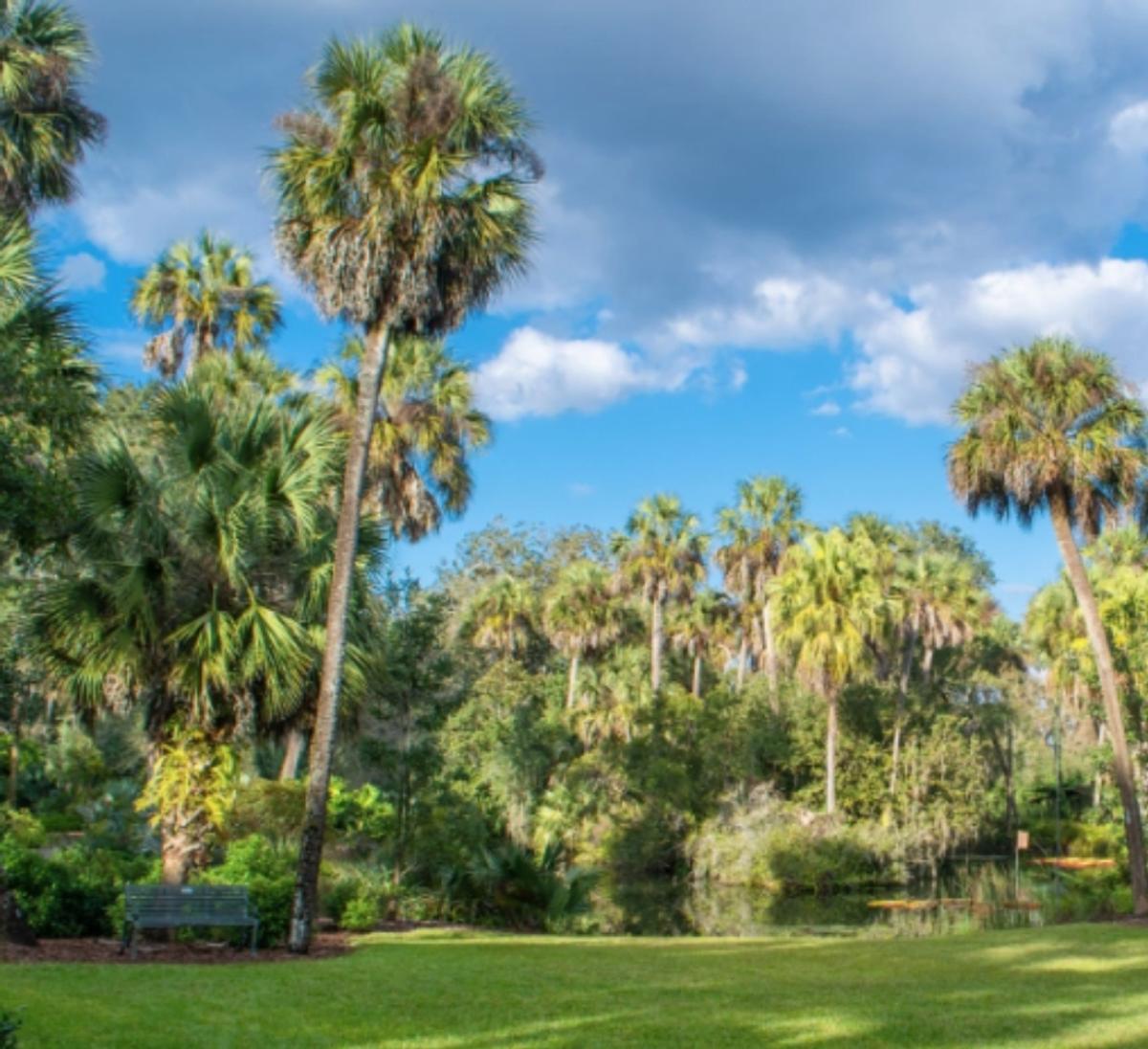
Few plants read as unmistakably Floridian as cabbage palm (Sabal palmetto), the state tree.
Its fan-shaped leaves and upright form make it a strong vertical element where the site has room for it.
A palm can also provide a visual anchor above shorter shrubs and perennials, creating the upper layer of a landscape without the broad canopy of a live oak.
As with any tree or palm, mature size matters.
A plant that looks appropriately scaled at installation can overwhelm a small space years later, so plan from the adult dimensions rather than the nursery pot.
Use Florida Native Plants to Build Habitat Into the Design
Landscaping for wildlife does not require abandoning aesthetics. It means choosing plants that perform more than one job.
Some native plants provide nectar for butterflies and bees. Others act as larval food plants or host plants for caterpillars. Fruiting shrubs provide food for bird species and other wildlife. Dense shrubs can offer cover. Vines and palms add structure.
A butterfly garden is strongest when it includes both nectar plants for adults and host plants for caterpillars.
The same principle applies to birds. Flowers are useful, but berries, insects, shelter, and nesting habitat can matter just as much.
The Florida Native Plant Society emphasizes native landscaping as a way to create wildlife habitat while also conserving water and reducing landscape inputs.
Florida Native Plant Society — Native Landscape Guidance
Reduce Turf by Replacing It With Planting, Not Bare Space
A lower-maintenance Florida landscape does not have to mean removing every square foot of lawn.
Turf can still be useful where people walk, play, or need open space.
But lawn that exists only because nothing else was designed there can often become more interesting planting.
Low-growing native plants, spreading perennials, shrubs, and grasses can turn underused turf into habitat while reducing the visual dominance of lawn.
Sunshine mimosa, for example, is a low-growing Florida native that can function as an informal ground cover in appropriate sunny conditions.
The broader idea is more important than any single species: use lawn where lawn serves a purpose, and use plants where vegetation can do more.
Design With Repetition, Not One of Everything
This may be the biggest difference between a native plant collection and a native landscape: Repeat plants.
If muhly grass works, use it several times. If one flowering species creates a good color contrast, repeat that combination elsewhere. Let a few plants become recognizable themes throughout the yard.
Group plants in masses rather than sprinkling isolated individuals across the property. Keep bed edges clear and use paths, lawn, stone, or another intentional boundary to give naturalistic plantings visual structure.
The result can be ecologically productive without looking accidental.
Central Florida, South Florida, and Coastal Areas Need Different Plant Palettes
Florida landscaping cannot be reduced to a universal statewide recipe.
Central Florida includes everything from dry sandy sites to moist low areas, with plant palettes overlapping both northern and southern portions of the state.
South Florida opens the door to more subtropical native species, including wild coffee, stopper species, and other plants associated with hammocks and pine rocklands.
Coastal areas add another layer of selection pressure. Salt-tolerant species may be essential where salt spray, wind, and sandy soil make inland plants struggle.
A landscaping article can give you ideas, but your county and micro-site should make the final call.
Establish the Landscape Before Expecting It to Be Low Maintenance
“Native” does not mean “plant it and walk away.”
New plants need watering while roots establish, especially when installation is followed by hot or dry weather.
Mulch can help conserve soil moisture and suppress weeds during establishment, but keep it away from plant crowns and avoid burying the landscape under excessive depth.
Once plants establish, those matched well to the site can often require much less intervention than poorly suited species.
That is where the maintenance savings actually come from: not from nativity alone, but from matching plants to conditions from the beginning.
Build a Florida Landscape Around Plants That Belong There
A resilient Florida landscape does not start by asking which plant is trendiest; it starts with the yard.
Find the sunny areas, the partial shade, the sandy soil, the wet pockets, the windy edges, and the places exposed to salt.
Then give each of those spaces plants that already know how to live there.
Use grasses and shrubs for structure. Add vines where you need vertical interest. Choose flowers for color and pollinators. Use ground covers where low vegetation makes sense. Add trees or palms where you have the room.
That is how native plants stop being individual purchases and start becoming a landscape.
Ready to Landscape With Florida Native Plants?
Make sure Florida is selected as your location, then start with plants suited to your area.
Want to choose your own mix of plants for a new bed?
Create Your Own Native Garden →
Want help turning plant choices into an intentional landscape?
Share this article