How to Grow Red Buckwheat
Eriogonum grande var. rubescensA small California native with big color: pom-pom clusters of rosy pink to red flowers from early summer into fall, on a low, drought tolerant mound that butterflies love.
- 3-pack or 6-pack
- Grown in California
- Ships to your door


Red buckwheat, also called red-flowered buckwheat, rosy buckwheat, and San Miguel Island buckwheat, is Eriogonum grande var. rubescens. It grows as a sub-shrub up to about 1 foot tall, a low mound of foliage topped with pom-pom clusters of rosy pink to red flowers from early summer into fall. The flower stems can reach about 2 feet. Butterflies love it, it is drought tolerant once established, and it is one of the showiest of the small buckwheats and one of our favorites for small spaces.
The short answerPlant in fall, in sun to part shade and well-drained soil. Water the first summer, then let it go nearly dry.
Plant red buckwheat in fall in full sun near the coast or afternoon shade inland, in well-drained soil, water it through the first summer, then let it go nearly dry. This guide is for California gardeners who want a compact, low water plant for rock gardens, borders, slopes, and pots. It covers planting, care by season, wildlife, where it grows wild, and how it compares to other California buckwheats. Get it right once and it will color your garden every summer and fall with almost no work.
Red buckwheat plants at a glance
- SunFull sun on the coast; part shade inland
- WaterLow once established; little or no summer water after year one
- Size8 to 20 inches tall, 1.5 to 3 feet wide; flower stems to about 2 feet
- FlowersRosy pink to red pom-poms, early summer into fall, fading to rust
- SoilWell-drained; tolerates clay, alkaline, and seaside soils (pH about 6 to 8)
- AttractsButterflies, native bees, and seed-eating birds
- HardyZones 8 to 10; established plants have survived 15°F
- Native toThe northern Channel Islands of California
When to plant red buckwheat
Fall through early winter is the best time to plant red buckwheat. Cool weather and winter rain help the roots spread before summer heat. Spring planting works if you can water through the first summer.
How to plant red buckwheat
Choose a bright, well-drained spot
Give it full sun near the coast. In hot inland gardens, a spot with afternoon shade keeps the leaves fresher. Rock gardens, slopes, the front of a border, and parkway strips are ideal.
Skip the compost
Plant in your native soil. Red buckwheat tolerates clay and alkaline soil but does not want rich, amended beds or fertilizer.
Plant high and space well
Dig a hole as deep as the pot and twice as wide. Set the crown slightly above the soil line so water drains away from the stems. Space plants about 2 to 3 feet apart, or closer for a quick groundcover drift.
Water in, then taper
Water deeply after planting and about once a week the first summer if there is no rain. After the first year, it usually needs little or no summer water. Use gravel mulch rather than thick bark around the crown.
Ready to plant this fall? Fall is the best time to get red buckwheat in the ground. Our plants ship in 3-packs and 6-packs.
Red buckwheat care by season
Fall
The best time to plant. Late flowers turn rusty brown. Leave seed heads for birds, or cut them off for a tidier look.
Winter
Rain does the watering. Protect young plants in pots if a hard frost below about 20°F is forecast.
Spring
Fresh gray-green leaves and the first flower stalks. No feeding needed. Pull weeds while the plant is small.
Summer
Peak bloom. Inland, an occasional deep watering can keep it looking good, but let the soil dry between drinks.

Pruning red buckwheat
Red buckwheat needs very little pruning. Cut spent flower stalks back to the leaves after bloom if you want a neat mound, or leave them standing for winter texture and bird seed. Avoid cutting into old woody stems.
Growing red buckwheat from seed
Red buckwheat can be grown from seed sown in fall, but germination is often slow and uneven, so most gardeners start with nursery plants. Plants in the garden may drop seed and produce a few volunteers.
Wildlife: why butterflies love red buckwheat
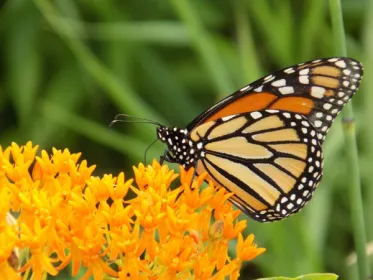
Like other California buckwheats, red buckwheat is a nectar source when summer gardens get dry. Las Pilitas Nursery calls it a very important butterfly plant, and native bees visit the flowers too. After bloom, the seeds feed finches, juncos, sparrows, towhees, and quail, and its flowers, leaves, and seeds are important to many smaller mammals. Plant it with other California native plants for a pollinator garden that blooms from spring to fall.
Deer can browse it, and some gardeners report deer pulling up young plants. Where deer are heavy, protect new plantings until they are established.
Where Eriogonum grande var. rubescens grows wild
Red buckwheat is native to the northern Channel Islands off the California coast, where it grows in coastal sage scrub and chaparral on windy slopes and bluffs. In the wild it is rare, and the California Native Plant Society lists it with a rare plant rank of 1B.2. Nursery-grown plants like ours let you enjoy it at home without collecting from the wild.
The species Eriogonum grande has other varieties, including var. grande, a white to pink island buckwheat, and the rare var. timorum of San Nicolas Island.
Red buckwheat vs. other California buckwheats
We grow three California buckwheats. Here is how they compare.
| Buckwheat | Size | Flowers | Best for |
|---|---|---|---|
| Red buckwheat Eriogonum grande var. rubescens | About 1 ft tall, 1.5 to 3 ft wide | Rosy pink to red, early summer to fall | Front of beds, rock gardens, pots |
| California buckwheat Eriogonum fasciculatum | 2 to 4 ft tall and wide | White to pink, late spring to fall | Dry slopes, top pollinator shrub. Read the guide |
| Santa Cruz Island buckwheat Eriogonum arborescens | 3 to 5 ft tall and wide | Pale pink and white, late spring to fall | Silver foliage, back of the border |
Use red buckwheat, the smallest and brightest of the three, at the front of a bed, with the larger buckwheats behind.
What to plant with red buckwheat
These California natives share its love of sun and dry summers, and together they keep color coming from spring to fall.


Red buckwheat FAQ
Is red buckwheat native to California?
Yes. Eriogonum grande var. rubescens is native to the northern Channel Islands of California.
How big does red buckwheat get?
About 8 to 20 inches tall and 1.5 to 3 feet wide. Flower stalks can rise a little above the leaves.
When does red buckwheat bloom?
From early summer into fall, often June through October, with rosy pink to red flowers that fade to rust.
Does red buckwheat need full sun?
Full sun is best near the coast. Inland, it does better with part shade in the afternoon.
Can I grow red buckwheat in a pot?
Yes. Its small size suits a wide pot with a fast-draining mix. Water when the top few inches are dry, and move pots to shelter in a hard freeze.
Is red buckwheat rare?
It is rare in the wild, with a CNPS rare plant rank of 1B.2, but widely grown by native plant nurseries. Buy nursery-grown plants and never collect from the wild.
Is red buckwheat the same as the buckwheat we eat?
No. Common buckwheat (Fagopyrum esculentum) is cultivated for its edible seeds. Red buckwheat is an ornamental native wildflower grown for its flowers and wildlife value. Both belong to the knotweed family, Polygonaceae, which also includes rhubarb.
Is Eriogonum grande rubescens the same as red buckwheat?
Yes. Eriogonum grande rubescens, often written Eriogonum grande var. rubescens or just grande rubescens, is the scientific name for red buckwheat.
What are other names for red buckwheat?
Rosy buckwheat, redflower buckwheat, and San Miguel Island buckwheat.
Red flowered buckwheat by any name
Nurseries sell this plant as red flowered buckwheat, red buckwheat, rosy buckwheat, or by its scientific name. Whatever the label says, look for Eriogonum grande var. rubescens to be sure you are getting the Channel Islands native.
Bring summer color to your garden
Our red buckwheat plants are grown in California and ready for a sunny rock garden, border, or pot.

Red buckwheat resources
- Las Pilitas Nursery: Eriogonum grande rubescensSize, sun, water, soil, and wildlife value
- Santa Barbara Botanic GardenPlant record and rare status
- Calscape, California Native Plant SocietyFind native plants for your address
- How to Grow California BuckwheatOur guide to its larger cousin
- California Native Flowers25 to grow for color all year
Sources: Las Pilitas Nursery; Santa Barbara Botanic Garden; Fine Gardening; Wikipedia, Eriogonum grande