Texas Native Plants for Shade That Thrive Under Trees

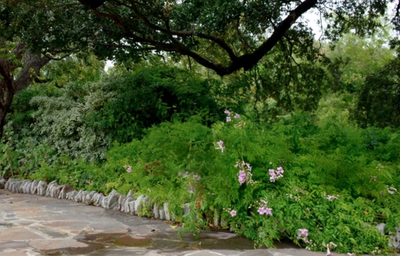
A shady Texas yard does not have to mean bare dirt, struggling turf or a handful of plants chosen simply because they refuse to die. Some of the most useful Texas native plants evolved along woodland edges, beneath open tree canopies and in other places protected from the strongest direct sun.
The best shade plants depend on the type of shade you have. Morning sun beneath a high tree canopy creates very different conditions from deep shade beneath a mature live oak. Soil moisture, tree-root competition and your part of Texas matter just as much as light.
This guide is for Texas gardeners choosing native plants for the shade, from low groundcovers and flowering perennials to native grass and shrubs. We’ll cover plants available from My Home Park, explain the difference between part sun, part shade, full shade and deep shade, and show how to combine them into attractive shade gardens that support birds, butterflies, hummingbirds and other wildlife.
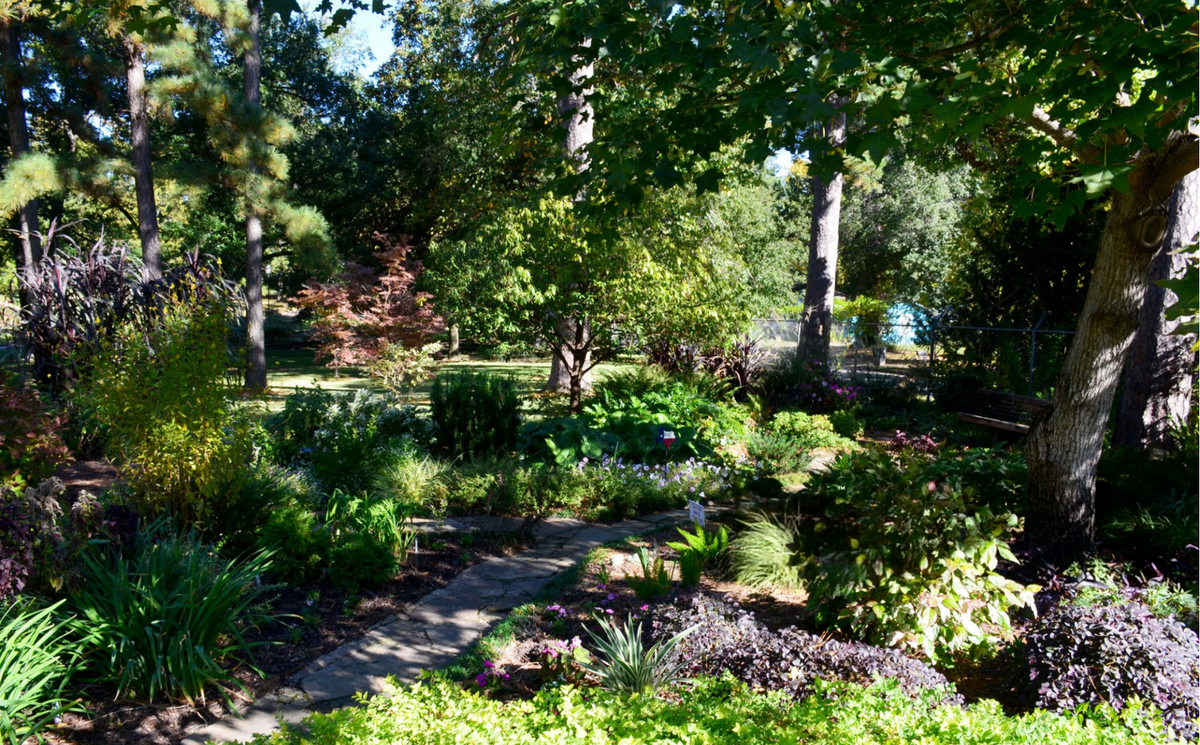
What Shade Means in a Texas Garden
Shade is not one condition.
As a practical starting point, a shaded garden receives less than about half a day of strong direct sun. But even that definition needs context in Texas. A few hours of gentle morning sun can be useful, while the same number of hours of late-afternoon sun may expose plants to much more intense Texas heat.
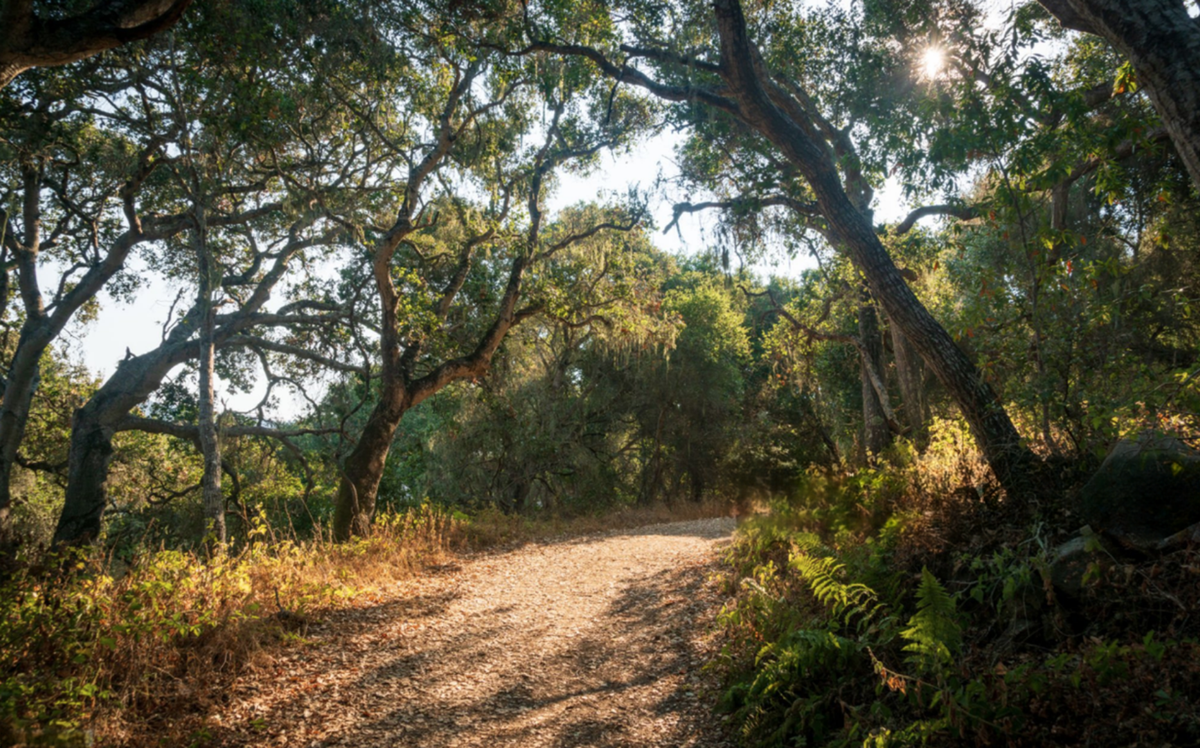
Part shade usually describes a site with several hours of sun followed by shade, or a location receiving dappled light beneath an open canopy. Morning sun with afternoon protection is often an excellent combination for flowering shade plants.
Part sun describes similar conditions but generally implies that the site receives somewhat more sun. Many plants tolerate both part sun and part shade, although they may produce more flowers in part sun.
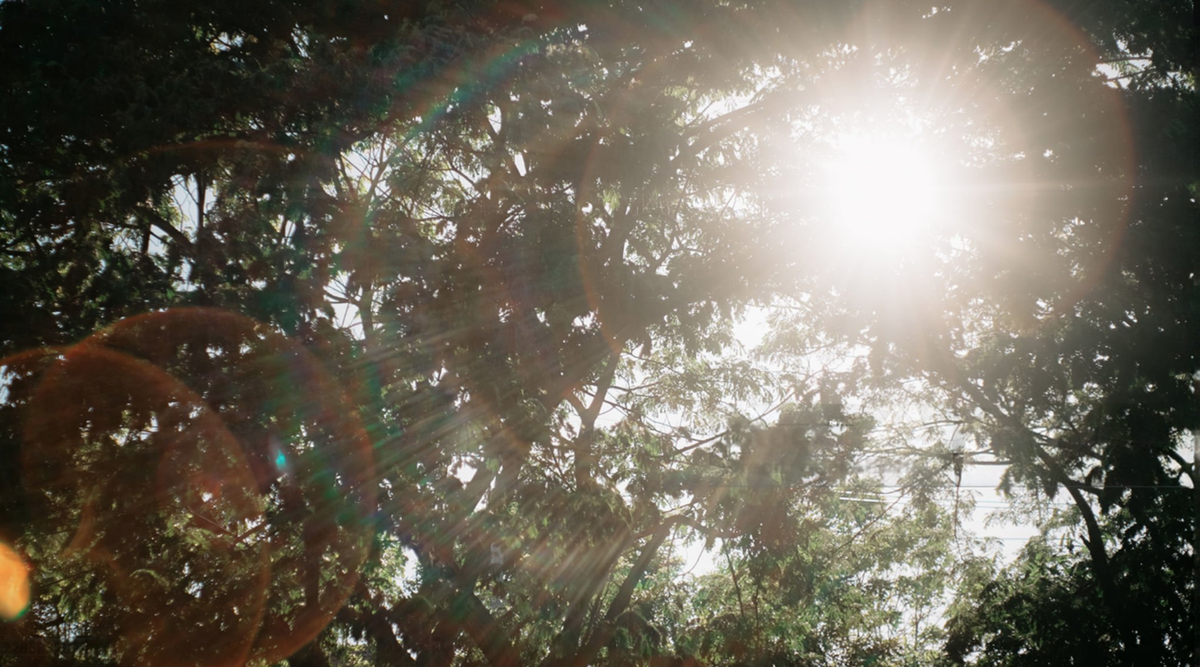
Full shade does not necessarily mean darkness. A north-facing bed or the ground beneath a high tree canopy may receive little direct sun while remaining quite bright from reflected or filtered light. Many woodland perennials and shrubs can thrive in this kind of full shade.
Deep shade is more challenging. Dense live oak canopies, evergreen trees, overlapping shrubs, buildings and fences can dramatically reduce available light. Deep shade often comes with another complication: mature trees competing with new plants for water.
Shade therefore does not automatically mean moist soil. Some of the driest shady beds in Texas occur beneath established trees.
Match Shade Plants to Your Part of Texas
Texas is much too large for one list of shade plants to work everywhere.
East Texas woodlands can receive substantially more rainfall than the Edwards Plateau, while North Texas experiences colder winter temperatures than San Antonio or the Lower Rio Grande Valley. Soil may be sandy and acidic in one region, heavy clay in another and shallow limestone elsewhere.
That means choosing plants based on more than the word “Texas.” Check native range, mature size, drainage and water needs as well as light. The Native Plant Society of Texas ecoregion map is a useful starting point when determining which part of the state your garden belongs to.
A moisture-loving woodland perennial might thrive beneath trees in eastern Texas but struggle in dry limestone shade around Austin. A plant that handles Central Texas heat beautifully may dislike a consistently wet site near the Gulf Coast.
The Native Plant Society of Texas plant database can help you investigate regional native ranges and growing conditions before choosing a plant.
When shopping My Home Park, enter your ZIP code to see native plants selected for your area. You can also browse the full Texas native plant catalog.
Best Native Plants for the Shade in Texas
The most successful shade gardens usually combine several plant forms.
Use low-growing plants to cover soil, flowering perennials for seasonal blooms, native grass for texture, and larger perennials or shrubs for height and structure. That variety can also provide nectar, seeds, berries and shelter for wildlife across more of the year.
The following shade plants are particularly useful starting points.
Turk’s Cap — Malvaviscus arboreus var. drummondii
Red Turk’s Cap (Malvaviscus arboreus var. drummondii) is one of the classic native shade plants for Texas.
Its arching stems produce unusual red flowers whose petals remain curled rather than opening flat. Those blooms are particularly attractive to hummingbirds, while butterflies and other pollinators visit them as well.
Turk’s Cap handles conditions ranging from part sun into substantial shade. It generally produces its strongest flowering where it receives useful light, but it remains a valuable option in brighter full shade where many prairie perennials become thin or weak.
Plants can gradually spread into broad colonies, so give Turk’s Cap space to develop its naturally relaxed shape. In colder parts of its range, stems may die back during winter and return from the base in spring.
Inland Sea Oats for Shade and Woodland Texture
Inland Sea Oats, also called River Oats (Chasmanthium latifolium), are unusual among ornamental grasses because they perform beautifully in part shade and shade.
Broad green foliage rises beneath flattened dangling seedheads. Those seeds mature from green toward tan and bronze, creating movement and interest through summer, fall and into winter.
Inland Sea Oats are particularly effective beneath trees because the upright grass texture contrasts with broad-leaved perennials and shrubs. The seeds may also feed birds and other wildlife.
Established plants can spread by seed. That can be extremely useful when naturalizing a woodland-style bed, but gardeners seeking a tightly controlled landscape can simply remove unwanted seedlings while they are young.
Pigeonberry — Rivina humilis
Pigeonberry (Rivina humilis) brings small-scale detail to the lowest layer of a shade garden.
Tiny pinkish-white flowers appear above fresh green foliage and are followed by glossy red berries. Flowers and berries can occur simultaneously, creating more seasonal interest than the plant’s modest size might suggest.
Its naturally low habit makes Pigeonberry useful near the front of shady beds or beneath taller perennials and shrubs. Birds use the berries, while the flowers provide another food source for visiting insects and pollinators.
Pigeonberry handles substantial shade but performs best where soil moisture and drainage suit it. In favorable conditions the plants can spread into an informal colony.
Horseherb for Dry Shade Beneath Trees
Horseherb (Calyptocarpus vialis) deserves special attention when the real problem is dry shade.
This low-growing Texas native forms green mats dotted with tiny yellow flowers and naturally occurs beneath trees, in lawns and along other lightly disturbed sites. It tolerates some foot traffic and can even be mowed where a shorter ground layer is preferred.
That makes Horseherb useful where conventional turf repeatedly thins because there is not enough direct sun. Instead of continually trying to force full sun lawn grass beneath a canopy, Texas gardening can work with a plant already adapted to lower light.
Its appearance is informal rather than manicured, making it particularly well suited to naturalistic beds, woodland edges and tree lawns.
Tropical Sage — Salvia coccinea
Scarlet Sage, also called Tropical Sage, is Salvia coccinea, a native flowering perennial that brings considerably brighter color to a part shade garden.
Loose spikes of red blooms can appear over a long growing season. Hummingbirds readily investigate the tubular flowers, while bees and butterflies also use them.
Salvia coccinea tolerates conditions from full sun into shade, although flowering usually improves with useful filtered light or a few hours of sun. In hotter portions of Texas, protection from the fiercest summer afternoon sun can be an advantage.
Plants frequently produce seeds and may move gently through the garden over time.
Texas Betony — Stachys coccinea
Texas Betony (Stachys coccinea) combines soft foliage with coral-red tubular blooms.
It is better suited to part sun or part shade than the darkest full shade. A location receiving morning sun followed by protection from afternoon Texas heat can be especially useful.
In the right conditions, Texas Betony can spread into a broad flowering patch. Its blooms attract hummingbirds and add warm color around woodland edges where darker shade begins to transition toward direct sun.
Frostweed for Height and Late-Season Blooms
Frostweed (Verbesina virginica) gives shade gardens something many low groundcovers cannot: height.
This native perennial rises above shorter plants and produces clusters of white blooms late in the growing season. Those flowers can become an important resource for butterflies, bees and other pollinators when fewer plants remain in bloom.
Frostweed also produces one of the more unusual sights in the winter garden. During an early hard freeze, moisture leaving the stems can form delicate ribbons of ice around the base.
Use Frostweed toward the middle or back of protected beds rather than an exposed, baking location.
Full Shade and Deep Shade Plants
A plant described as shade tolerant will not necessarily thrive in the darkest part of the yard.
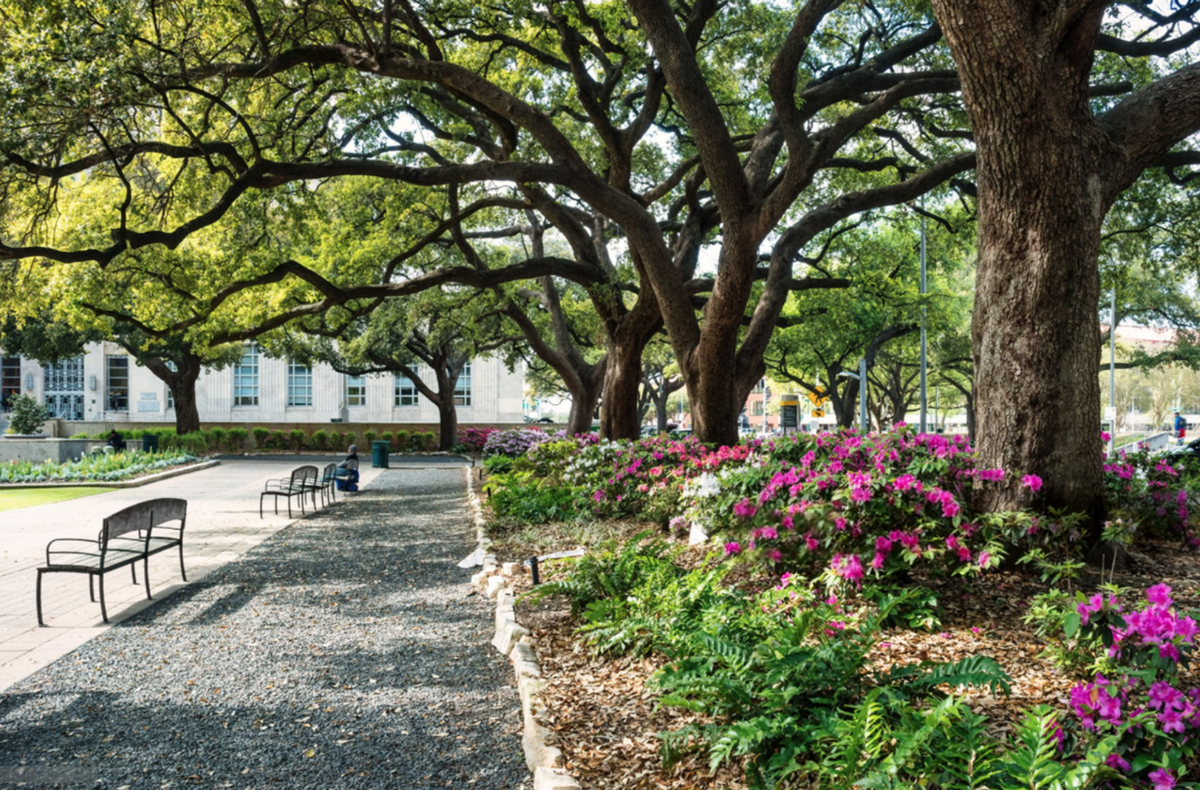
Bright full shade beneath a high canopy may support plenty of foliage and flowers. Move beneath dense overlapping live oaks, however, and the same garden may become deep shade with much less usable light.
For full shade, plants such as Pigeonberry, Horseherb, Inland Sea Oats and Turk’s Cap can be useful where their other site requirements are met. Turk’s Cap may produce fewer blooms as the light decreases, but its foliage can still contribute useful mass.
For genuine deep shade, expectations should change. Most flowering perennials need some meaningful light. Ground-layer plants that naturally occupy woodland environments are generally stronger candidates than full sun prairie plants that merely tolerate a little shade.
Moisture then becomes the second filter. Moist full shade can support a different palette than dry deep shade beneath a thirsty mature tree.
Dry Shade Under Trees
Dry shade may be the hardest planting condition in a Texas yard.
Large trees are formidable competitors. Their roots occupy the same upper layers of soil that new perennials are trying to establish in, while their leaves intercept rainfall before it reaches the ground.
Horseherb is particularly useful in dry shade. Established Turk’s Cap can also tolerate dry periods, while Inland Sea Oats fits sites with somewhat greater moisture.
Do not try to fix dry shade by piling rich soil over mature tree roots. Likewise, heavy irrigation can create a completely different problem if drainage is poor.
A modest layer of mulch can slow evaporation, but keep it away from tree trunks and plant crowns. Dry shade requires shade plants that can tolerate both reduced light and root competition—not simply plants with low water needs.
Lyreleaf Sage and Missouri Violet for the Ground Layer
Lyreleaf Sage (Salvia lyrata) stays low for much of the year before sending up blue to purple flowers in spring.
Salvia lyrata can tolerate conditions from sun into shade and may gradually occupy open ground where conditions suit it. That makes Lyreleaf Sage useful as part of a mixed ground layer rather than only as a single focal plant.
Missouri Violet is another low perennial for part shade and shade. Its spring flowers can occupy the lowest level of a planting before taller summer perennials expand above it.
Low-growing shade plants like these help keep the garden visually active near ground level rather than leaving bare soil beneath larger shrubs and perennials.
American Beautyberry — Callicarpa americana
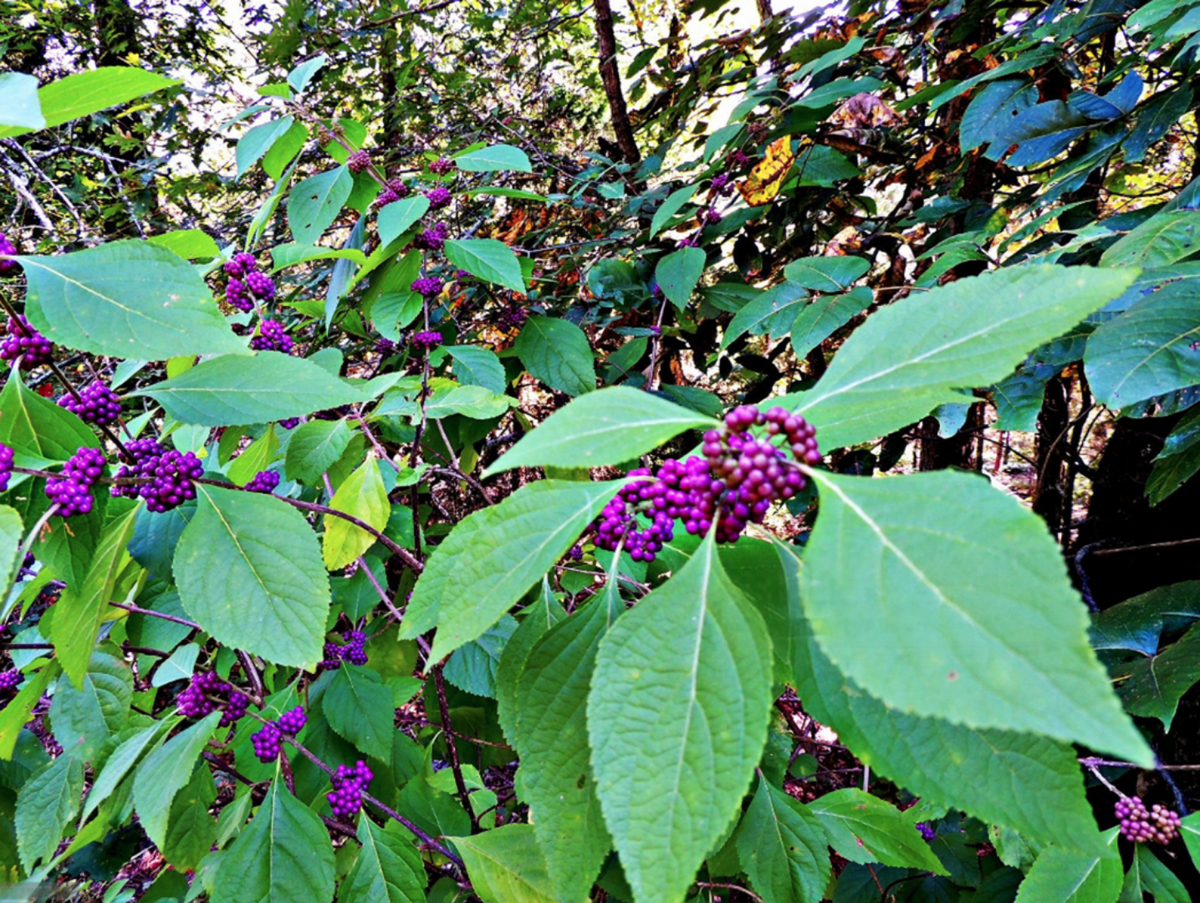
American Beautyberry (Callicarpa americana) becomes especially memorable during late summer and fall, when brilliant purple berries cluster around its stems.
This deciduous native shrub performs well in woodland-edge conditions and part shade. The flowers themselves are modest, but the fruit creates an unmistakable display while also providing food for birds and other wildlife.
American Beautyberry is best treated as a bright-shade or part-shade shrub rather than a deep-shade solution. More available light generally produces a fuller plant.
Give Callicarpa americana room for its long arching stems instead of forcing it into the tight footprint expected from a compact evergreen shrub.
Mountain Laurel, Yaupon Holly and Other Native Shrubs
Native shrubs can create structure after herbaceous shade plants disappear for the winter.
Mountain Laurel, specifically Texas Mountain Laurel, provides evergreen foliage and fragrant purple spring flowers. It handles full sun to part shade in appropriate native regions but should not be treated as a plant for deep shade. Good drainage is important.
Yaupon Holly is another adaptable evergreen shrub that can grow from sun into shade. Female plants can produce red berries used by birds, providing both wildlife value and winter color.
American Beautyberry offers a looser deciduous alternative. Roughleaf Dogwood (Cornus drummondii) can be useful in suitable parts of Texas where soil and moisture conditions fit.
Buckeyes such as Aesculus glabra also appear in Texas plant references, but regional range matters. A shrub or tree native to one portion of Texas should not automatically be promoted as a statewide solution.
The Lady Bird Johnson Wildflower Center native plant database is another useful resource for checking native range, growing requirements and appropriate landscape uses before selecting woody plants.
Texas Gold Columbine, White Mistflower and Other Part Shade Plants
Not every useful Texas native shade plant fits the darkest corner beneath a tree.
Texas Gold Columbine brings airy foliage and yellow spring flowers to protected sites with dependable moisture. It is better suited to a moist part shade garden than to the driest root-filled ground beneath a live oak.
Native ferns can provide similarly fine-textured foliage in moist full shade. River Fern and other regionally appropriate ferns create an airy woodland effect where conditions remain sufficiently protected.
White Mistflower can add clouds of pale blooms in appropriate areas, while plants such as Frogfruit can occupy brighter edges where part sun reaches the bed.
For another flowering option near those brighter edges, Zexmenia tolerates some part shade but generally flowers more heavily as available sun increases.
This is why mapping the site before buying plants matters. The same yard can contain full sun, part sun, part shade, full shade and deep shade within a surprisingly short distance.
Why Generic Shade-Plant Lists Can Mislead Texas Gardeners
Search for “shade plants” online and you will often get results that have little to do with an outdoor Texas native garden.
Pothos, ZZ plants, peace lilies, snake plants, Chinese evergreen and heartleaf philodendron commonly appear because they tolerate relatively low light indoors. Many originate from environments such as tropical forest floors, where filtered light is common. They are houseplant answers, not substitutes for native Texas understory plants.
Other generic garden lists recommend Hostas, Astilbe, Bleeding Heart, Hellebores, Brunnera, hydrangeas or Japanese Pachysandra. Hellebores may offer evergreen leaves and early spring flowers, Hostas provide colorful foliage, and Japanese Pachysandra can form a dense groundcover—but none of those qualities makes them Texas native plants.
The same distinction applies to Cast Iron Plant, Elephant Ears, English Ivy (Hedera helix) and plants historically sold under the common name “Wandering Jew.” These are familiar examples from general shade-gardening advice, not reasons to overlook locally native species.
There is an important distinction between adapted plants and native plants. Well adapted plants may survive local heat, soil or shade. Native plants can solve the same landscape problem while also participating in ecological relationships with local insects, birds and other wildlife.
That does not mean every native is automatically easy to grow. It means you can choose shade plants that fit the site while contributing more than attractive foliage alone.
How Direct Sun Changes a Shade Garden
Few shade beds receive exactly the same light from one edge to the other.
The outside of a canopy may receive several hours of direct sun and function as part sun. Move closer to the trunk and conditions may transition through part shade, full shade and eventually deep shade.
Use that gradient instead of fighting it.
Scarlet Sage, Texas Betony, Frogfruit or Zexmenia can occupy the brighter edge. Inland Sea Oats and Turk’s Cap can move farther into protection. Pigeonberry or Horseherb can occupy lower-light areas where appropriate.
This creates more interesting gardens and lets you use a broader collection of perennials, groundcovers, grass and shrubs. Different flowering periods also provide nectar for bees, butterflies and hummingbirds from spring through summer and into fall.
Shade Plant Choices for San Antonio and Central Texas
Shade can be particularly valuable in San Antonio, where blocking the fiercest afternoon Texas heat can dramatically alter growing conditions.
Many San Antonio yards combine shallow limestone soil, mature live oaks and limited rainfall. That creates the classic challenge of shade plus drought and heavy root competition.
Horseherb and Turk’s Cap can be useful starting points around San Antonio, while Inland Sea Oats generally fits locations with somewhat more moisture. Pigeonberry can perform well where filtered light and suitable moisture coincide.
Texas Betony and Scarlet Sage often make more sense near the brighter edge of the tree canopy, where part sun or morning sun encourages stronger blooms.
The same principle extends beyond San Antonio throughout much of Central Texas: separate dry shade from moist shade, then map how the sun moves across the yard. A shade garden in San Antonio should not be expected to use exactly the same plant palette as one in Houston simply because both are in Texas.
Gardeners in Central Texas can also consult the City of Austin Grow Green Plant Guide for additional regional landscape guidance.
Design a Layered Texas Shade Garden
Shade garden design becomes much easier when you think vertically.
Begin with a ground layer of Horseherb, Pigeonberry, Lyreleaf Sage, Missouri Violet or another regionally appropriate low plant. Add flowering perennials such as Scarlet Sage and Texas Betony where enough light reaches the bed.
Use Inland Sea Oats for grass texture and moving seedheads. Bring in Turk’s Cap, Frostweed, American Beautyberry, Yaupon Holly or other shrubs farther back for height and structure.
Repeat plants instead of scattering one of everything. Groups are easier to read visually, and concentrated flowers can become more noticeable to pollinators.
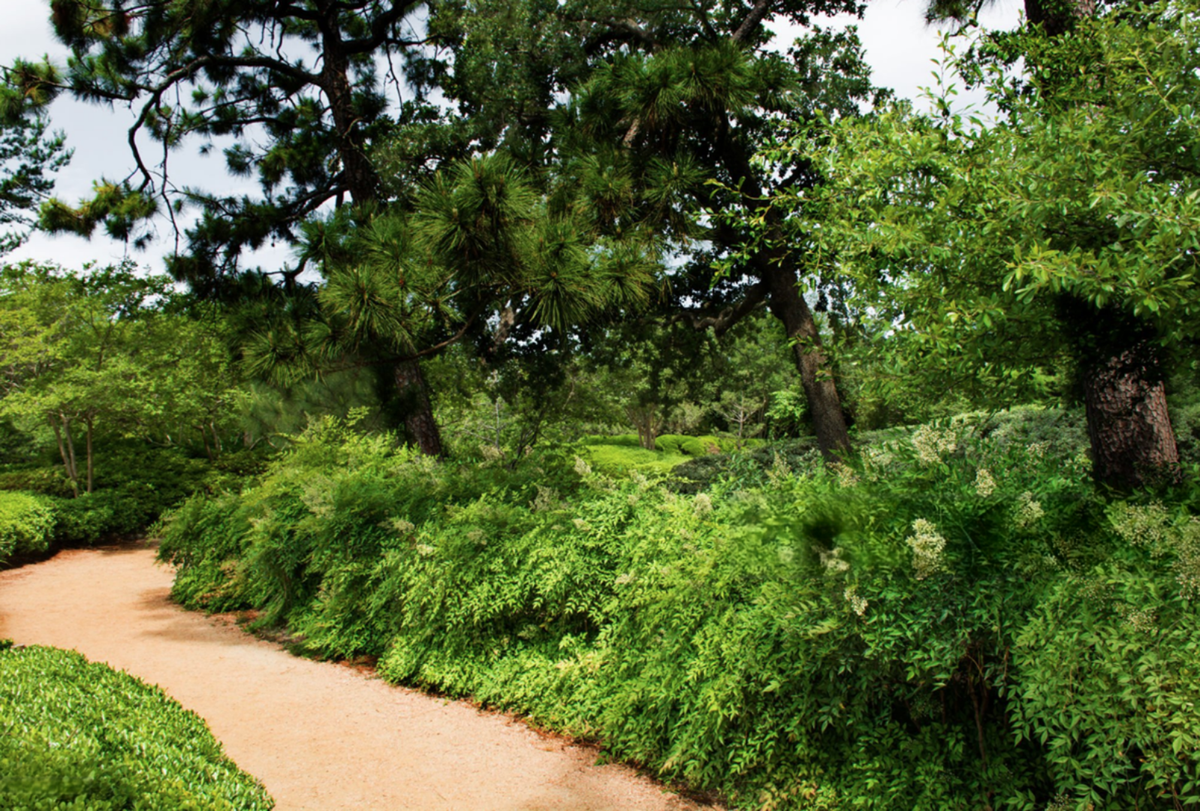
A woodland-style planting near a porch, path or entry can even function as a natural welcome mat, replacing a patch of struggling lawn with foliage, flowers and seasonal movement.
Plan for multiple seasons. Spring flowers, summer blooms, fall berries, seeds and evergreen foliage can keep the landscape interesting even though no individual plant does everything.
If you want to create a repeating palette yourself, My Home Park’s Build Your Own Garden lets you combine several native species into one 25- or 50-plant tray.
Care for Texas Shade Plants Through the First Year
New shade plants still need establishment care, even though they are protected from the strongest Texas heat.
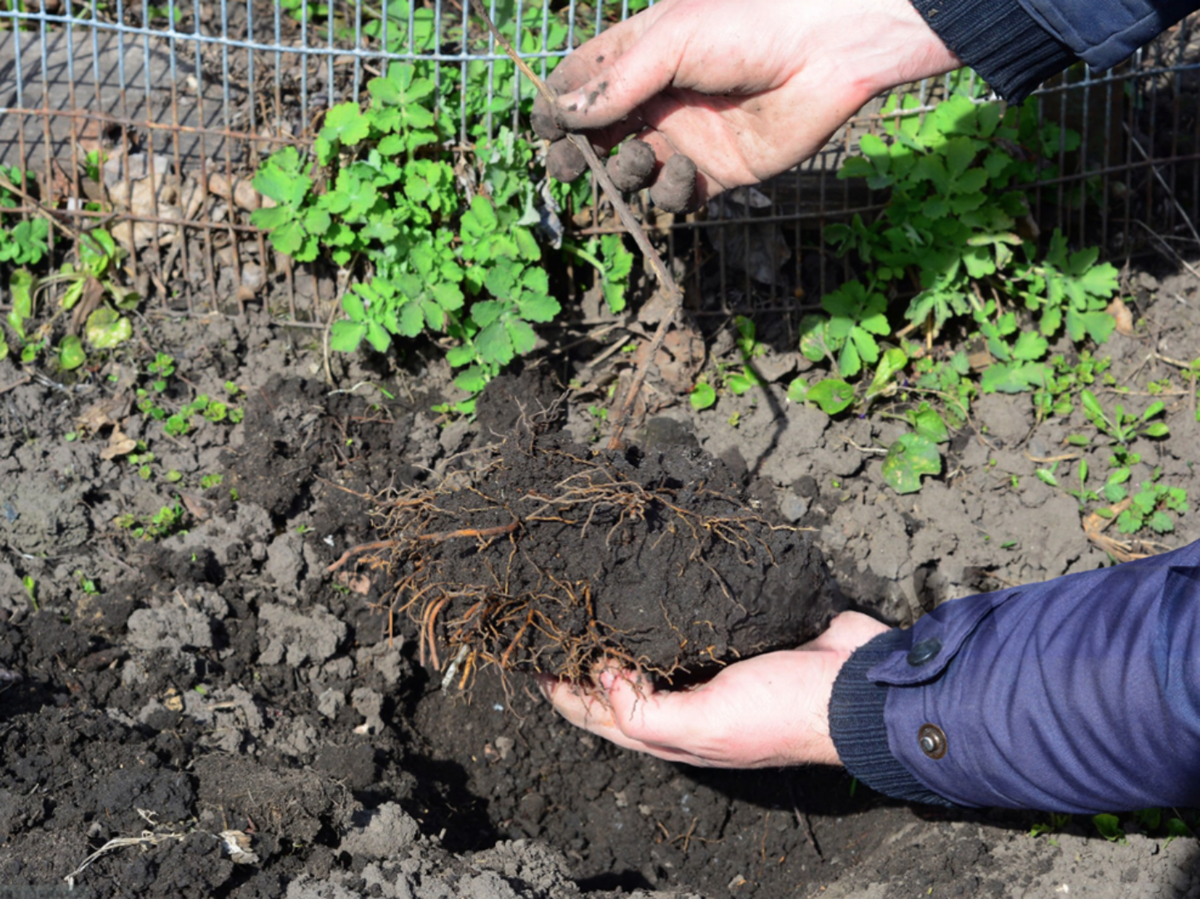
Water deeply after planting so moisture reaches roughly 6 to 8 inches into the root zone where practical. After that, check the actual soil rather than watering from a rigid calendar. Pushing a finger into the soil is often more useful than judging moisture from the dry-looking surface.
Tree roots can make full shade surprisingly dry. At the same time, poorly drained shade can stay wet for days after rainfall. Group plants according to their water needs rather than treating every shaded bed the same.
Most native shade plants have low to moderate supplemental water needs once established when they are correctly matched to the site. New plants will require more dependable moisture while their root systems develop.
A thin layer of compost can help where existing soil genuinely needs organic matter, but avoid dramatically changing soil conditions around established trees. Most native plants are better served by matching them to the existing Texas soil than by trying to manufacture a completely different planting medium.
Mulch can reduce evaporation and suppress weeds, but keep it away from plant crowns and tree trunks.
Most native shade plants also do not need heavy fertilizer. Excess fertility can encourage weak growth without solving a mismatch in light, moisture or drainage.
Watch the planting through its first summer. Persistent wilting, scorched leaves from unexpected afternoon sun or soil that stays saturated for days are all clues that the site may not match the plant.
Build Your Own Texas Shade Garden
A successful Texas shade garden begins by treating shade as a set of conditions to work with rather than a problem to overcome.
Use Horseherb or Pigeonberry for a low ground layer. Add Scarlet Sage or Texas Betony where part shade or part sun allows stronger flowering. Bring in Inland Sea Oats for texture, then use Turk’s Cap or Frostweed for height.
You do not need every plant in this guide. A repeating palette of four or five well-matched species will usually look more intentional than a collection of unrelated shade plants.
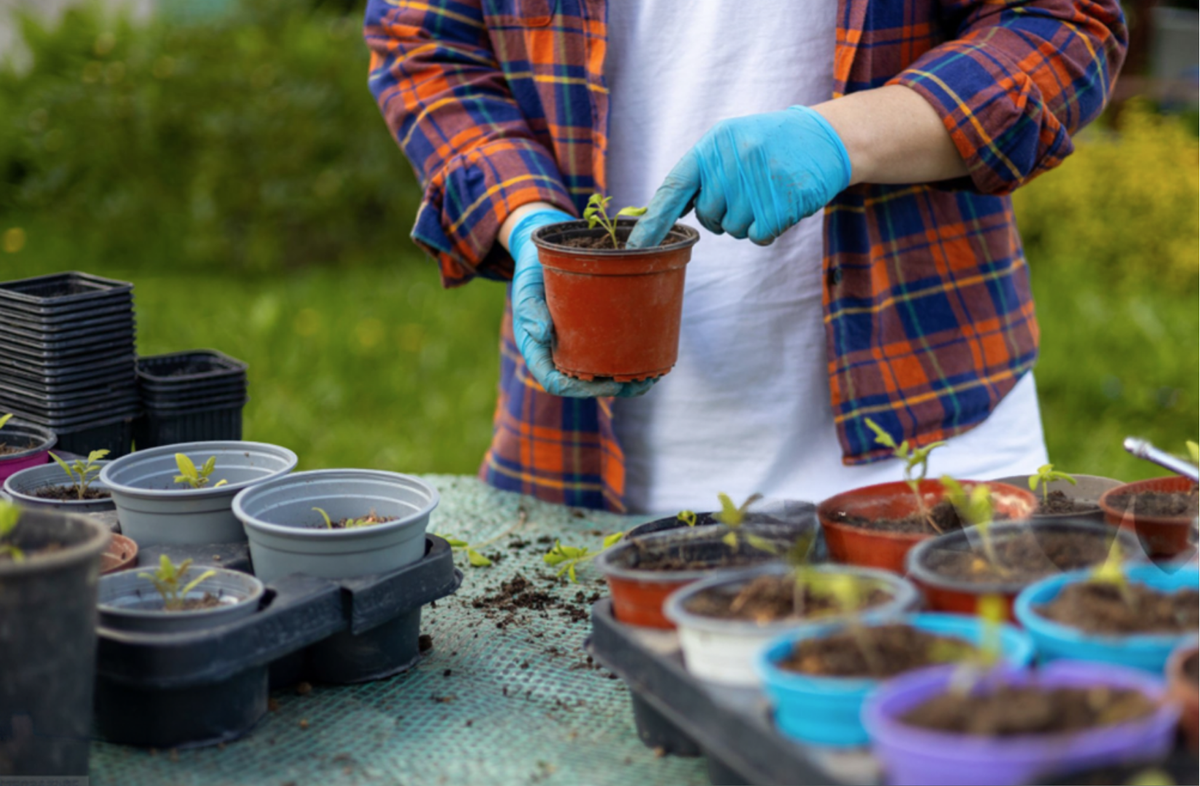
My Home Park’s Build Your Own Garden feature lets you assemble your own mixed tray of 25 or 50 native plants, making it easier to repeat several compatible shade species throughout a bed.
For smaller projects, many individual Texas natives can also be purchased in groups of three or six through the full native plant catalog.
Enter your ZIP code before ordering, observe how much sun actually reaches the bed and pay special attention to moisture beneath mature trees. Those basic observations can turn one of the most difficult parts of a Texas yard into a layered landscape filled with foliage, flowers, berries and wildlife.
Helpful Texas Native Plant Resources
Share this article