American Persimmon
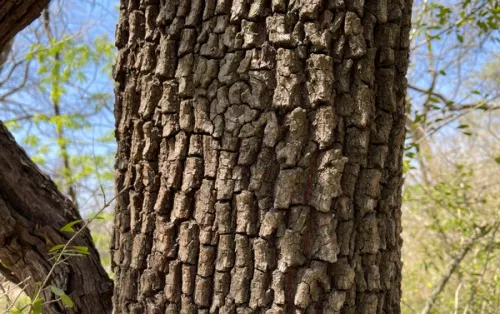
American Persimmon is a rugged and adaptable deciduous tree native to much of the eastern and central U.S. Reaching heights of 20 to 60 feet depending on conditions, it develops a strong presence through its handsome, blocky bark, lustrous green leaves, and a graceful, open habit that adds character to both wild and cultivated landscapes.
In late spring to early summer, inconspicuous yet fragrant yellow-green flowers appear, typically on female trees. These flowers attract a range of pollinators, including native bees. If pollinated (usually requiring a male tree nearby), female trees produce edible fruit in late fall. The fruit is initially puckeringly astringent, but after frost or full ripening, it becomes honey-sweet and sought after by wildlife and humans alike.
The ripe, apricot-colored persimmons serve as an important food source for opossums, foxes, raccoons, turkeys, cedar waxwings, and more. Ecologically, the tree is valuable not just for its fruit but also for its role as a larval host for several moths, including the Luna Moth and Royal Walnut Moth.
American Persimmon thrives in full sun and tolerates a wide range of soil types, from dry sandy loams to heavier clay, though it prefers well-drained soils. Its deep taproot makes it drought-tolerant once established, but also means it should be planted young and in place.
Details
Range Map
record
Ecological Benefits
Maintenance Tips
- Dioecious: Both male and female trees are needed for fruit production.
- Fruit drop can be messy near walkways—best sited in low-traffic zones if fruiting is expected.
- Minimal pruning required; train early for form if desired.
- Extremely tolerant of poor soils and dry conditions once established.
- Propagation is easiest from seed or root suckers (common in wild settings).