Blackhaw Viburnum
Blackhaw Viburnum is a versatile native shrub or small tree known for its four-season interest and high ecological value. It grows 12–15 feet tall and wide, forming a dense, multi-stemmed habit perfect for hedgerows, borders, or naturalized plantings.
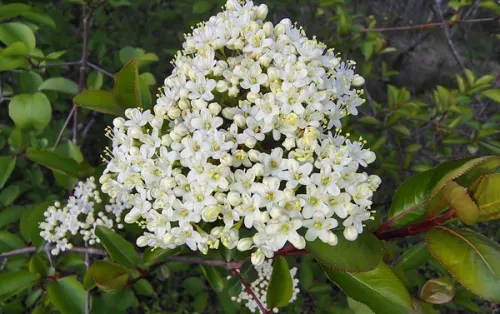
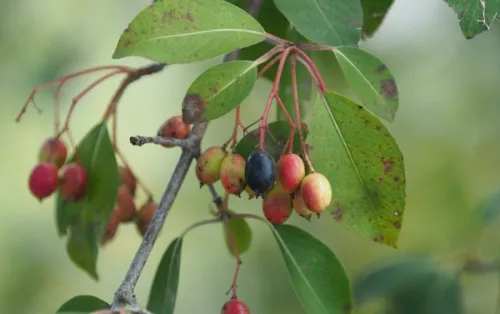
In spring, flat-topped clusters of creamy white flowers emerge, attracting a variety of early-season pollinators. These give way to pink-tinged berries that ripen to a deep blue-black by late summer and are beloved by birds like cedar waxwings, thrushes, and cardinals, as well as small mammals. The edible fruits have a sweet, date-like flavor and were traditionally used in jams and jellies.
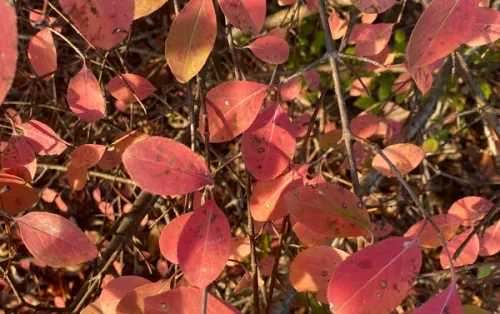
Glossy dark green leaves turn shades of burgundy, red, and purple in fall, rivaling many ornamental shrubs in beauty. Its upright, vase-like form and distinctive blocky bark provide winter structure and texture.
Blackhaw Viburnum is highly tolerant of drought once established, as well as a range of soil types including clay. It does well in full sun to part shade and is even tolerant of urban conditions.
Details
Range Map
record
Ecological Benefits
Maintenance Tips
- Prune after flowering if needed to shape or thin.
- Allow suckers to grow if a thicketed form is desired; remove if not.
- Mulch in early years to retain soil moisture and suppress weeds.
- Drought-tolerant once mature but benefits from occasional deep watering.
- Plant more than one shrub for better fruit set.