Bluebunch Wheatgrass
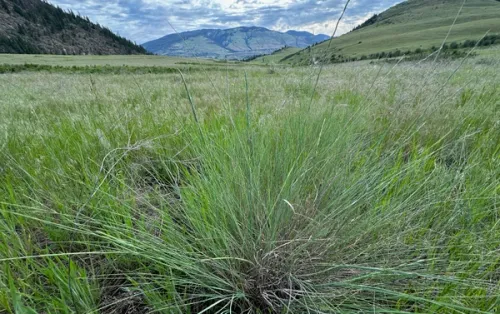
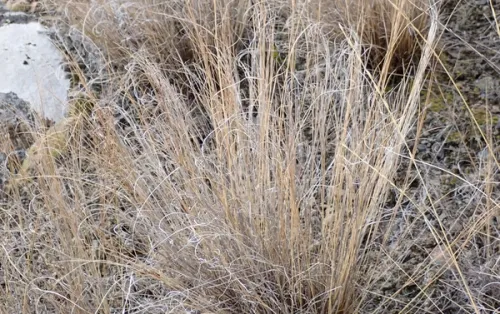
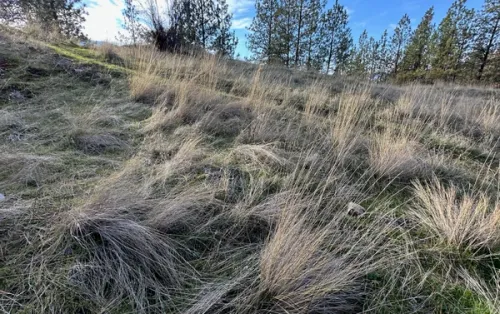
Bluebunch Wheatgrass is one of the signature perennial grasses of western North America's grasslands, sagebrush steppe, and open woodlands. Narrow blue-green leaves emerge in dense upright bunches, followed by slender flower spikes with distinctive outward-pointing spikelets. Mature clumps remain relatively narrow, making the grass useful as a structural accent or repeated matrix plant in dry native landscapes.
Its greatest strengths are largely hidden below ground. Bluebunch Wheatgrass develops an extensive root system that can penetrate several feet into the soil, allowing established plants to access moisture long after the surface has dried. This makes it one of the West's more drought-resistant native bunchgrasses and an excellent choice for sunny slopes, restoration projects, dry meadows, and erosion-prone soils. It tolerates everything from sandy to clay-rich and stony ground but does poorly in saturated soil or locations with prolonged standing water.
Bluebunch Wheatgrass is wind-pollinated, so it does not provide floral nectar for bees. Its ecological role lies elsewhere: it supplies forage and cover for wildlife, seeds for birds and small mammals, and larval food for native skipper butterflies including the woodland skipper. Its persistent roots also help stabilize soil and compete with invasive annual grasses, making the plant as functional ecologically as it is visually useful.
Details
Range Map
record
Ecological Benefits
Maintenance Tips
- Plant in full sun to light partial sun in well-drained soil and avoid overwatering once established.
- Leave old foliage and seedheads through winter for habitat and structure, then cut or comb away weathered growth before fresh spring leaves emerge.