Cherokee Sedge
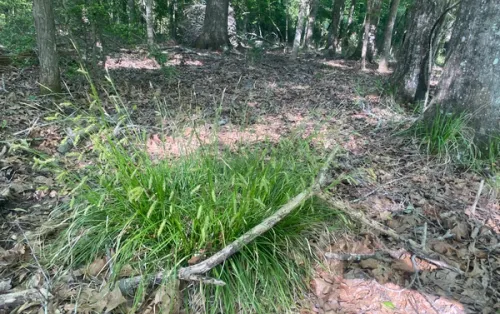
Cherokee Sedge is a graceful, clump-forming sedge native to the southeastern and south-central United States. It thrives in moist, partly shaded environments such as low woodlands, streambanks, and floodplains, but also tolerates drier shade once established.
Growing 1–2 feet tall, Cherokee Sedge stands out for its elegant, arching foliage and soft texture. Unlike more aggressive rhizomatous sedges, this species maintains a well-contained, fountain-like habit that’s ideal for naturalistic plantings, erosion control, or as a refined groundcover under trees and shrubs.
Its ecological benefits are broad. The dense foliage offers refuge for small wildlife, while the seeds are a food source for birds. Like many sedges, it also plays host to caterpillars of native skipper butterflies.
Details
Range Map
record
Ecological Benefits
Maintenance Tips
- Watering: Best in moist, even wet, soils but tolerates some drought once established.
- Trimming: Cut back old foliage in early spring to promote fresh growth.
- Spreading: Clump-forming and non-aggressive—low risk of invasiveness.
- Division: Can be divided every few years in spring if needed.
- Use Case: Excellent for rain gardens, shaded borders, or as a matrix plant in layered plantings.