Creek Sedge
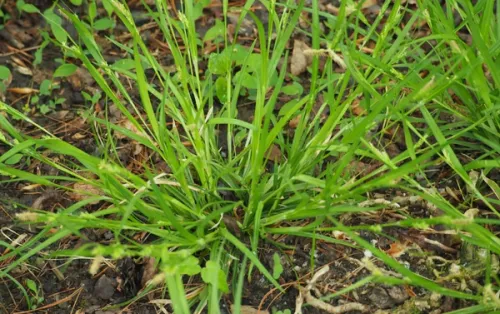
Creek Sedge, also known as Gray’s Sedge or Eastern Narrowleaf Sedge, is a graceful native woodland sedge that thrives in part to full shade and moist, well-drained soils. Native to eastern and central North America, it’s often found along forested floodplains, slopes, and shaded ravines.
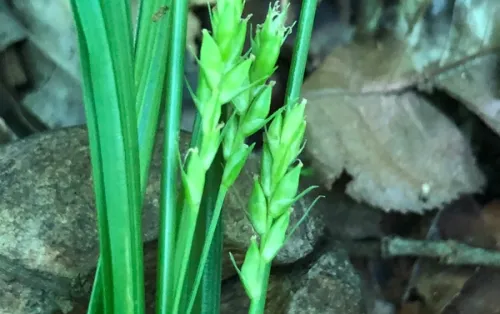
This clump-forming sedge grows to about 12–18 inches tall and wide, producing arching, fine-textured foliage with a bluish-green hue. In spring, it sends up subtle inflorescences that add delicate interest but are not the plant’s main feature. Creek Sedge is highly adaptable to garden conditions, tolerating occasional dry periods once established, and is excellent for massing in shady beds, beneath trees, or as a tidy edge along paths.
Ecologically, it helps prevent erosion and improves habitat structure for insects and amphibians. Though it’s not a major host plant, it provides cover and foraging habitat for beneficial insects and is ignored by deer.
Details
Range Map
record
Ecological Benefits
Maintenance Tips
- Watering: Prefers moist or even wet soil but is surprisingly drought-tolerant once established in shade.
- Sunlight: Best in part to full shade; can tolerate some dappled sun.
- Trimming: Trim back old foliage in early spring to make way for fresh growth.
- Division: Can be divided every 3–5 years in spring if clumps become too dense or you want to propagate.
- Mulching: A light mulch helps retain soil moisture and suppress weeds in newly planted areas.