Desert Globemallow
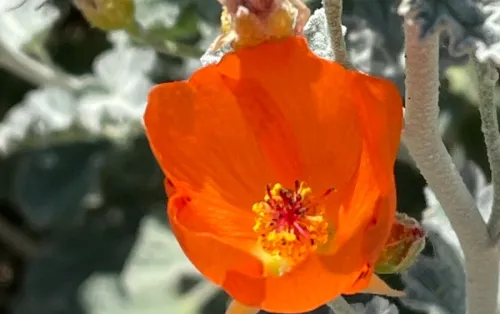
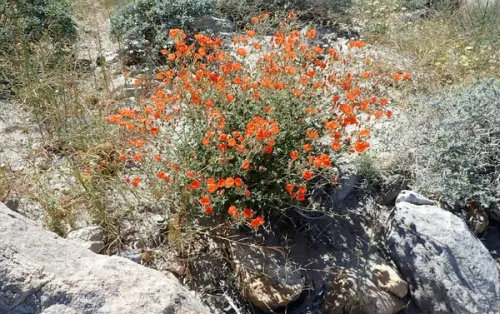
Desert Globemallow - also called Apricot Mallow - is a resilient, long-blooming native that delivers color and pollinator value in some of the toughest conditions. From spring through early summer—and often again after seasonal rains—it produces an abundance of cup-shaped flowers in shades of orange to salmon, creating a luminous display against its gray-green, fuzzy leaves.
Native to the deserts and arid grasslands of the Southwest, this perennial or short-lived subshrub is exceptionally well adapted to heat, wind, and drought. Its softly hairy foliage reflects sunlight and reduces moisture loss, allowing it to flourish in full sun and lean, rocky soils. The flowers are frequently visited by native bees, including specialist mallow bees, as well as butterflies seeking nectar during dry months.
Desert Globemallow typically grows 2–3 feet tall and wide, forming a loose, open shape that blends beautifully into naturalistic plantings. While individual plants may be relatively short-lived, they often reseed gently, maintaining their presence over time.
Details
Range Map
record
Ecological Benefits
Maintenance Tips
- Water: Very low water needs once established; occasional deep watering may extend bloom.
- Soil: Requires excellent drainage; performs best in sandy, gravelly, or rocky soils.
- Light: Full sun is essential for compact growth and flowering.
- Pruning: Lightly cut back after flowering to tidy shape and encourage fresh growth.
- Longevity: Often short-lived; allow seedlings to establish to sustain populations.
- Mulch: Use gravel or mineral mulch to keep the crown dry.
- Wildlife note: Supports native bees (including specialists) and butterflies; generally deer-resistant.