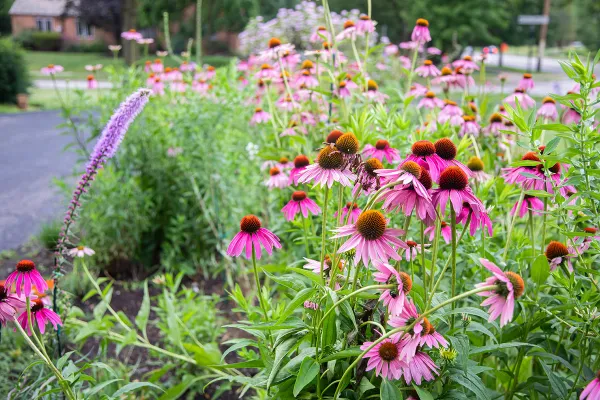
Dotted Blazing Star
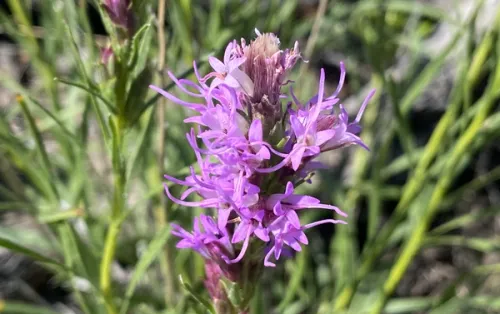
Dotted Blazing Star brings vivid late-season color to dry, sunny landscapes when many earlier wildflowers have begun to fade. Dense clusters of feathery, rosy-purple flowers open along upright spikes above a compact clump of narrow green leaves. Like other blazing stars, the flowers typically begin opening near the top of the spike and progress downward, creating a long-lasting display with strong vertical form.
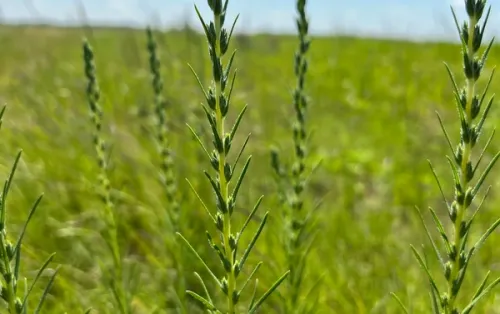
Native to the prairies and plains of central and western North America, this resilient perennial is built to withstand heat, wind, drought, and lean soil. Its leaves are marked with tiny resinous dots, inspiring both its common and scientific names. Beneath the soil, an exceptionally deep root system allows established plants to reach moisture unavailable to many shallower-rooted garden perennials.
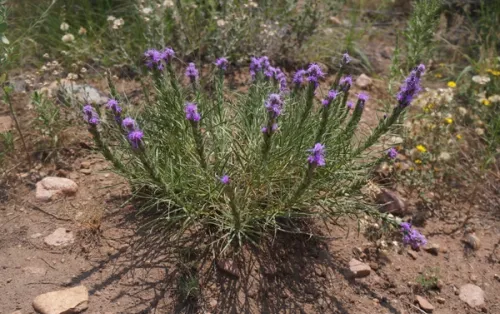
The nectar-rich flowers attract butterflies, including monarchs and other late-season migrants, along with native bees and beneficial insects. Growing roughly 1–2 feet tall, Dotted Blazing Star is shorter and more compact than many other Liatris species, making it especially useful near the front of prairie borders, in gravel gardens, on dry slopes, and among low native grasses.
Details
Range Map
record
Ecological Benefits
Maintenance Tips
- Plant Dotted Blazing Star in full sun and well-drained soil, avoiding frequent irrigation, rich compost, and heavy fertilizer.
- Choose its location carefully because the deep root system makes established plants difficult to move.
- Leave some seed heads standing for winter texture and potential bird use.
- Cut back old stems in early spring.