Incrediball Storm Proof™ Smooth Hydrangea
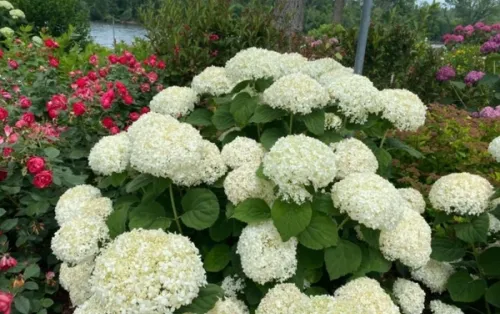
Incrediball Storm Proof Smooth Hydrangea was developed to solve one of the biggest frustrations with traditional smooth hydrangeas: heavy flower heads that collapse after rain. Thick, sturdy stems hold its abundant rounded flower clusters upright through summer weather, while dense growth keeps foliage and blooms extending nearly to the base of the plant. At roughly 3½–4 feet tall and 3–4 feet wide, it delivers a substantial floral display without overwhelming smaller residential landscapes.
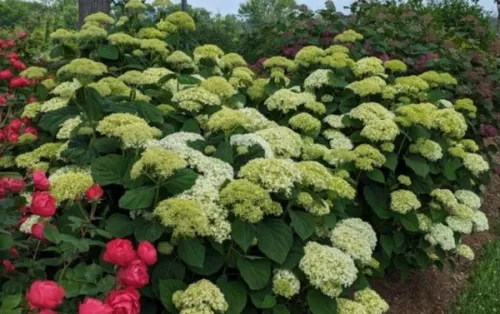
The flowers emerge with a soft green cast before opening white, creating a long-lasting summer display that works equally well in foundation beds, mixed borders, mass plantings, and cut-flower gardens. Unlike many mophead-style hydrangea cultivars dominated by sterile decorative florets, Incrediball Storm Proof produces an unusually large number of fertile flowers. Breeder comparisons specifically highlight this trait as an improvement for bees and other beneficial insects, making Storm Proof a particularly appealing option where ornamental impact and pollinator value are both priorities.
Because Storm Proof is a cultivar of the North American native Hydrangea arborescens, it retains meaningful ecological relationships associated with the species. Smooth hydrangea is a host plant for the Hydrangea sphinx moth and supports butterflies, moths, bees, other pollinators, and songbirds. Named cultivars may not duplicate every ecological interaction of a straight species, but Storm Proof's abundant fertile florets give it a stronger ecological case than heavily sterile selections.
Storm Proof grows best in full sun to partial sun with medium to consistently moist, well-drained soil. Full sun generally produces the strongest stems and heaviest flowering, but plants in hotter climates benefit from some afternoon protection and reliable moisture. Like other smooth hydrangeas, it flowers on new wood, making pruning straightforward and helping ensure dependable blooms even after cold winters.
Details
Range Map
record
Ecological Benefits
Maintenance Tips
- Plant in full sun to partial sun with well-drained soil that receives consistent moisture, especially during hot weather.
- In early spring, cut stems back by roughly one-third rather than to the ground; this preserves a sturdy woody framework while encouraging vigorous new flowering growth.