Pigeonberry
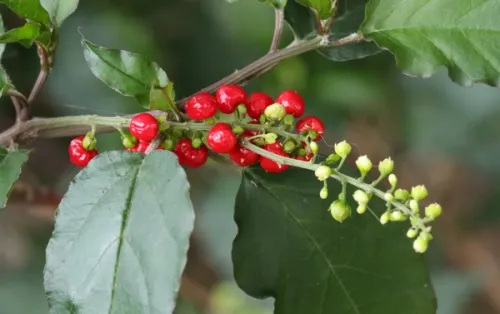
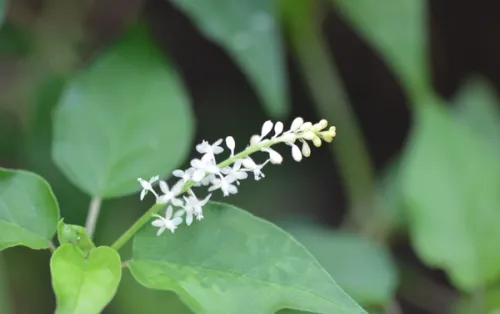
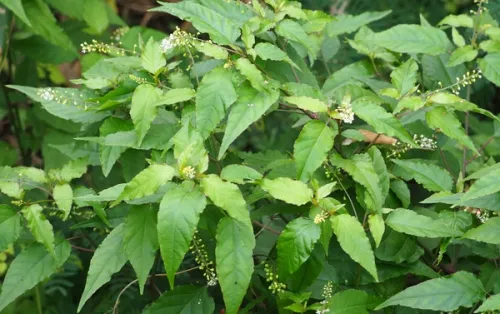
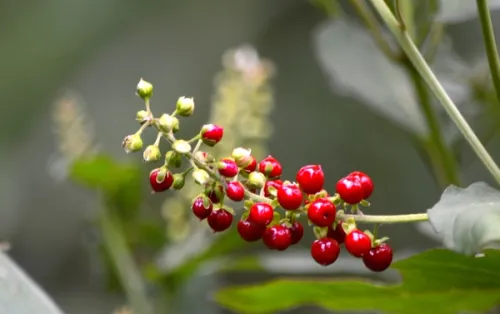
Pigeonberry brings subtle color and lively texture to the shaded garden. Slender flower clusters rise above bright green foliage, opening into delicate white to pale pink blossoms before developing into glossy scarlet berries. Flowers and fruit commonly share the plant at once, creating a charming display that can continue through much of the warm season.
Native to the southern United States and throughout tropical regions of the Americas, Pigeonberry naturally grows beneath trees, along woodland edges, and in other sheltered places. It performs especially well in partial to full shade, where it can spread into a loose, informal groundcover around shrubs, pathways, and larger woodland perennials. The flowers attract small pollinating insects, while birds - including cardinals, mockingbirds, and other fruit-eating songbirds - readily consume the berries and help disperse the seeds.
Typically growing 1–2 feet tall, Pigeonberry has an airy habit that fills open soil without creating a heavy or uniform mat. It may remain evergreen in frost-free areas but can die back or behave as an annual in colder climates. Because the berries are intended for wildlife rather than people, they should not be treated as edible fruit.
Details
Range Map
record
Ecological Benefits
Maintenance Tips
- Plant Pigeonberry in partial to full shade with reasonably well-drained soil, watering during establishment and extended dry periods.
- It may reseed freely where birds spread the fruit, so remove unwanted seedlings or trim plants back to maintain a defined area.