Red Yucca
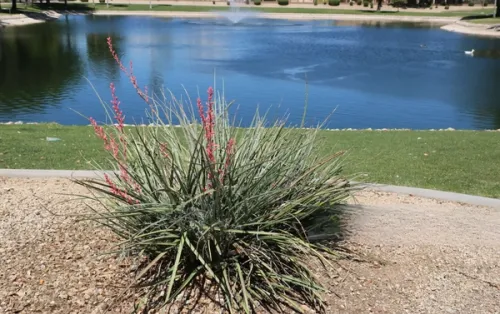
Red Yucca brings dramatic height, movement, and long-lasting color to water-wise landscapes. Although its name suggests otherwise, it is not a true yucca. Instead, it forms a tidy rosette of narrow, arching leaves edged with delicate curling fibers, creating the look of an ornamental grass with the durability of a desert succulent.
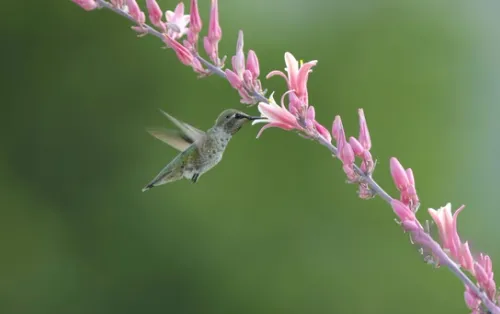
From late spring into summer, slender flower stalks rise several feet above the foliage and carry rows of tubular blooms in shades of coral red, rose pink, and salmon. Hummingbirds frequently patrol the nectar-rich flowers, while bees and other pollinators also visit throughout the extended bloom season. Mature plants may produce multiple stalks at once, creating an airy display that remains colorful without overwhelming neighboring plants.
Native to Texas and northeastern Mexico, Red Yucca thrives in intense sun, reflected heat, and lean, well-drained soil. Its evergreen or semi-evergreen foliage provides structure throughout the year, making it especially effective as a specimen plant, repeated accent, driveway border, or architectural addition to gravel gardens and dry slopes. Once established, it requires little supplemental water and remains attractive through conditions that challenge many traditional perennials.
Details
Range Map
record
Ecological Benefits
Maintenance Tips
- Plant Red Yucca in full sun and sharply drained soil, allowing the soil to dry between waterings once established.
- Remove spent flower stalks at the base and trim away damaged older leaves as needed, but avoid cutting back the entire rosette.
- Mature clumps can be divided or unwanted offsets removed to manage their size.