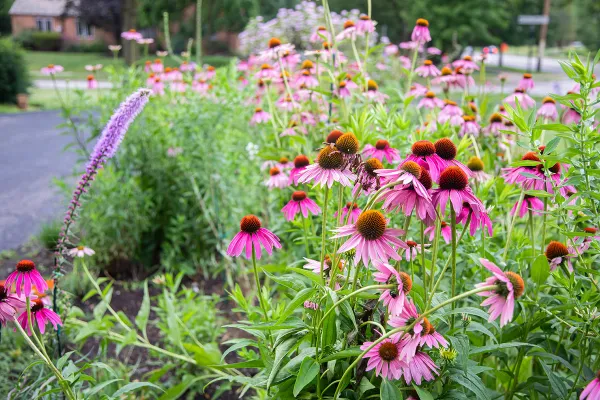
Showy Fleabane
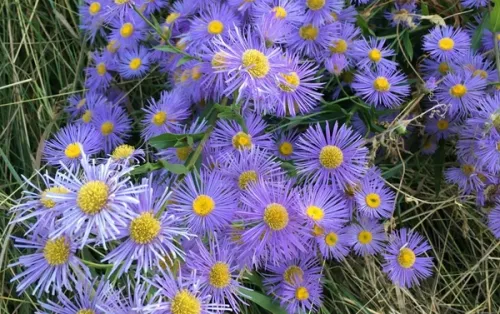
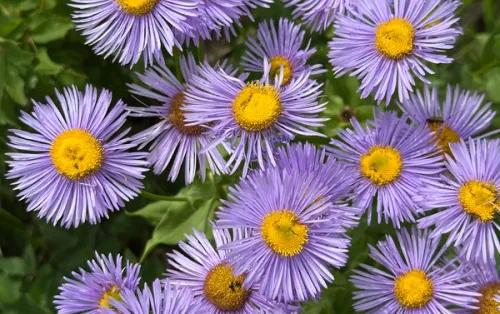
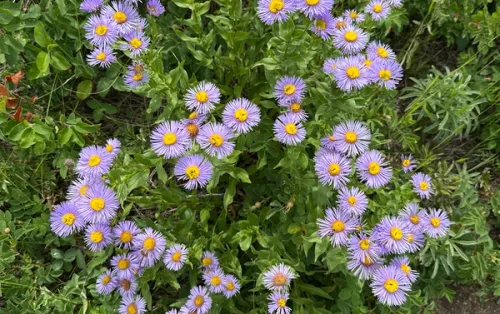
Showy Fleabane, also called Aspen Fleabane, earns its name with an abundance of finely rayed lavender-blue to purple flowers surrounding bright yellow centers. Flowering stems rise from a compact leafy base, creating a loose mound that typically reaches one to two feet tall. Its long bloom season brings dependable color to meadow gardens, cottage-style borders, slopes, and naturalistic plantings while providing an important nectar and pollen source for native bees and butterflies.
Native across much of the western United States, Showy Fleabane naturally occurs in mountain meadows, open forests, grasslands, and rocky slopes. Although it often grows where some spring moisture is available, established plants are remarkably drought tolerant and adapt well to ordinary dry-to-medium garden soil with good drainage. Full sun produces the most compact growth, while light partial shade is also tolerated.
Its ecological value extends beyond its flowers. Showy Fleabane has documented relationships with native moths and serves as a larval host for the northern checkerspot butterfly, while its flowers can become major seasonal nectar sources for butterflies and bumblebees. Birds and small mammals may also consume its seeds. Plants gradually enlarge through short rhizomes and self-seeding, allowing them to form colorful colonies without behaving like an aggressively spreading groundcover.
Details
Range Map
record
Ecological Benefits
Maintenance Tips
- Plant in full sun to light partial shade with well-drained soil and water regularly while plants establish.
- Deadheading can encourage additional flowering.
- Established clumps can be divided or unwanted seedlings removed if colonies expand beyond their intended area.