Tiny Wine Ninebark
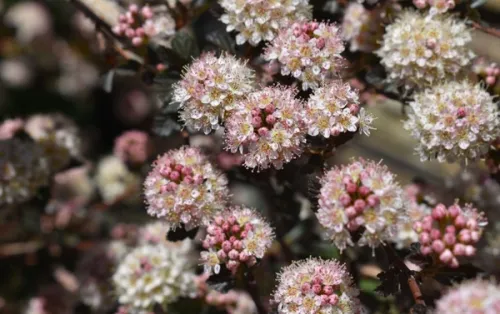
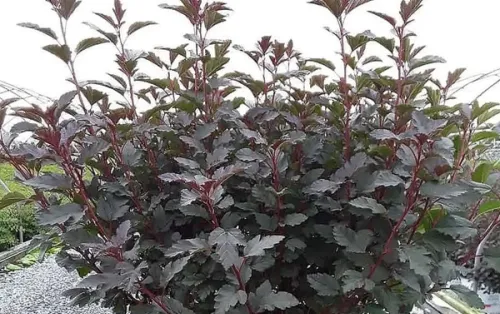
Tiny Wine brings strong foliage contrast without the large stature of traditional ninebark. Dark wine-purple leaves emerge densely along slender stems, followed by clusters of pale pink buds that open into white to blush flowers in spring. The result is a compact shrub with interest well beyond its relatively brief flowering period.
Because ‘Tiny Wine’ is a cultivar of native Physocarpus opulifolius, it retains the species' adaptability to cold, drought, and varied soil conditions. The flowers remain useful to bees and other pollinators, although research and observation suggest that dark-leaved ninebark cultivars may be used less frequently by foliage-feeding insects than green-leaved forms. That makes it ecologically useful, but not necessarily equivalent to the straight species for every wildlife function.
Details
Range Map
record
Ecological Benefits
Maintenance Tips
- Ninebark flowers on older wood, so prune immediately after flowering if shaping is necessary.
- Avoid routinely shearing it into a tight ball.
- Selective removal of older stems preserves its natural form and encourages fresh growth.