Western Redbud
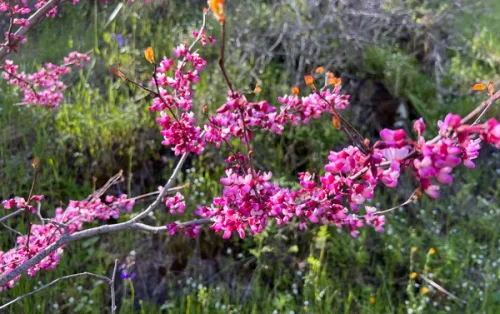
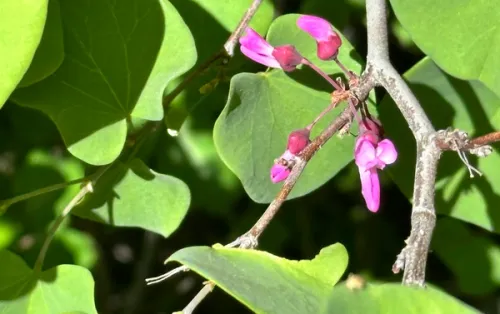
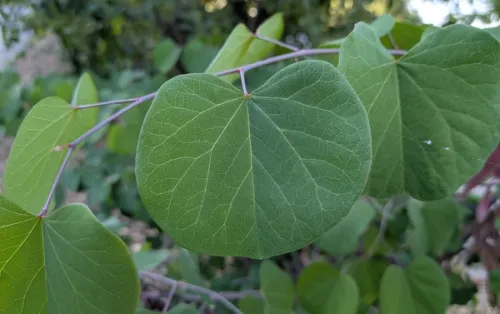
Western Redbud announces spring with an unforgettable display of brilliant magenta flowers clustered directly along its bare branches. The pea-shaped blossoms emerge before or alongside the new foliage, transforming the entire shrub into a haze of saturated color. Rounded, heart-shaped leaves follow, opening fresh green before maturing to a soft blue-green and often developing warm yellow or red tones in fall.
Native to California, Arizona, Nevada, and Utah, Western Redbud naturally grows along canyons, foothills, stream terraces, and open woodland edges. Its spring flowers provide nectar and pollen for native bees and other early-emerging pollinators. Flat, reddish-brown seed pods develop after flowering and may persist into winter, adding texture to its smooth gray branches.
Western Redbud can be grown as a large, multi-stemmed shrub or trained into a small tree, typically reaching 10–20 feet tall. It performs beautifully as a specimen, informal screen, woodland-edge accent, or focal point in a water-wise garden. Although established plants tolerate summer drought, occasional deep watering can support fuller growth and more abundant flowering, particularly in hotter inland landscapes.
Details
Range Map
record
Ecological Benefits
Maintenance Tips
- Plant Western Redbud in full sun to partial shade and well-drained soil, providing occasional deep water during establishment and prolonged drought.
- Prune immediately after flowering to shape the plant or remove crossing stems, since later pruning may reduce the following spring’s display.
- Avoid heavy annual shearing which can spoil its naturally graceful form.