Western Spiderwort
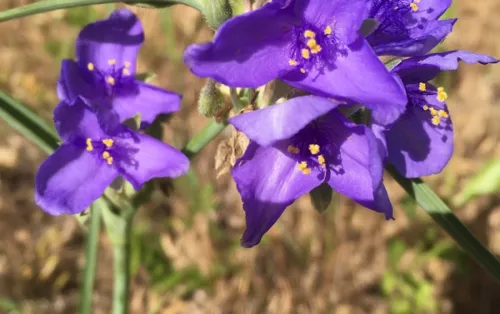
Western Spiderwort brings rich color and graceful texture to sunny gardens. Clusters of three-petaled flowers open in shades of blue, violet, and occasionally rose, each centered by bright yellow anthers. Individual blossoms are short-lived and often close as the day grows hot, but fresh buds open in succession for weeks, creating an ever-changing display above narrow, blue-green leaves.
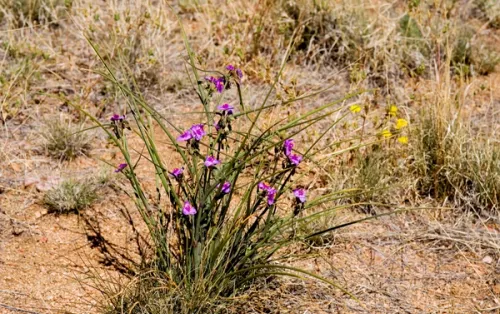
Native to prairies, plains, dunes, and open woodlands across much of central and western North America, this adaptable perennial is well suited to meadow plantings, dry borders, slopes, and naturalistic gardens. Its flowers provide pollen for bumble bees and other native bees, which are especially active around the blooms during the cooler morning hours.
Western Spiderwort generally grows 1–2 feet tall and develops into a sturdy clump that may gradually broaden in favorable conditions. Its foliage can become relaxed or untidy after flowering, making it especially effective when woven among supportive grasses and later-blooming perennials that carry the planting through summer.
Details
Range Map
record
Ecological Benefits
Maintenance Tips
- Plant Western Spiderwort in full sun to light shade and well-drained soil, watering regularly only while it becomes established.
- Cut the foliage back after flowering if it begins to flop or look tired as fresh basal growth may follow.
- Established clumps can be divided in spring when additional plants are desired.