Yerba Mansa
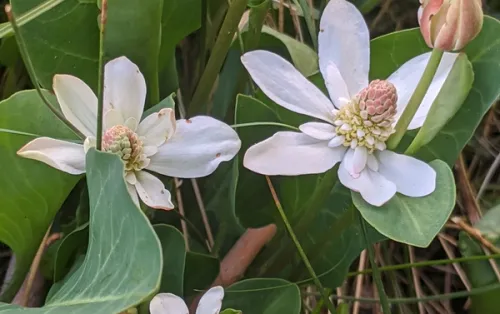
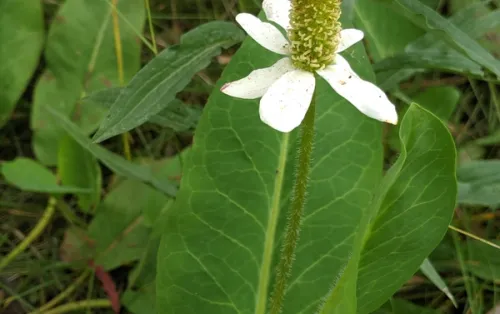
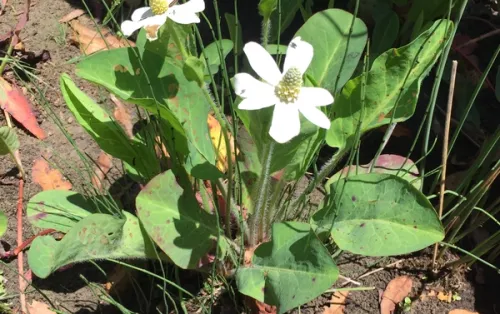
Yerba Mansa brings bold foliage and unusual floral structure to consistently moist landscapes. Each bloom features a central cone packed with tiny flowers, surrounded by broad white bracts that create the appearance of a single dramatic blossom. As the flowers age, they may take on pink or reddish tones, extending the display above the plant’s glossy, often red-tinged leaves.
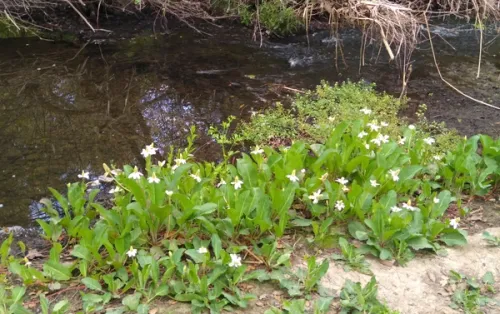
Native to wetlands, springs, streambanks, and alkaline seeps of the southwestern United States and northern Mexico, Yerba Mansa thrives where many drought-adapted natives cannot. It spreads through creeping rhizomes, gradually forming a dense colony that can stabilize damp soil and suppress open patches around ponds, rain gardens, bioswales, and low-lying areas. The foliage and roots are strongly aromatic when crushed, adding another memorable dimension to this distinctive regional native.
Details
Range Map
record
Ecological Benefits
Maintenance Tips
- Plant Yerba Mansa in sun to partial shade where the soil remains moist or periodically saturated, and do not allow newly established plants to dry out.
- Its rhizomes can spread assertively, so remove wandering shoots or divide colonies when needed.
- Cut back dormant or weather-damaged foliage in late winter before fresh growth emerges.