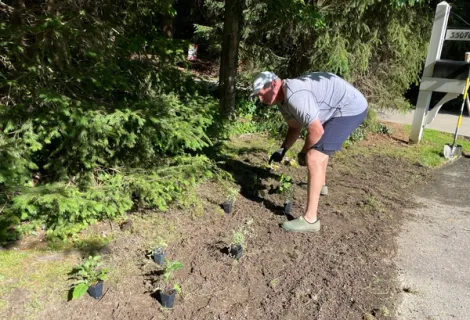
Cut back in early summer to encourage bushier growth if space is limited. Divide clumps every few years to control spread and maintain vigor.
Common Ironweed
Vernonia fasciculata
$29.99
$34.99
You Save 15%
Reserve Now
Ships the week of September 21.
Select Quantity
3-Pack
3 Plants
$10.00/plant
6-Pack
6 Plants
$9.17/plant
32-Plant Tray
32 Plants
Out of stock
Verify Availability
Show Native Range
Enter your ZIP code to verify if these plants are available in your area.
Quantity
Sourced ecologically
Delivered to Your Door
Easy Planting
About this Plant
Common Ironweed makes a dramatic late-season statement with tall, upright stems topped by dense clusters of vivid purple flowers. Blooming from late summer into fall, it becomes a magnet for monarchs, swallowtails, and many other butterflies, as well as bees and beneficial insects looking for a rich nectar source. Its height, often reaching 4 to 6 feet, adds strong vertical structure to native garden beds, wet meadows, and the back of borders.
The narrow, lance-shaped foliage forms a lush green backdrop for the bold blooms and tolerates both wet and average soils. While it naturally grows in moist prairies and along streambanks, Common Ironweed adapts well to garden settings and plays an important role in supporting late-season pollinators.
Why Choose Common Ironweed?
- Shade-tolerant and thrives in dry woodland conditions
- Abundant fall blooms support pollinators when resources are scarce
- Tolerates poor soil and drought once established
- Attractive arching form adds texture to woodland borders
- Easy to maintain and resistant to browsing
Maintenance Tips
- Cut back to the ground in late winter to promote vigorous spring growth.
- Divide in early spring every few years to control growth and invigorate the plants.
- On rare occasion, consider staking taller stems if they being to flop.
- Consider cutting back main stems of well-established plants by roughly one half in early summer to manage overall height if this becomes an issue.
- Allow seedlings to establish in naturalized areas or remove them to maintain aesthetics in more formal settings.
Details
Soil Types
-
Soil Moisture
-
Sun Exposure
-
Hardiness Zone
USDA 3–8
Plant Type
Flower
Mature Height
-
Mature Width
-
Bloom Color
Purple
Bloom Time
-
Root Type
Fibrous
Common Ironweed
$29.99$34.99
Ecological Benefits
Attracts Pollinators
Provides nectar and pollen for bees and other pollinators.
Attracts Butterflies
A nectar source that draws butterflies throughout the season.
Butterfly Host
Supports butterfly caterpillars as a host plant.
Soil Stabilizing
Deep roots help prevent erosion and stabilize soil.
Deer Resistant
Less likely to be browsed by deer.
Birds
Seeds or berries provide food for birds.
What Folks Are Saying
“It's like following a recipe. Choosing from multiple designs is fun.” - Kari
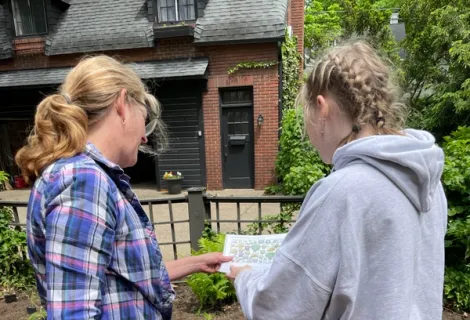
“The process from the website to getting the plants, could not have been easier or more seamless.” - Justin

“I can't believe that we are the house with this beautiful garden.” - Howard
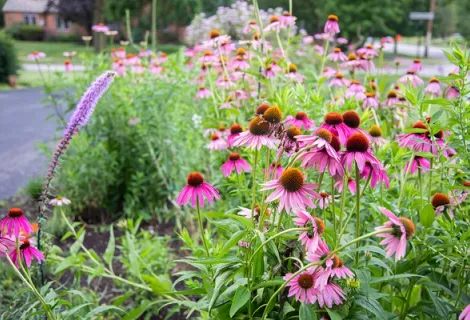
“I've never planted anything in my life. And this was actually quite fun.” - Steve