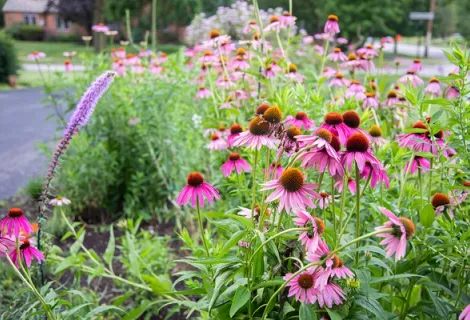
New England Aster
New England Aster (Symphyotrichum novae-angliae) is a bold, late-blooming native perennial that delivers a splash of deep purple color just when most other flowers are fading. New England Aster brings vibrant height and critical pollinator support to gardens, meadows, and wildlife plantings.
Towering up to 6 feet tall in the wild (often 3–4 feet in gardens), New England Aster erupts in masses of daisy-like flowers with vivid purple petals and golden yellow centers from late summer into fall. These nectar-rich blooms attract a wide range of pollinators, including bees, butterflies, and migrating moths, providing essential late-season nourishment.
This aster performs best in full sun to partial shade with moist, well-drained soil, and thrives in naturalistic or pollinator-focused plantings. Its sturdy stature makes it a natural candidate for background layers, rain gardens, or borders.
Why Choose New England Aster?
- Striking fall color – Deep purple blooms light up the late season.
- Pollinator powerhouse – Supports bees, butterflies & migrating insects.
- Tall & tough – Great for meadows, wildlife gardens, or layered borders.
Plant New England Aster for a dramatic, pollinator-rich display that extends your garden’s color and ecological value well into autumn.
- Prefers consistent moisture but can tolerate some drought once established. Water regularly during prolonged dry spells.
- Pinch back stems in early summer to promote bushier growth and more flowers. Deadhead spent blooms to extend flowering.
- Divide clumps every 2-3 years in early spring to maintain vigor and manage plant size.
- Support taller plants with stakes if necessary. Monitor for common pests and diseases like powdery mildew, especially in humid conditions.
What Folks Are Saying