How to Grow California Poppies

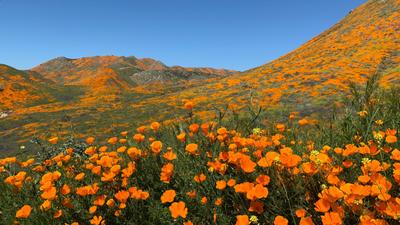
California poppy is the state flower of California and one of the easiest native plants you can grow. Give it full sun, lean soil, and very little water, and it rewards you with silky orange and gold blooms from late winter into summer, then seeds itself so it comes back year after year.
The short answer on how to grow it: plant California poppy in fall, in full sun and lean, well-drained soil, water it until the winter rains take over, and let some flowers go to seed so it comes back on its own. This guide is for California gardeners who want easy, low-water color without much work. It covers when and how to plant, care by season, seed pods and reseeding, wildlife value, companion plants, a bit of history, and answers to common questions. Plant it once and you can enjoy the state flower in your yard for years.
California poppies at a glance
- Sun: Full sun, at least 6 hours a day
- Water: Very low once established
- Size: 6 to 24 inches tall, about 1 foot on average
- Blooms: Late winter through summer, often again in fall
- Soil: Sandy to clay loam, well drained, no compost
- Attracts: Native bees, including bumble, sweat, and mining bees
- Life cycle: Short-lived perennial that reseeds; annual in some areas
- Where it grows: Most of California, coast to desert edge, into Baja California
When to plant California poppy
Fall is the ideal time to plant California poppy, before the winter rains arrive. Cool temperatures and rain give the roots all winter to settle in, so plants are ready to bloom by late winter or early spring. In mild coastal areas you can also plant in early spring, but plan to water more often as days warm up. In places with cold winters, gardeners usually wait until after the last spring frost.
Good to know: California poppies grow a long taproot and do not like to be moved. That is why we ship them as young plants, small enough that the root ball goes into the ground intact. Plant them where you want them to stay.
How to plant California poppy
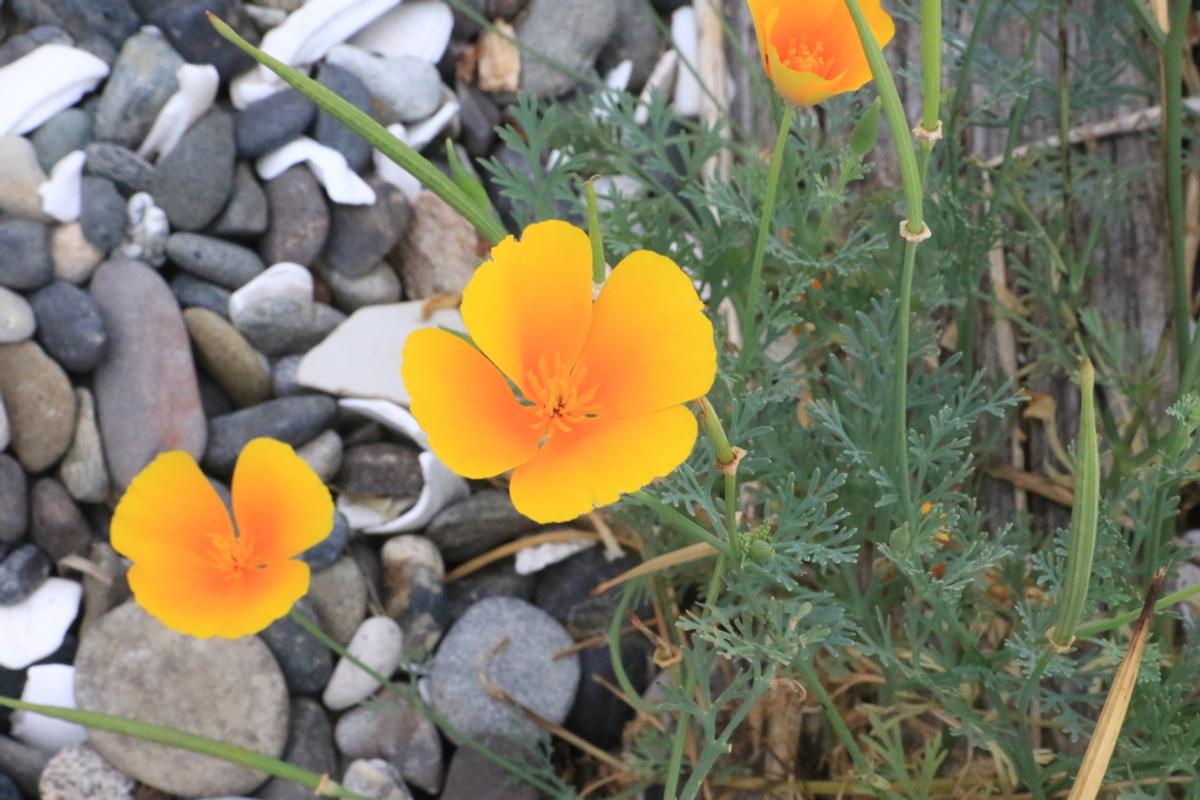
California poppies are happy in lean, rocky soil. No compost needed.
- Pick the sunniest spot you have. Poppies need full sun to bloom well, and the flowers stay closed in shade and on cloudy days. Slopes, borders, parkway strips, and gravel gardens all work, and a drift of poppies makes a cheerful ground cover.
- Skip the soil amendments. California poppies prefer poor, lean soil, so do not add compost or fertilizer. Rich soil gives you floppy plants with fewer flowers. Most native soils, from sandy to clay loam, are fine as long as water does not sit there. Skip thick bark mulch too. A thin layer of gravel, or bare soil, makes it easier for poppies to reseed.
- Plant without disturbing the roots. Dig a hole about the size of the root ball. Slide the plant out gently, set it at the same depth it was growing, and firm the soil around it. California poppy plants do not like their roots disturbed, so do not tease them apart. Space plants about 8 to 12 inches apart along borders or in drifts.
- Water in, then ease off. Water well right after planting and about once a week until the winter rains take over. After that, most California poppies need little or no extra water. Mature plants handle dry spells easily and need very little maintenance.
California poppy care tips by season
Fall
Plant new poppies and let rain do most of the watering. Established plants may rebloom if they get an occasional deep drink.
Winter
Soft, blue-green leaves fill out. Hold off on water during rainy stretches, since soggy soil is the main thing that kills poppies.
Spring
Peak bloom, usually March through May. Flowers open in morning sun and close at dusk. Removing spent flowers (deadheading) keeps blooms coming, or leave a few to set seed.
Summer
Plants slow down and may brown in summer heat. That is normal. Let seed pods split open to sow future poppies, then cut back the old foliage to tidy up. Many plants return with fall rain.
Spot the seed pods
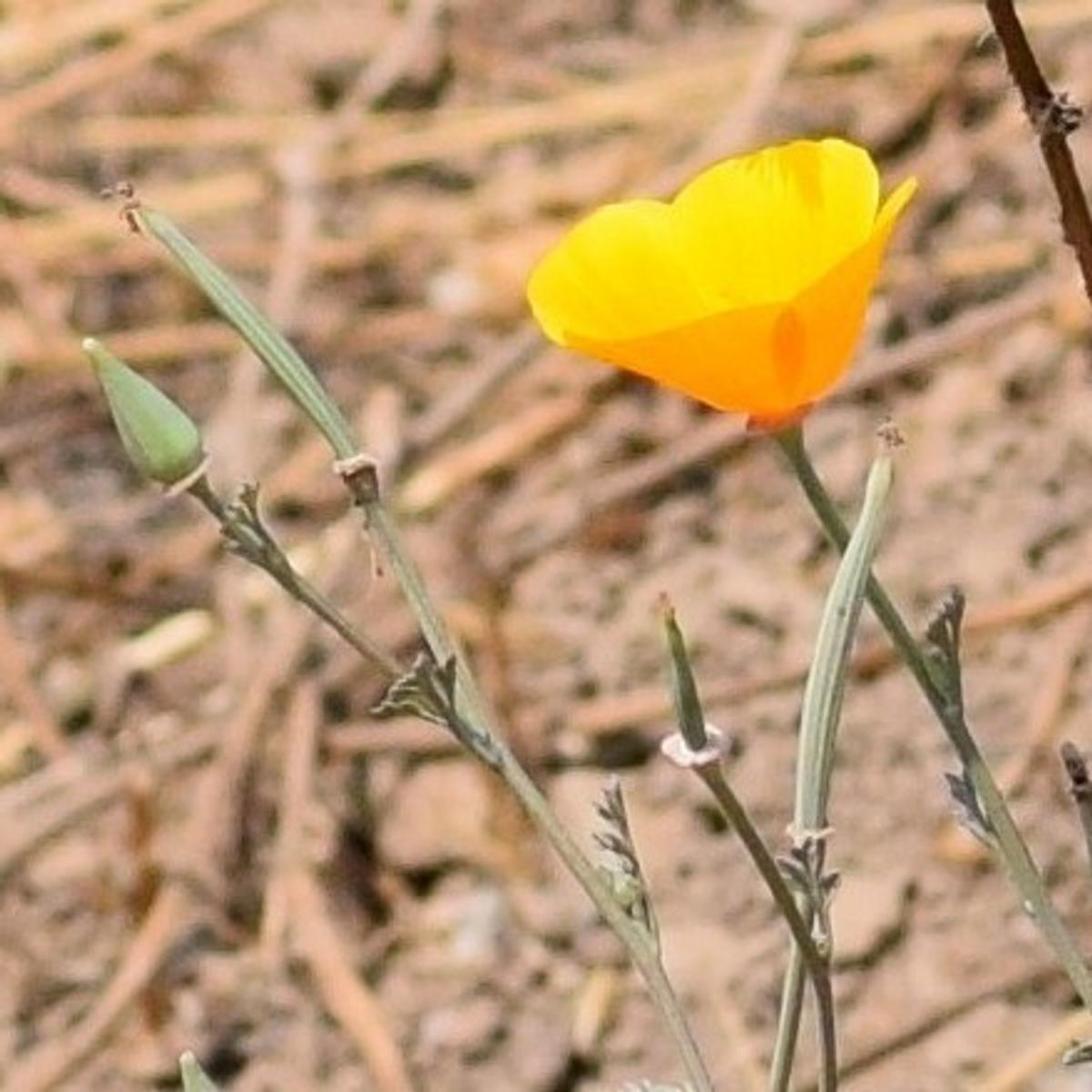
After a flower fades, it leaves behind a long, skinny green pod. As the pod dries it turns tan and splits open, tossing seed a few feet away. Leave some pods on the plant if you want new poppies next year. When self-seeding poppies sprout in fall and winter, thin seedlings to about 8 inches apart so each one has room to grow.
Why California poppy is good for wildlife
California poppy depends on insects for pollination, and its open, cup-shaped flowers are an easy landing pad for native bees. Bumble bees, sweat bees, mining bees, and tiny specialist bees all visit the flowers for pollen. When the seed pods ripen, small birds and mammals pick through the fallen seed.
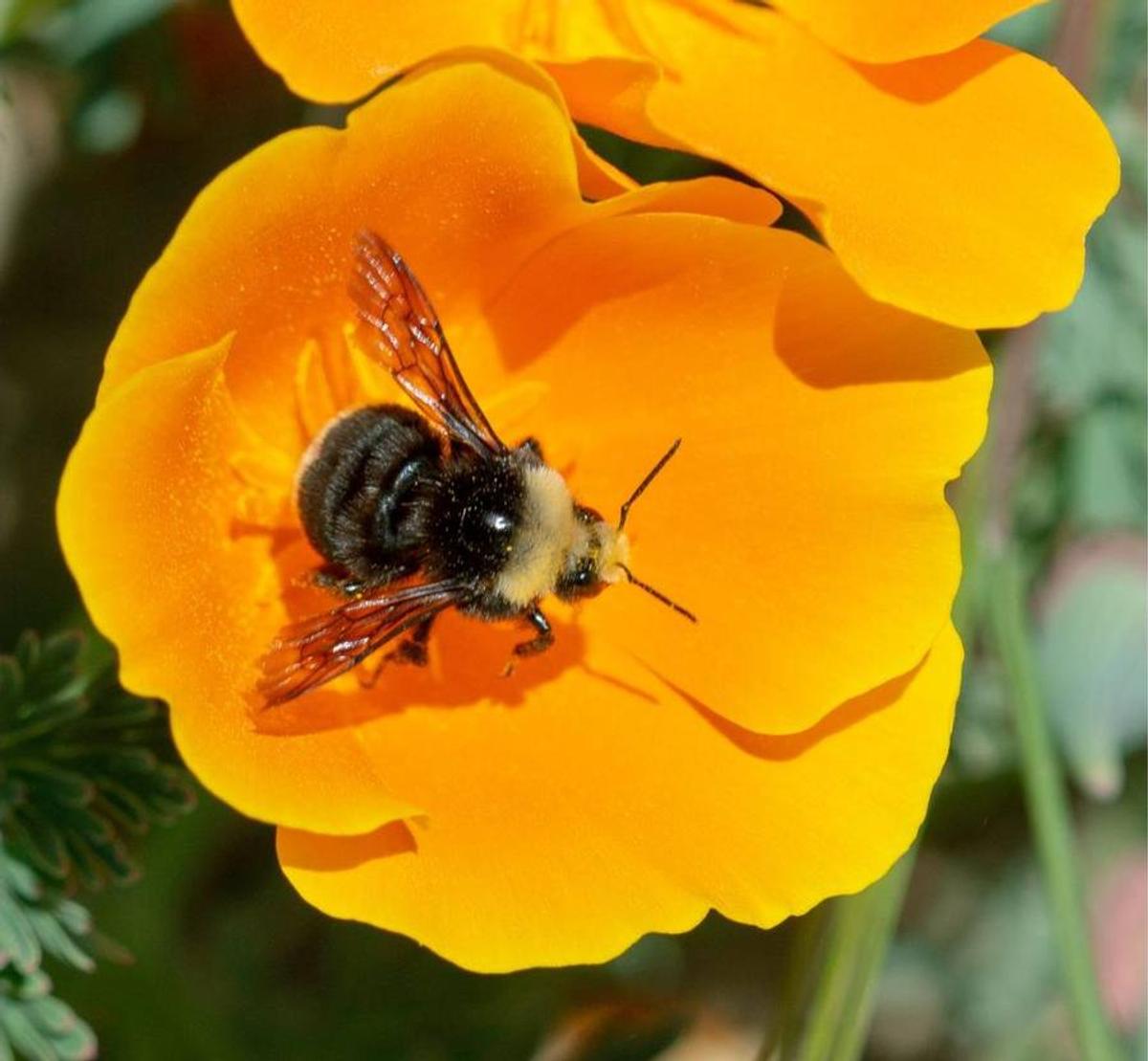
A bumble bee dusted in pollen inside a California poppy.
Planting poppies alongside other California native plants gives pollinators food across more of the year, from the first poppies in late winter to buckwheat and sages in summer.
A little California poppy history
California poppy grows wild across a wide native range, from southern Washington through most of California and into Baja California, and east to the edges of the Great Basin and Sonoran Desert. Few native plants handle so many regions and environments, from foggy coastal bluffs to hot inland grasslands. Spanish settlers called the golden poppies "copa de oro," or cup of gold.
Its scientific name comes from a Russian expedition that visited California in 1816. The expedition's naturalist, Adelbert von Chamisso, named the genus Eschscholzia after his colleague Johann Friedrich von Eschscholtz. Long before that, Native Californian peoples, including the Pomo, Luiseño, and Cahuilla, used it as food and medicine. It became California's official state flower in 1903, and the state celebrates California Poppy Day every April 6. For many people, its beauty is part of California's identity.
What to plant with California poppy
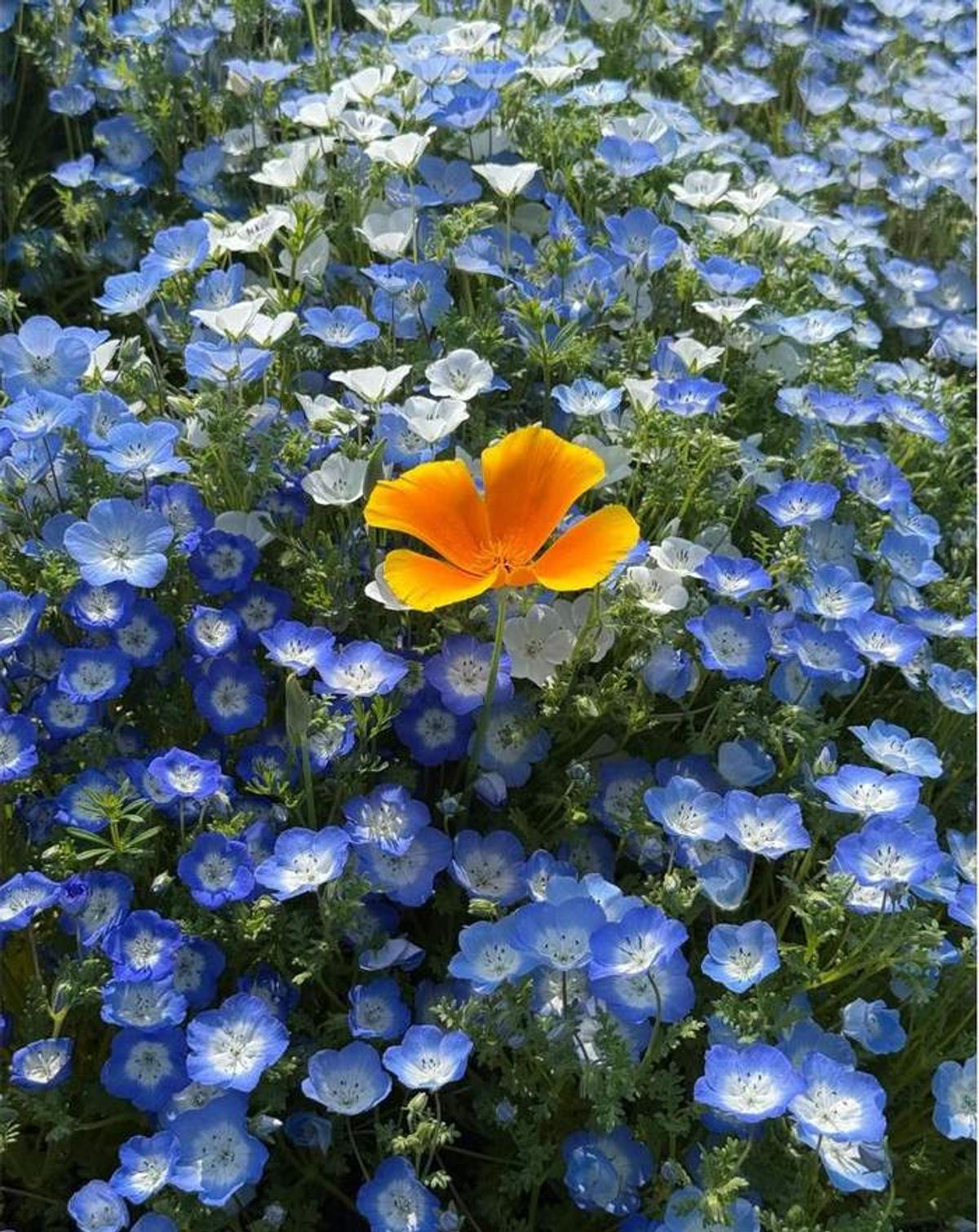
Orange poppies look their best next to blues and purples. Mix them into a wildflower patch, or combine them with natives that share the same love of sun and lean, dry soil, so you can water them all the same way.
The four plants below bloom at different times, which keeps color and pollinator food going from late winter into summer.
- California buckwheat: Summer flowers that pick up when poppies slow down
- Western blue-eyed grass: Purple-blue flowers that pair well with orange
- Common yarrow: Ferny leaves and white flower clusters
- Purple sage: Silvery shrub that gives poppies a backdrop
California poppy FAQ
Is California poppy a perennial or an annual?
Both, depending on where it grows. Along the coast and in mild areas it often lives as a short-lived perennial for a few years. In hotter or colder spots it behaves like an annual. Either way, it reseeds readily, so a patch usually keeps itself going.
When do California poppies bloom?
Most bloom from late winter or early spring into summer, with the biggest show in spring. With an occasional deep watering, established plants often bloom again in fall.
Why are my California poppy flowers closed?
That is normal. The flowers close at night and on cloudy or cool days, then open again in sunshine. If they stay closed all day, the plant may need more sun.
Can I grow California poppy in a pot or container?
Yes, as long as the container has adequate drainage. Choose a deep pot so the taproot has room, use a fast-draining potting mix with no added fertilizer, and keep it in full sun. Potted poppies need more water than plants in the ground, but let the top inch of soil dry out between waterings.
Do California poppies spread?
They spread by seed, not by roots. If you let pods ripen, new poppies will pop up nearby the next season. Deadhead the flowers before they set seed if you want to keep them in one spot.
What colors do California poppies come in?
Wild California poppies bloom orange to golden yellow, sometimes with a darker orange center. Cultivated garden varieties also come in red, pink, cream, and white. Ours bloom in the classic native orange and gold.
How do I harvest California poppy seeds?
Wait until the seed pods turn tan and dry, usually in late spring or summer, and snip them into a paper bag before they split. Let them finish drying, and the pods will pop open and drop small dark seeds. Store the seeds somewhere cool and dry, then scatter them on bare soil in fall. There is no need for cold stratification. Sowing in fall lets cool temperatures and winter rain handle germination, and plants grown from seed usually bloom about 60 to 90 days after sowing.
Is California poppy the same as the opium poppy?
No. California poppy (Eschscholzia californica) is a different species from the opium poppy (Papaver somniferum). It does not produce opium and is grown as a garden flower and wildflower.
Are California poppies deer resistant?
Generally, yes. Deer tend to leave California poppy alone, though hungry deer will taste almost anything.
Bring home California's state flower
Bring home California's state flower
Our young California poppy plants are grown in California and shipped small, so the taproot goes into your garden intact. Shop California poppy.
California poppy resources
- USDA NRCS Plant Guide: California Poppy: Growing conditions, native range, and wildlife value
- California Department of Fish and Wildlife: California Poppy: The state flower and California Poppy Day
- Calscape, by the California Native Plant Society: Find native plants that grow where you live
- Antelope Valley California Poppy Reserve: See wild poppy fields in bloom each spring
- Theodore Payne Foundation: Native plant classes, seeds, and garden tours in Los Angeles
- More California native plants from My Home Park: Drought tolerant natives that ship to your door
Share this article