Black-Eyed Susan ‘Goldsturm’
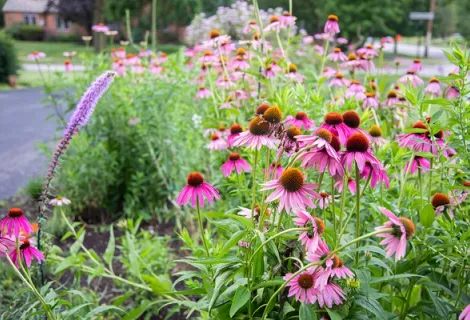
Black-Eyed Susan ‘Goldsturm’ is a beloved garden classic, known for its bold golden-orange petals and dark chocolate centers that brighten borders from mid-summer into fall. More compact and uniform than its wild cousins, ‘Goldsturm’ delivers weeks of dependable bloom—especially with occasional deadheading—and draws in bees, butterflies, and other beneficial insects with its pollen and nectar.
Reaching 18–24 inches tall with a tidy clumping habit, this selection is well-suited for middle-of-the-border plantings, mass plantings, and low-maintenance pollinator gardens. It tolerates drought and deer, resists flopping thanks to sturdy stems, and thrives in full sun and average soil conditions.
Special Note: While ‘Goldsturm’ is a cultivated variety derived from native Rudbeckia fulgida, it maintains many of the ecological benefits of the straight species. It continues to support a wide range of native pollinators and blends beautifully into gardens focused on native plantings, especially when combined with straight species to diversify genetics and form.
Why Choose Black-Eyed Susan ‘Goldsturm’?
- Long-lasting golden blooms from July through September.
- Compact, uniform habit ideal for formal or informal designs.
- Strong pollinator value despite being a cultivar.
- Drought- and deer-resistant once established.
- Easy to grow and reliable across a wide range of soils.
Deadhead to extend bloom period and prevent excessive self-seeding. Cut back in late fall or early spring. Divide clumps every few years to rejuvenate growth.
- Deadheading: Extends bloom time and maintains tidy appearance.
- Division: Clumps can be divided every 3–4 years in spring or fall to rejuvenate vigor.
- Soil: Adaptable to a range of soils, but prefers well-drained, moderately fertile sites.
- Water: Drought-tolerant once established; water in prolonged dry spells for best flowering.
- Sunlight: Full sun is best, though it can tolerate part sun with slightly fewer blooms.
- Notes: This cultivar is not a straight species, so use with discretion in official ecological restorations—but it remains a strong performer in wildlife-friendly gardens.
What Folks Are Saying

Shop Additional Species


