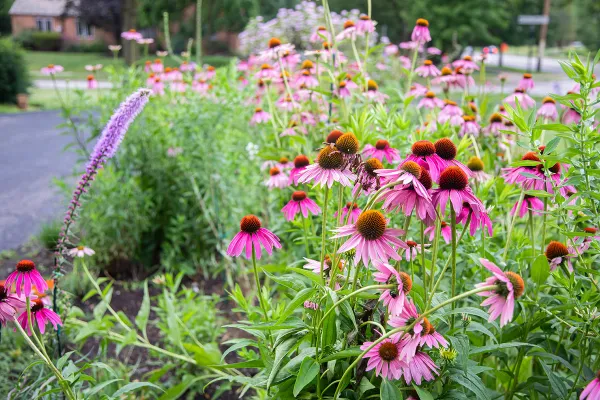
Blackfoot Daisy
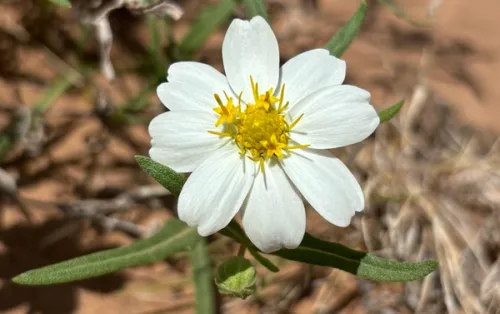
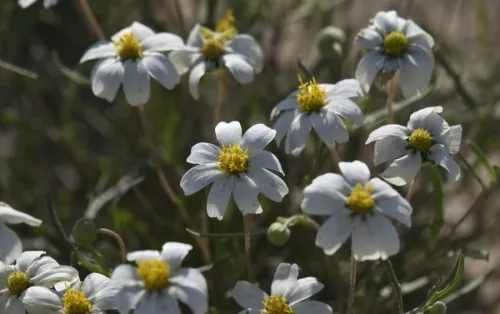
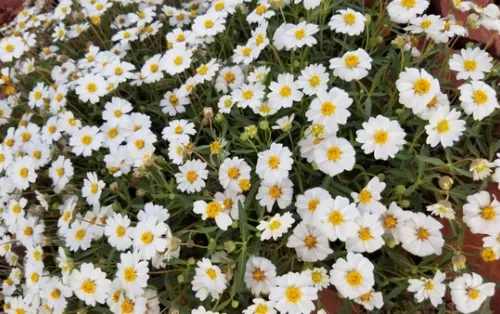
Blackfoot Daisy brings months of bright, clean color to dry gardens without demanding rich soil or frequent watering. Its crisp white, daisy-like flowers rise just above a low mound of narrow gray-green leaves, each bloom surrounding a sunny yellow center. Flowering often begins in spring and continues through summer and fall, especially when occasional rainfall or deep watering encourages fresh growth.
Native to rocky grasslands, limestone slopes, and desert landscapes of the southern Great Plains and Southwest, Blackfoot Daisy is built for intense sun, heat, and lean soil. Its compact habit makes it especially useful along pathways, at the front of borders, among rocks, or spilling softly over retaining walls. Native bees, butterflies, and other small pollinators visit the abundant flowers, giving this diminutive perennial ecological value well beyond its size.
Blackfoot Daisy typically remains around 6–12 inches tall while spreading into a rounded mound. Excellent drainage is essential: it is far more likely to struggle from excess moisture than from drought. In the right location, it offers a long season of bloom with very little maintenance.
Details
Range Map
record
Ecological Benefits
Maintenance Tips
- Plant in full sun and sharply drained soil, avoiding heavy clay, rich compost, and frequent irrigation.
- Lightly shear tired growth after a major flowering flush to encourage a denser shape and renewed bloom.
- Avoid cutting deeply into old woody stems.