Plant in partial shade with moist, well-drained soil and allow plants to spread where a natural groundcover is desired. Thin or edge colonies as needed if they begin moving into pathways or neighboring beds.
Native PerennialFritillary Host
Common Blue Violet
Viola sororia
$29.99
$34.99
You Save 15%
Reserve Now
Ships the week of April 26.
Select Quantity
3-Pack
3 Plants
$10.00/plant
6-Pack
6 Plants
$9.17/plant
Verify Availability
Show Native Range
Enter your ZIP code to verify if these plants are available in your area.
Quantity
Sourced ecologically
Delivered to Your Door
Easy Planting
My Home Park's Take
“Common Blue Violet turns the first weeks of spring into a blue-flowered welcome mat for specialist bees and fritillaries. Performs best where its cheerful self-sowing can feel like abundance, not trespassing.”
In your regionCheck your ZIP
Details
Soil Types
Clay
Loam
Sand
Soil Moisture
Dry
Medium
Moist
Sun Exposure
Full Shade
Partial Sun
Full Sun
Hardiness Zone
USDA 3–9
Plant Type
Flower
Mature Height
4”-8”
Mature Width
8”
Bloom Color
Violet
Bloom Time
April - June
Root Type
Rhizome
About this Plant
Common Blue Violet is a low-growing perennial that forms lush mats of heart-shaped foliage and blue to violet spring flowers. Standing only about 4–6 inches tall, it spreads readily to fill open spaces beneath taller plants, along woodland edges, and through shaded borders. Its cheerful flowers appear from early to late spring and are edible, making a colorful addition to salads, desserts, and other seasonal dishes.
For Rocky Mountain and Pacific Northwest gardens, Common Blue Violet is best suited to cooler, moisture-retentive sites with partial shade, especially beneath deciduous trees or along protected garden edges. It appreciates more consistent moisture than many dryland western natives, making it a useful choice for irrigated woodland gardens and other shaded areas where a spreading groundcover is welcome. Its early flowers also provide resources for small spring pollinators.
Why Choose Common Blue Violet?
- Blue to purple flowers brighten shaded gardens in spring
- Edible blossoms add color to salads and desserts
- Spreading habit creates a low, leafy groundcover
- Excellent for woodland gardens and shaded borders
- Provides early-season floral resources for pollinators
Maintenance Tips
- Prefers consistent moisture; water regularly, especially in dry conditions, to keep the soil evenly moist.
- Little pruning is needed, but plants can be divided in early spring or fall to manage spread and invigorate growth.
- Grows best in rich, loamy soils but is quite adaptable to different soil types if drainage is good.
- Apply a thin layer of organic mulch to help retain moisture and suppress weeds without smothering the plants.
- Monitor for common pests like aphids and treat as necessary. The plant is generally low-maintenance and resistant to many diseases.
Details
Soil Types
Clay
Loam
Sand
Soil Moisture
Dry
Medium
Moist
Sun Exposure
Full Shade
Partial Sun
Full Sun
Hardiness Zone
USDA 3–9
Plant Type
Flower
Mature Height
4”-8”
Mature Width
8”
Bloom Color
Violet
Bloom Time
April - June
Root Type
Rhizome
Common Blue Violet
$29.99$34.99
Ecological Benefits
Attracts Butterflies
A nectar source that draws butterflies throughout the season.
Attracts Pollinators
Provides nectar and pollen for bees and other pollinators.
Deer Resistant
Less likely to be browsed by deer.
Butterfly Host
Supports butterfly caterpillars as a host plant.
Yard Friendly
A well-behaved growth habit that won't take over your yard.
Pet Safe
Non-toxic to cats and dogs.
What Folks Are Saying
“It's like following a recipe. Choosing from multiple designs is fun.” - Kari

“The process from the website to getting the plants, could not have been easier or more seamless.” - Justin

“I can't believe that we are the house with this beautiful garden.” - Howard
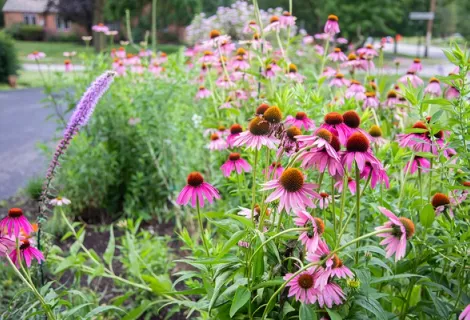
“I've never planted anything in my life. And this was actually quite fun.” - Steve

Popular Native Plants

Butterfly Milkweed
Asclepias tuberosa
$29.99
Save 15%

Narrowleaf Milkweed
Asclepias fascicularis
$26.99
Save 33%

Frogfruit
Phyla nodiflora
$27.99
Save 31%

Purple Coneflower
Echinacea purpurea
$29.99
Save 15%

Common Milkweed
Asclepias syriaca
$29.99
Save 15%

New England Aster
Symphyotrichum novae-angliae
$29.99
Save 15%

Swamp Milkweed
Asclepias incarnata
$29.99
Save 15%

Wild Bergamot
Monarda fistulosa
$29.99
Save 15%

Black-Eyed Susan
Rudbeckia hirta
$29.99
Save 15%

Eastern Columbine
Aquilegia canadensis
$29.99
Save 15%

Blue Mistflower
Conoclinium coelestinum
$27.99
Save 31%

Lavender Hyssop
Agastache foeniculum
$29.99
Save 15%

Coral Honeysuckle
Lonicera sempervirens
$27.99
Save 31%

Scarlet Sage
Salvia coccinea
$27.99
Save 31%

Aromatic Aster
Symphyotrichum oblongifolium
$29.99
Save 15%

Ohio Spiderwort
Tradescantia ohiensis
$29.99
Save 15%

White Sage
Salvia apiana
$26.99
Save 33%

Virginia Mountain Mint
Pycnanthemum virginianum
$29.99
Save 15%

Sweet Goldenrod
Solidago odora
$27.99
Save 31%

Hummingbird Sage
Salvia spathacea
$26.99
Save 33%

Golden Alexanders
Zizia aurea
$29.99
Save 15%

Pennsylvania Sedge
Carex pensylvanica
$29.99
Save 15%

Common Yarrow
Achillea millefolium
$26.99
Save 33%

Sweet Joe Pye Weed
Eutrochium purpureum
$29.99
Save 15%

California Buckwheat
Eriogonum fasciculatum
$26.99
Save 33%

Wild Petunia
Ruellia humilis
$29.99
Save 15%

Western Blue-Eyed Grass
Sisyrinchium bellum
$26.99
Save 33%

Northern Bush Honeysuckle
Diervilla lonicera
$49.99

Smooth Penstemon
Penstemon digitalis
$29.99
Save 15%

Bottlebrush Grass
Elymus hystrix
$29.99
Save 15%