How to Grow Hummingbird Sage

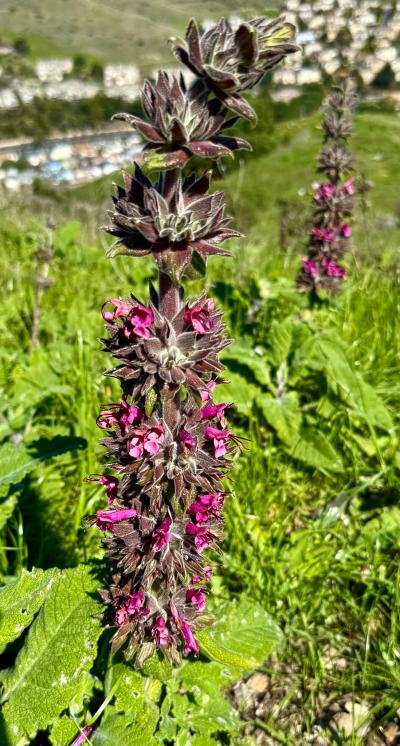
Hummingbird sage is a fragrant California native groundcover that loves dry shade, a rare and useful trait. Like all native sages, it belongs to the mint family. Its large, soft foliage smells sweet and fruity, and each spring it sends up tall spikes of magenta flowers that hummingbirds cannot resist. That mix of scent, shade tolerance, and color is what hummingbird sage makes possible in spots where little else blooms.
The short answer on how to grow it: plant hummingbird sage in part to full shade with well-drained soil, water at the base through its first dry season, then give it very little summer water and cut off spent flower stalks. This guide is for California gardeners with dry shade, under oaks, on the north side of the house, or along a woodland edge, who want flowers and hummingbirds there. It covers planting, care by season, propagation, companion plants, and answers to common questions. Get it settled once and it turns a shady problem spot into a hummingbird stop every spring.
Hummingbird sage at a glance
- Light: Prefers part shade to full shade; full sun near the cool coast
- Water: Low; very little in late summer
- Size: About 1 foot tall in leaf, flower spikes 1 to 2 feet; patches 3 to 5 feet wide or more
- Bloom season: Mainly March to May; February into early summer in mild gardens
- Soil: Well-drained; tolerates clay; soil pH about 5 to 7
- Attracts: Hummingbirds above all, plus native bees
- Hardy: Evergreen perennial; hardy in roughly USDA zones 7 to 11
- Where it grows: Central and Southern California oak woodland and chaparral
When to plant hummingbird sage
Fall is the best time to plant hummingbird sage. Cool weather and winter rain help the roots settle in, and plants put on fresh leaves through winter before blooming in spring. Early spring planting works too, with a little more water through the first summer.
Hummingbird sage often rests in late summer heat and can look tired. That is normal, not a sign it needs more water. Too much summer water is actually the most common way to lose it. Fresh leaves return with fall rain.
How to plant hummingbird sage
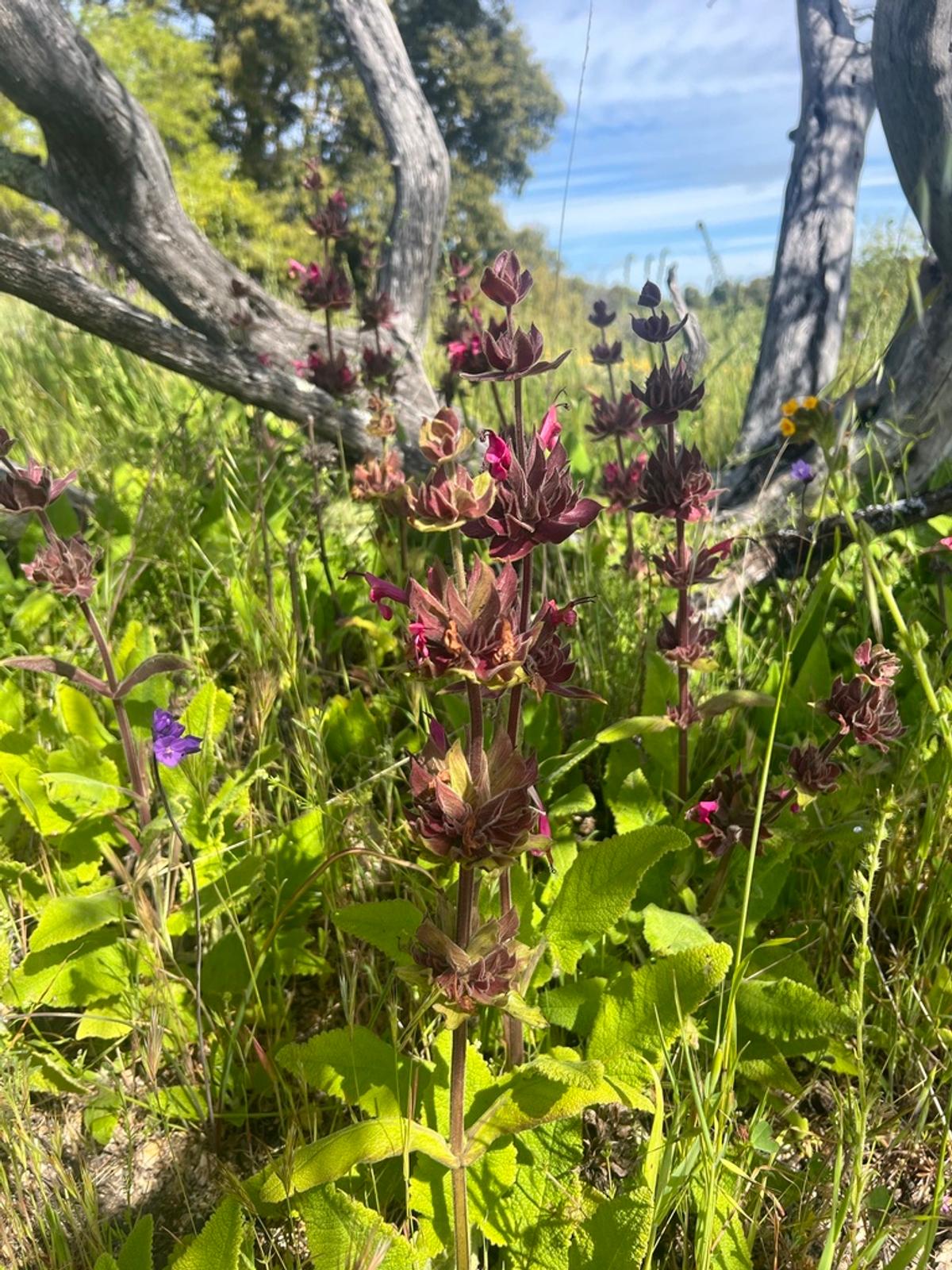
- Pick a spot with the right light. Dappled shade under trees, including coast live oaks, the north or east side of a house, and woodland edges are ideal. In cool coastal gardens it can take more sun. Inland, shield it from hot afternoon sun.
- Keep the soil simple. Hummingbird sage does well in ordinary, well-drained soil and tolerates clay. Skip the fertilizer and compost. Rich soil and extra feeding make it floppy. It prefers slightly acidic to neutral soil, about pH 5 to 7, which most garden soils already are.
- Give it room to spread. Dig a hole about the size of the root ball, plant at the same depth it was growing, and firm the soil. Space plants about 3 feet apart so they can knit together into a groundcover. Over the years, a happy patch can spread 5 feet or more, and some gardeners report patches up to 8 feet wide.
- Water at the base. Water deeply at planting, then every 2 to 3 weeks through the first dry season. Water at the soil instead of over the leaves, which helps prevent powdery mildew. Once established, it needs little summer water.
Hummingbird sage care tips by season
Fall
The best time to plant. Cut off any old flower stalks left from spring so new growth has room.
Winter
Fresh, bright green leaves fill in with the rain. If winter is unusually dry, give it a deep watering now and then.
Spring
Peak bloom season. Each spike carries whorls of 10 to 20 magenta flowers, and hummingbirds arrive. Leave the flowers up as long as they look good.
Summer
Rest time. Cut spent flower stalks to the base and water very little. Prune lightly in late summer to keep the patch tidy and encourage strong blooming next year.
Why hummingbird sage is good for birds and pollinators
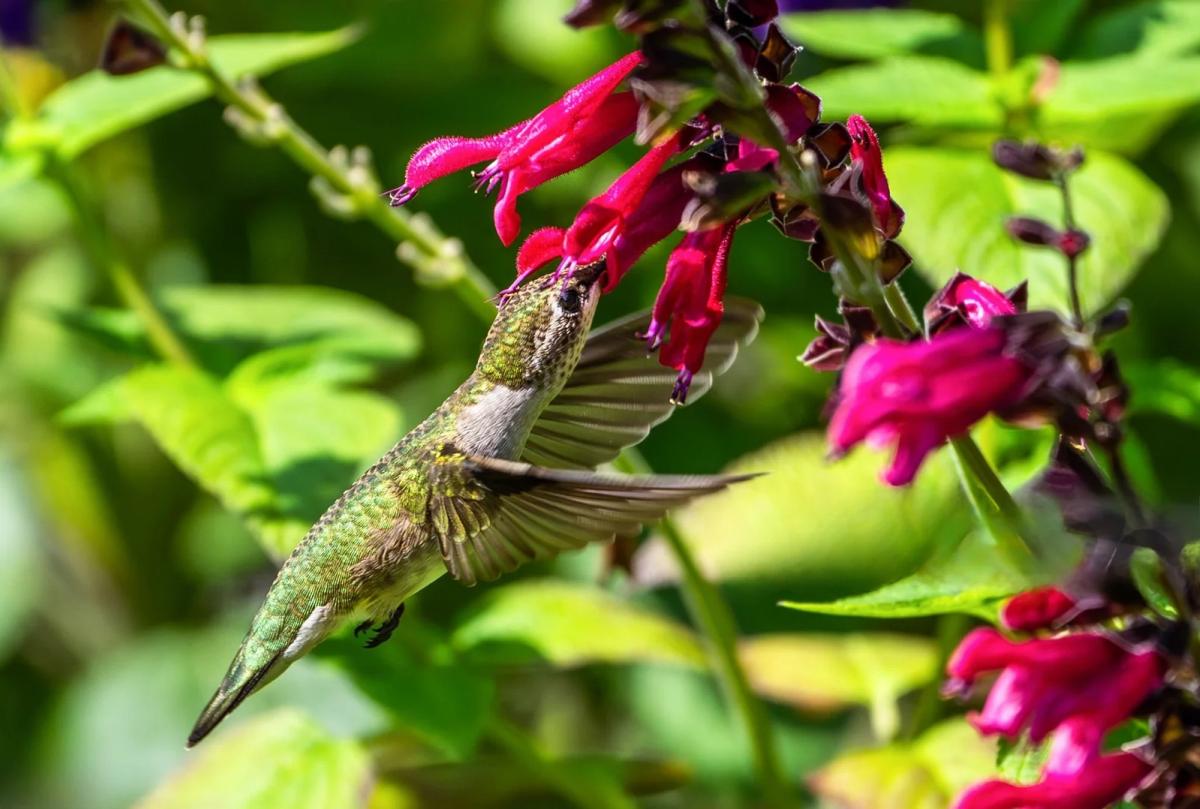
True to its name, hummingbird sage is a magnet for hummingbirds. Its tubular magenta flowers are shaped for their long bills, and hummingbirds often stake out a patch and defend it from rivals all spring. Native bees and other pollinators visit the flowers too, and butterflies occasionally stop by. Its aromatic foliage also helps it resist deer and other browsing animals.
Because it blooms in spring and grows in shade, it fills a gap many sunny gardens miss. Pair it with other California native plants that flower at different times, and hummingbirds will find food in your garden through more of the year.
Hummingbird sage habitat: where Salvia spathacea grows wild
Hummingbird sage is native to central and southern California, from the Sacramento Valley south through Orange County to the San Diego area. It grows on open or shady slopes in oak woodland, chaparral, and coastal sage scrub, often within sight of the coast. In the landscape it often grows beneath coast live oaks and mixed with other native shrubs. The name Salvia, shared by all the sages, comes from the Latin salvere, "to be well." Copying that wild setting at home, with dappled shade, decent drainage, and dry summers, is the key to a healthy patch.
How to propagate hummingbird sage
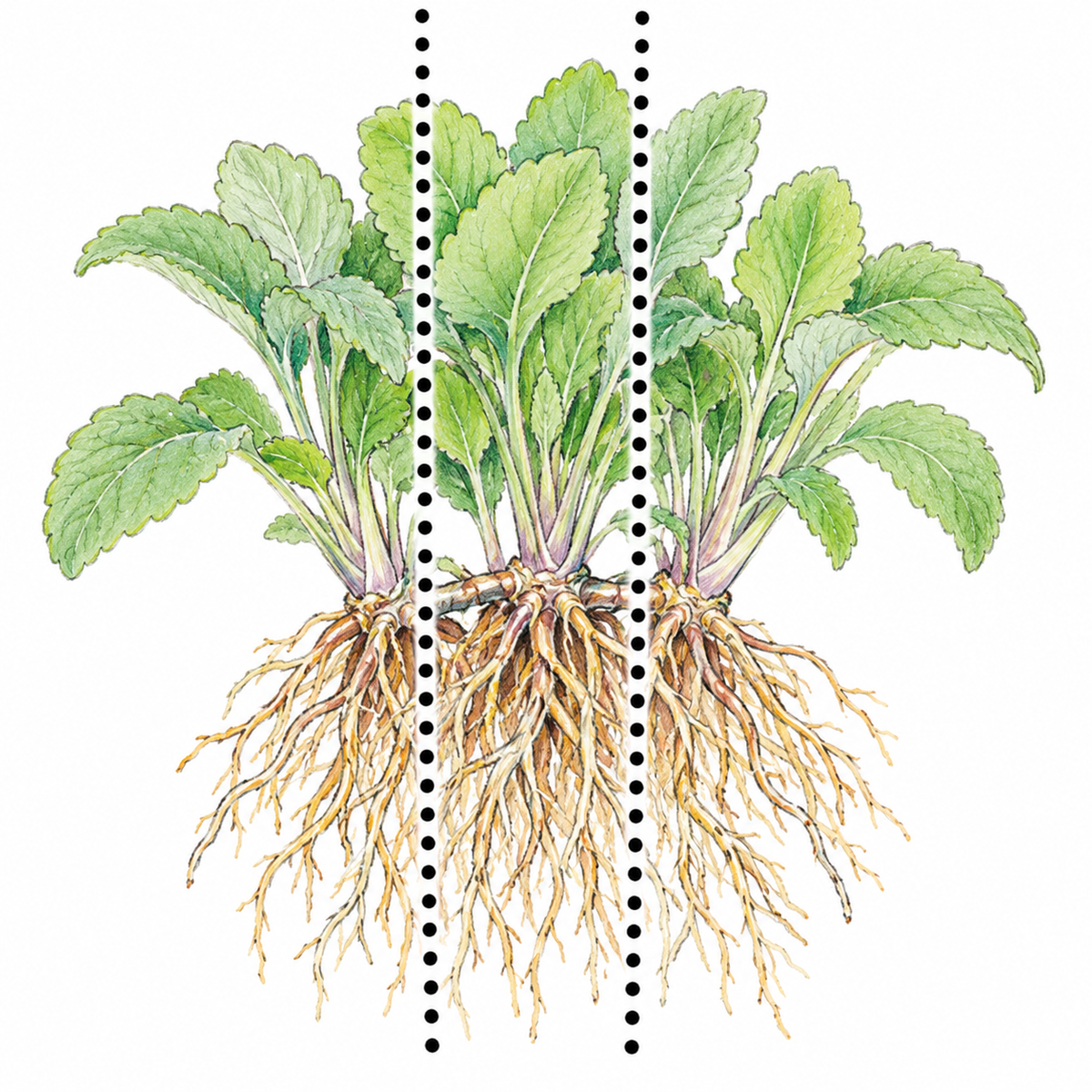
If you are interested in more plants for free, hummingbird sage is easy to share once a patch is established.
Divide the rhizomes
In early fall or spring, dig up a section at the edge of the patch and divide the rhizomes (the underground stems). Make sure each segment has several good-sized roots. Replant the pieces in a new place in the garden or in pots, water them in well, and keep the soil lightly moist until new growth appears.
Grow from seed
Collect seed from dry flower spikes in summer and sow it directly into the soil in fall, so winter rain can do the work. Seed-grown plants take a season or two longer to fill in than divisions.
What to plant with hummingbird sage
These natives, including an attractive flowering shrub or two, share hummingbird sage's tolerance for part shade and low water, and together they keep flowers going from late winter into fall.
- Pink alumroot: Low leaves and airy pink flowers for shady edges
- California goldenrod: Late summer gold after hummingbird sage finishes
- Golden currant: Early yellow flowers hummingbirds also visit
- Island bush snapdragon: Red flowers for hummingbirds in part shade
[Insert photo: PHOTO 4. Close-up of the flower spike or the large wrinkled leaves. Use product photo hummingbird_sage_02.jpg or hummingbird_sage_01.jpg. Alt text: Close-up of hummingbird sage flowers and leaves]
Hummingbird sage FAQ
Does hummingbird sage grow in shade?
Yes. Hummingbird sage is one of the best California native plants for dry shade. It grows happily under oaks, on north-facing slopes, and along woodland edges. Near the coast it can also take full sun, but inland it does best with protection from hot afternoon sun.
When does hummingbird sage bloom?
The main bloom season is spring, roughly March through May. In mild coastal gardens it can start as early as February and keep going into early summer. Tall spikes rise above the leaves with whorls of magenta flowers set in dark red to maroon bracts.
What does hummingbird sage smell like?
Touch or brush the large, soft, wrinkled leaves and you get a sweet, fruity scent that many people compare to pineapple. The scent is strongest on warm days.
Does hummingbird sage spread?
Yes, slowly. It spreads by underground rhizomes and can form a patch about 3 to 5 feet across over time. It is not aggressive, which makes it a good groundcover for filling shady spaces.
Can I plant hummingbird sage under oak trees?
Yes. It is a classic choice for planting under native oaks because it needs little summer water, and oaks are harmed by regular summer irrigation near their trunks. Keep plants a few feet from the trunk and let the soil stay dry in summer.
Can I grow hummingbird sage in pots or containers?
Yes. Choose a wide pot, since the plant spreads sideways, with drainage holes and a fast-draining mix. Keep it in part shade and water when the top couple of inches of soil are dry. Containers dry out faster than the ground, so potted plants need a bit more summer water.
Does hummingbird sage get pests or diseases?
It has few pests. The most common problem is powdery mildew, a white dusting on the leaves, which shows up with overhead watering, poor air flow, or too much summer water. Water at the base, give plants room, and cut back affected leaves. Deer and gophers usually leave it alone.
Is hummingbird sage deer resistant?
Generally, yes. Deer and gophers usually leave hummingbird sage alone, though hungry deer will taste almost anything.
Why does my hummingbird sage look tired in summer?
That is normal. Hummingbird sage often slows down or rests in late summer heat, and leaves may look dull or brown at the edges. Cut off old flower stalks, hold back on water, and it will freshen up with fall and winter rain.
Bring hummingbirds to your shady spots
Our hummingbird sage plants are grown in California and ready for the shady corners where little else blooms. Shop hummingbird sage.
Hummingbird sage resources
- Las Pilitas Nursery: Salvia spathacea: Size, forms, plant communities, and growing notes
- Calscape, by the California Native Plant Society: Find native plants that grow where you live
- How to Grow Coyote Mint: Read our guide to another fragrant, low-water native
- More California native plants from My Home Park: Drought tolerant natives that ship to your door
Sources: Las Pilitas Nursery, Salvia spathacea; Wikipedia, Salvia spathacea
Share this article