How to Grow Coyote Mint

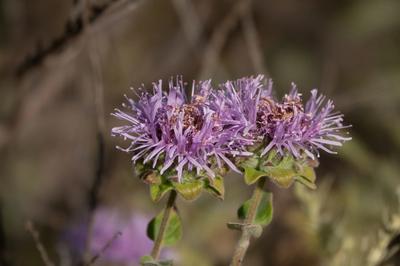
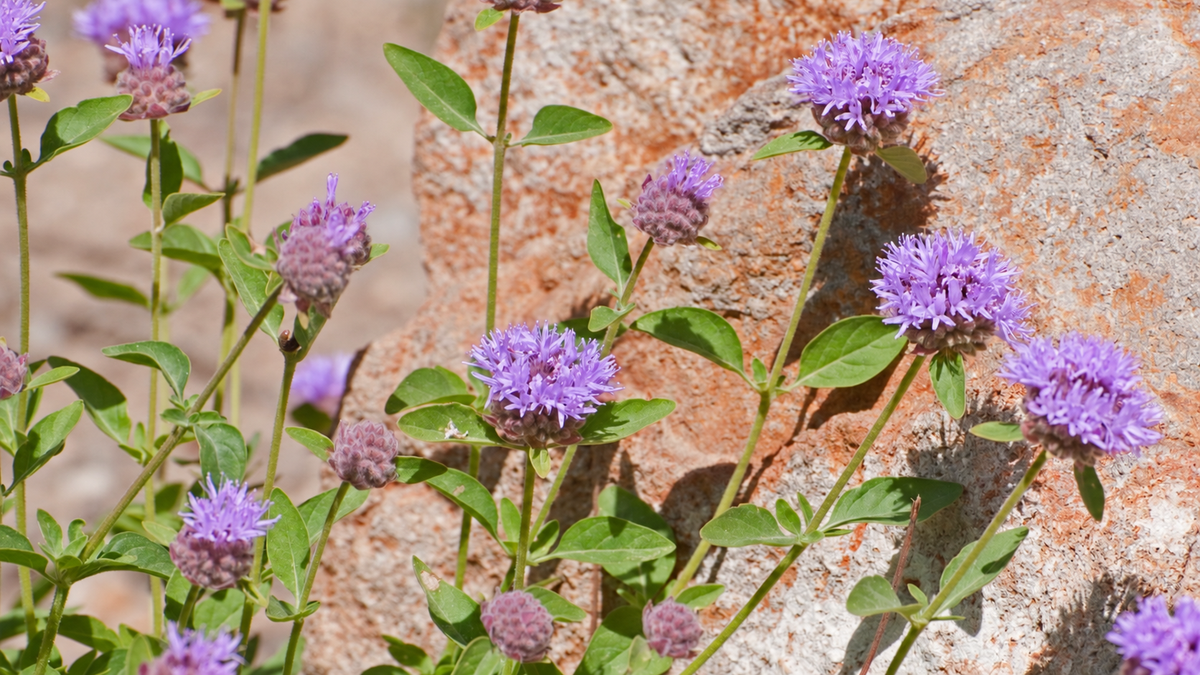
Coyote mint is a tough, fragrant, drought tolerant California native in the mint family (Lamiaceae), with hairy mint scented leaves in soft gray-green. It forms a low, tidy mound, blooms all summer with lavender-pink pompom flowers that butterflies love, and needs very little water once established.
Coyote mint plant at a glance
- Sun: Full sun for the most flowers; partial shade in hot inland areas
- Water: Very low once established
- Size: 6 inches to 2 feet tall, up to 2 to 3 feet wide
- Blooms: Summer, with lavender to pink pompom flowers
- Soil: Any well-drained soil, from sand to clay
- Attracts: Butterflies, native bees, and hummingbirds
- Life cycle: Woody perennial; fairly deer resistant
- Where it grows: California Coast Ranges and Sierra foothills
When to plant coyote mint
Fall is the best time to plant coyote mint. Cool temperatures and winter rain let the roots settle in before the first hot summer, so plants bloom well the following year. You can also plant in early spring, but plan to water more often through the first summer.
Good to know: Coyote mint is "stress deciduous." In a long dry spell it may drop some leaves and look thin. That is how it saves water, not a sign it is dying. It fills back in when rain returns.
Coyote mint is "stress deciduous." In a long dry spell it may drop some leaves and look thin. That is how it saves water, not a sign it is dying. It fills back in when rain returns.
How to plant coyote mint
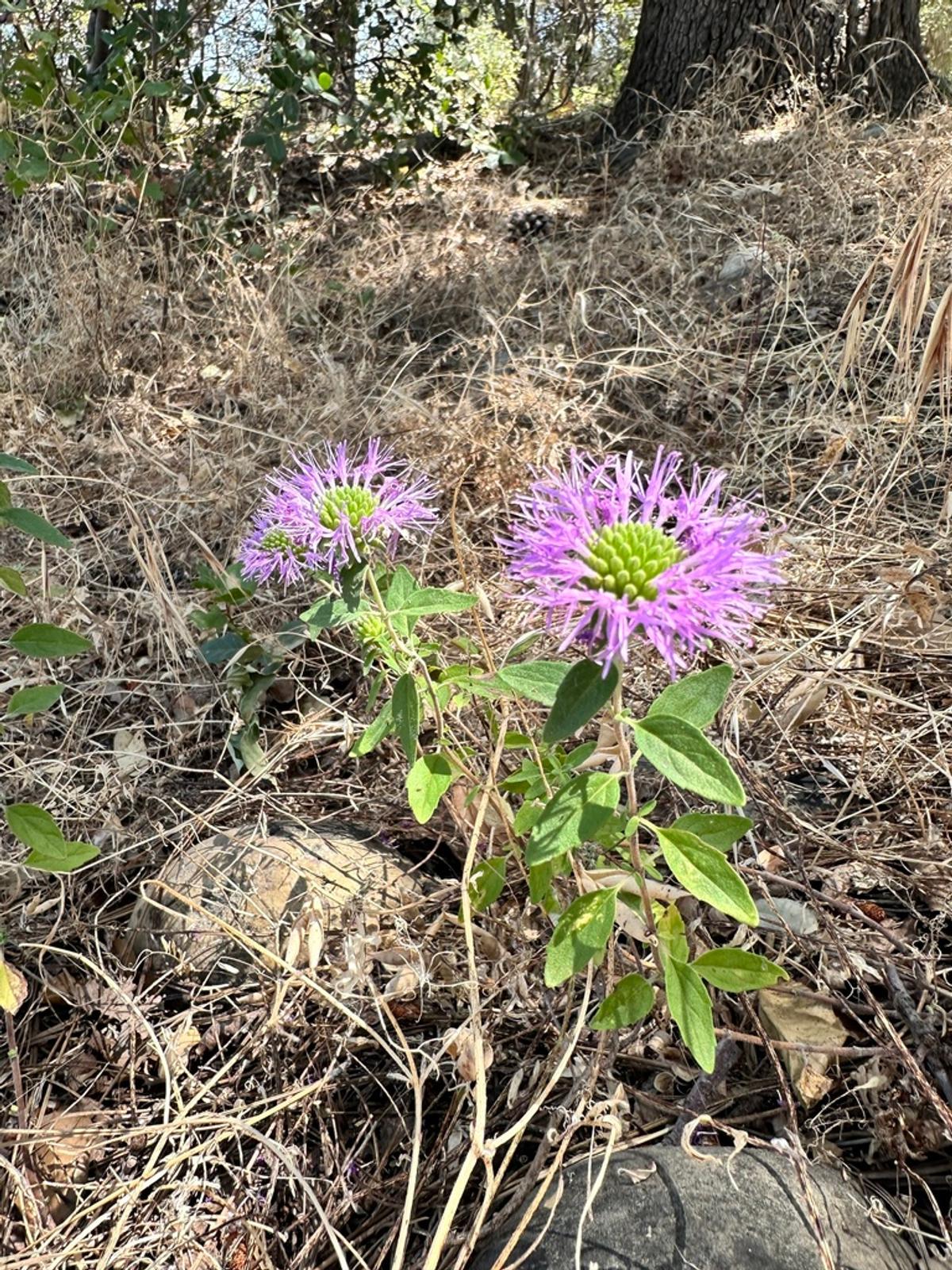
- Choose a sunny, well-drained spot. Full sun gives you the most flowers and the most butterflies. Rock gardens, borders, path edges, and slopes all work well, and its spreading roots help hold soil, which makes it useful for erosion control on banks. In hot inland locations, a sunny location with a little afternoon shade is fine. If your soil stays wet in winter, plant on a small mound.
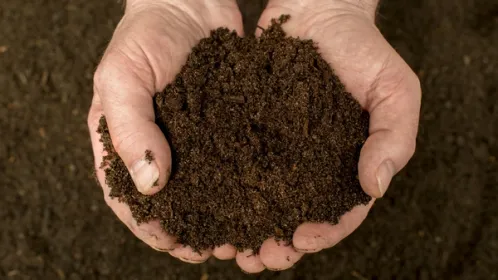
- Skip the compost. Coyote mint likes lean soil. Rich soil and fertilizer make it floppy and can shorten its life. Sand, clay, and rocky soil are all fine as long as water drains away.
- Plant at the same depth. Dig a hole about the size of the root ball, set the plant so the top of the soil matches the ground, and firm it in. Space plants 2 to 3 feet apart so each mound has room to fill out. In lean, dry spots plants often stay 6 to 18 inches tall; with a little summer water they can reach about 2 feet tall.
- Water in, then let it toughen up. Water deeply at planting and again after a week. Through the first year, give it a deep drink every 2 to 4 weeks when it is dry. After that, coyote mint can get by on rain, with occasional supplemental summer water for longer bloom.
Coyote mint care tips by season
Fall
The best time to plant. Cut established plants back by about a third. Plants pruned this way stay full and compact instead of sprawling.
Winter
Rain does the watering. Make sure water does not pool around the plant, since soggy soil is the main thing coyote mint will not tolerate.
Spring
New growth fills in through late spring, and the minty scent picks up. Hold off on fertilizer; it does not need any.
Summer
Bloom time. Butterflies and bees cover the flowers. Remove spent flowers to keep blooms coming, and water once or twice a month if you want a longer show.
Why coyote mint is good for wildlife
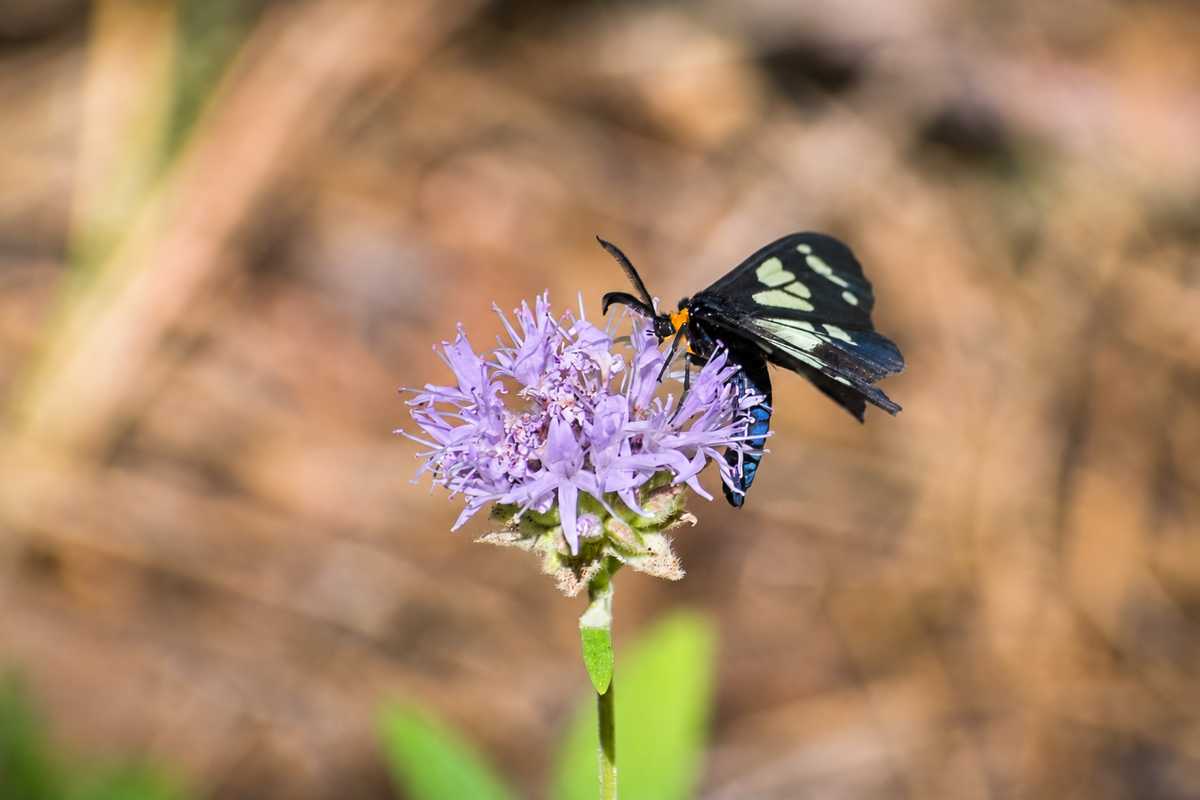
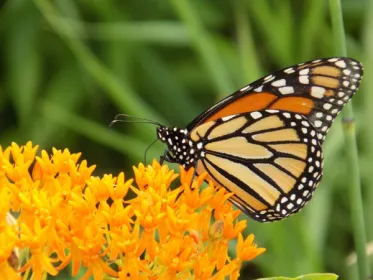
Coyote mint is one of the best butterfly plants you can grow in a water wise California garden. Its purple to lavender-pink flower clusters are highly attractive to pollinators and packed with nectar, so they draw butterflies, native bees, and hummingbirds at a time of year when many other plants have stopped blooming. Even a small patch in your yard can bring in butterflies all summer.
Plant it alongside other California native plants that bloom in different seasons, and pollinators will find food in your garden most of the year.
Where Monardella villosa grows wild
In the wild, coyote mint grows in chaparral, coastal sage scrub, and oak woodland across the California Coast Ranges and Sierra foothills. You can find it on dry, rocky hillsides in places like Sonoma County and the Bay Area, often alongside coyote brush, oaks, and sages. Matching those conditions at home, with sun, lean soil, and good drainage, is the key to a long-lived plant.
What to plant with coyote mint
These natives like the same sun, lean soil, and low water, and their bloom times overlap with coyote mint so there is always something flowering. Coyote mint also looks great with sages, including black sage (Salvia mellifera) and white sage (Salvia apiana).
- California fuchsia: Red tube flowers that take over as coyote mint finishes
- California buckwheat: A natural neighbor in coastal sage scrub
- Black sage: Spring flowers for bees before coyote mint blooms
- California aster: Late-season daisies for fall pollinators
Coyote mint FAQ
Is coyote mint edible?
Yes. The leaves have long been used as an herbal tea, including by Indigenous Californians, steeped fresh or dried. It tastes stronger and a little more bitter than garden mint. Before you cook or brew with it, make sure the plant has not been sprayed, and pick a few leaves at a time so it keeps growing.
Does coyote mint smell like mint?
Yes. It belongs to the mint family, and if you press a leaf between your fingers or brush past the plant, it releases a strong, fresh mint scent, a bit like toothpaste. That strong minty taste and smell is why deer usually leave it alone.
When does coyote mint bloom?
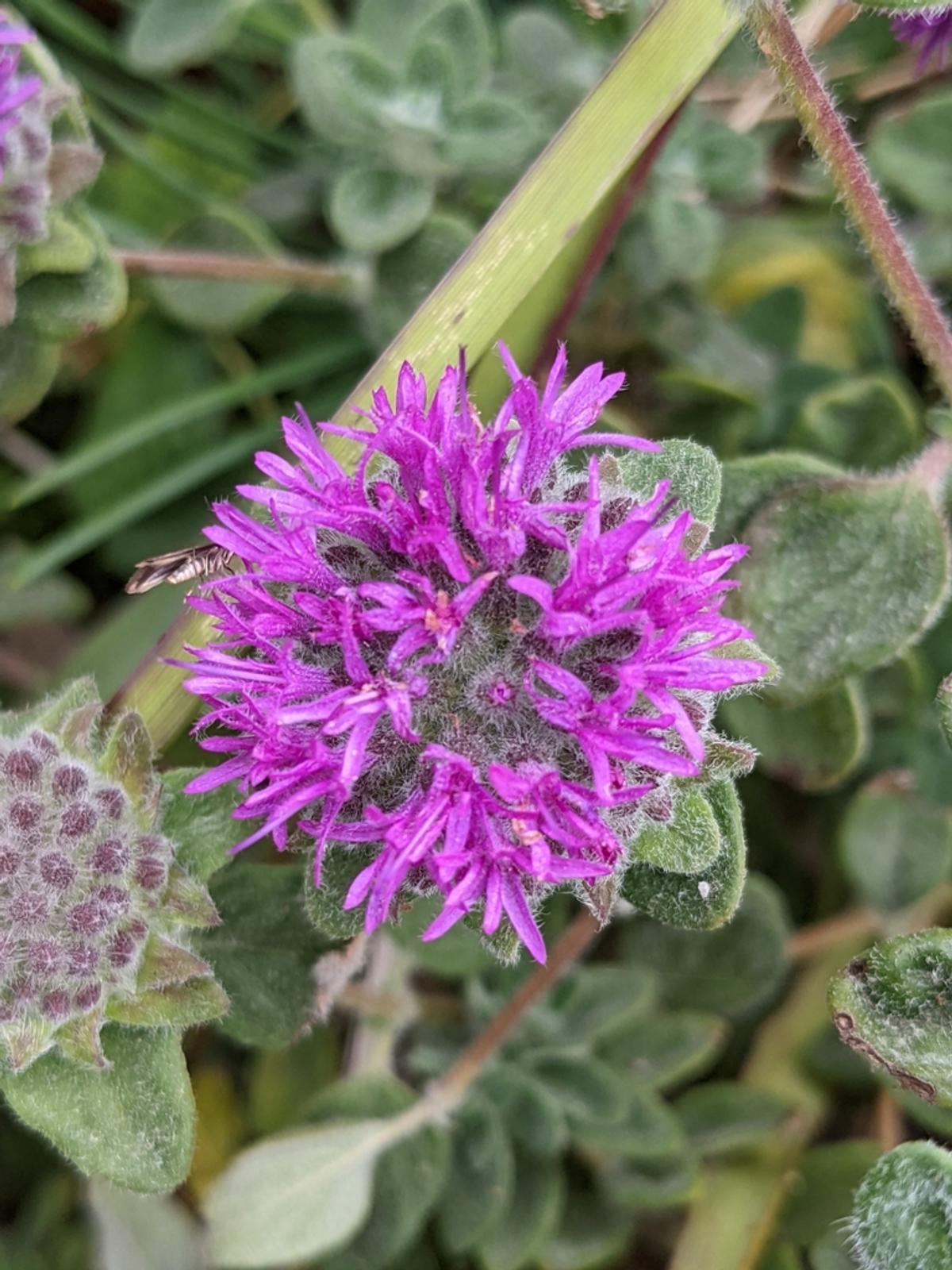
Mostly in summer, roughly May through August, with round clusters of lavender to pink flowers. An occasional deep watering and removing spent flowers can stretch the bloom season.
Is coyote mint the same as Monardella odoratissima?
They are close relatives. Some botanists now group coyote mint (Monardella villosa) with Monardella odoratissima, often called mountain coyote mint, while others keep them as separate species. The plants we sell are Monardella villosa, the coyote mint native to the California Coast Ranges and foothills.
Can I grow coyote mint from seed?
Yes, though it takes patience. Sources differ on seed prep: some recommend 30 to 60 days of cold-moist stratification (chilling damp seed in the fridge) to improve germination, while others simply scatter seed on bare soil in fall and let winter do the work. Of course, starting with young plants gets you flowers much sooner.
Can I grow coyote mint in a pot?
Yes. Use a pot with drainage holes and a fast-draining mix, and give it full sun. Potted plants dry out faster than plants in the ground, so water when the top couple of inches of soil are dry.
Will coyote mint spread like garden mint?
No. Unlike garden mint, coyote mint stays in a tidy mound and does not run underground. It slowly widens over time but will not take over a bed.
How do I keep coyote mint from getting woody?
Cut it back by about a third in late fall or winter. That keeps the mound full and encourages fresh growth and more flowers the next summer.
Add coyote mint to your garden
Our coyote mint plants are grown in California and ready for a sunny, dry spot. Questions or comments? Our team is happy to help you choose plants that suit where you live. Shop coyote mint.
Coyote mint resources
- Las Pilitas Nursery: Monardella villosa: Size, soil, plant communities, and butterfly notes
- Calscape, by the California Native Plant Society: Find native plants that grow where you live
- More California native plants from My Home Park: Drought tolerant natives that ship to your door
- How to Grow California Poppy: Read our guide to the state flower, another easy summer-dry native
Sources: Las Pilitas Nursery, Monardella villosa; Each Green Corner, Coyote Mint Plant Guide; Wikipedia, Monardella villosa
Share this article