Designing Gardens to Reduce Deer Pressure

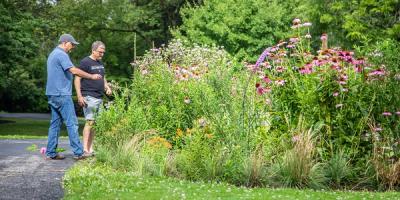
Deer will always pass through, but how you lay out your garden can strongly influence where they walk, how long they linger, and which plants they reach. By working with deer behavior through things like routes, sightlines, and comfort zones, you can dramatically reduce damage while keeping your landscape open, beautiful, and wildlife‑friendly rather than fenced‑in.
Why layout matters for deer
Layout matters because deer:
- Follow habitual routes and prefer easy in‑and‑out paths.
- Feel safest where they have cover plus quick escape options.
- Linger and feed longer in open “lanes” lined with tender plants.
Deer follow habitual routes, prefer easy in‑and‑out paths, and feel safest in areas with cover and quick escape options. When a garden is laid out as open, straight “lanes” lined with tender plants, it becomes an easy feeding corridor instead of a place they move through (or past) quickly.
Thoughtful design uses paths, structures, or plant groupings to make browsing less convenient while still keeping the space beautiful and usable for people. The goal is not to block every deer, but to change how long they linger and what they find worth eating.
Place vulnerable plants in safer zones
To protect favorites, generally:
- Put vulnerable “dessert” plants near the house, doors, and regular foot‑traffic areas.
- Use tougher, deer‑tolerant natives in far corners, woodland edges, and obvious deer paths.
- Work from the house outward, with the most browsable plants deepest inside.
Deer are often more cautious close to houses, regular foot traffic, and well‑lit entry areas. Putting your most vulnerable “dessert” plants in these higher‑traffic zones naturally reduces the time deer spend there.
Reserve more exposed spots (far corners, woodland edges, obvious paths) for tougher, deer‑tolerant natives that can handle more attention. This inside‑out pattern lets you keep favorite plants without turning the whole yard into a buffet.
Use buffers and hedges to redirect movement
Buffers help when you:
- Plant dense bands of coarse, aromatic, or less‑palatable natives along common entry points.
- Make these bands continuous enough that deer can’t casually step between plants.
- Treat them as “soft green fences” that guide deer toward less sensitive areas.
Dense hedges or bands of coarse, less‑palatable plants along common entry points can “nudge” deer to move around beds instead of through them. Strategically placing aromatic, thorny or stiff forbs and shrubs at key entry gaps, or building a row of deer‑tolerant species, can encourage deer to keep moving toward less sensitive areas like meadows or back woodland edges.
These living buffers work best when they are continuous enough that deer cannot easily step between plants, but still attractive and functional as part of the design. Think of them as soft, green fences that guide traffic rather than hard barriers that try to stop it outright. Although some species can be aggressive, low-growing mints can work very well for this purpose while also providing enormous pollinator support. Read more on plant selection in our Deer-Tolerant Native Plants for Home Gardens guide.
Pay attention to sightlines and cover
For sightlines and cover:
- Long, straight corridors with tall plants feel like safe browsing lanes for deer.
- Varied heights and visual “interruptions” make lingering less comfortable.
- Layer short–medium–tall plants to keep human views pleasant without hidden browsing pockets.
Deer are more comfortable in places where they can see escape routes and blend into cover. Long, straight sightlines bordered by tall plants can feel like safe corridors, while varied heights and occasional visual “interruptions” make deer less inclined to linger.
You can use staggered layers, with short plants in front, medium in the middle, taller in back, to keep human views pleasant while avoiding deep, hidden pockets where deer can browse unnoticed. Adding elements like benches, birdbaths, or large containers in key spots can also break up obvious runways without compromising design.
Design paths and open spaces to your advantage
Use paths and open spaces to:
- Create straight, direct routes near the house that prioritize people and visibility.
- Offer simpler outer routes that gently funnel deer past, not through, key beds.
- Make human presence more obvious where you don’t want deer to linger.
Well‑placed paths and open spaces can shift where deer travel and how long they stay. Straight, direct paths near the house and main use areas invite people in while giving deer fewer comfortable hiding spots.
Around the perimeter, you can allow wider, simpler routes that gently funnel deer past the garden and into less sensitive areas, especially if those edges are planted with tougher, deer‑tolerant natives. The more your design makes human presence visible and predictable, the less appealing it becomes as a quiet browsing zone.
Combine layout with plant choice and protection
Remember the triangle of deer prevention:
- Design: Place vulnerable plants in safer zones and guide deer movement.
- Plant choice: Use deer‑tolerant species where exposure is highest.
- Protection: Add cages, guards, or netting only where most needed.
Design alone cannot stop all browsing, but it can dramatically increase the effectiveness of deer‑tolerant plants, repellents, and small barriers. When vulnerable plants are clustered in safer zones, it is easier to protect them with temporary cages or netting, while the rest of the garden relies more on layout and plant traits.
Ensuring a strong triangle - with good design, plant choice, and targeted protection - keeps the garden feeling like a coherent, wildlife‑friendly space instead of a patchwork of defenses. This approach also scales over time as plantings mature and you learn more about local deer patterns. Just recall that from herd to herd - even deer to deer - different methods will have different degrees of success.
How My Home Park supports deer‑aware design
Designing around deer from scratch can be challenging, especially when you are also trying to meet goals for pollinators, birds, and seasonal color. My Home Park can help with this in three ways:
- Use pre‑designed kits that already lean toward deer‑tolerant natives.
- Get custom designs that bake in deer‑aware placement and early‑year protection.
- Browse a long list of deer‑tolerant natives for the “outer ring” of your garden.
Share this article