Native Bees, Native Wasps, and Their Plant Partners

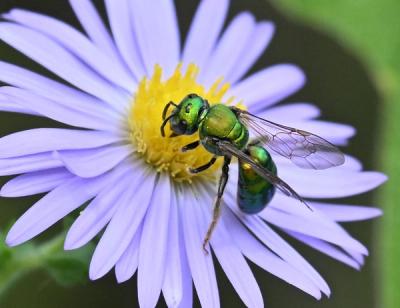
Native bees and wasps are doing a huge amount of quiet work in your garden: pollinating flowers, setting fruit, and hunting pests often more efficiently on native plants than honey bees and without much interest in people. This guide explains who these insects are, how they live and forage, which native plants they rely on, and how to build nesting habitat that keeps them thriving in a yard that still feels tidy and safe.
Why native bees and wasps matter in gardens
Native bees and wasps matter because they:
- Provide a large share of pollination in home landscapes, often more efficiently on native plants than honey bees.
- Are mostly solitary and gentle, focusing on flowers and nests rather than defending big colonies.
- Include many wasps that hunt garden pests like caterpillars and aphids, helping keep plants healthy.
Native bees carry out a large share of pollination in home landscapes, often more efficiently than honey bees on native plants because they are better matched to local bloom timing and flower structures. Many are solitary and gentle, spending their lives quietly visiting flowers and provisioning nests rather than defending large colonies.
Native wasps, meanwhile, are some of the garden’s most effective pest controllers, hunting caterpillars, aphids, and other insects to feed their young. Most solitary wasps are not aggressive toward people and play key roles in keeping pest herbivore populations in balance, which indirectly supports healthier plants.
Meet some common native bee groups
Native bees differ in social behavior, nesting habits, and flower preferences. Common groups include:
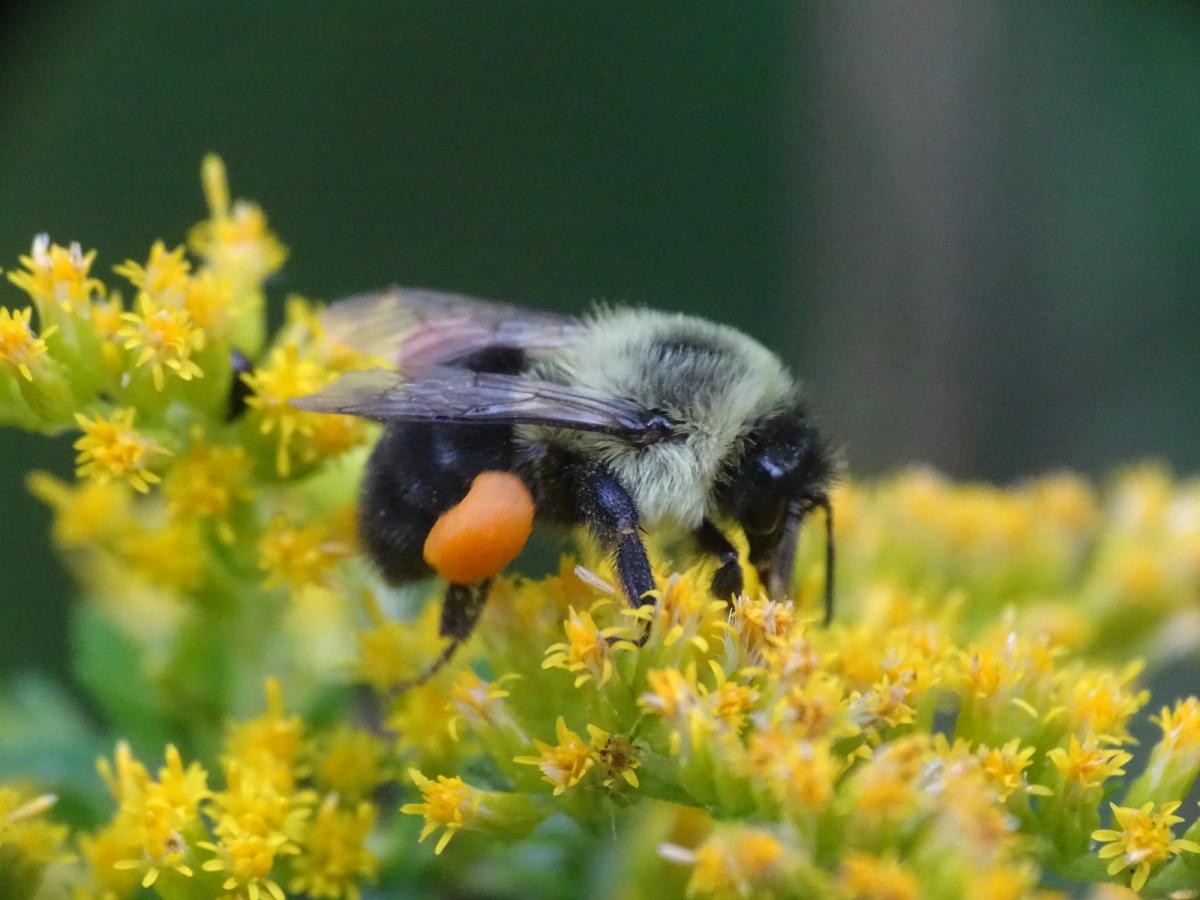
- Bumble bees (genus Bombus) – Social bees that nest in small colonies in cavities or old rodent burrows and forage on a wide range of native flowers, often active in cooler, cloudier weather than honey bees.
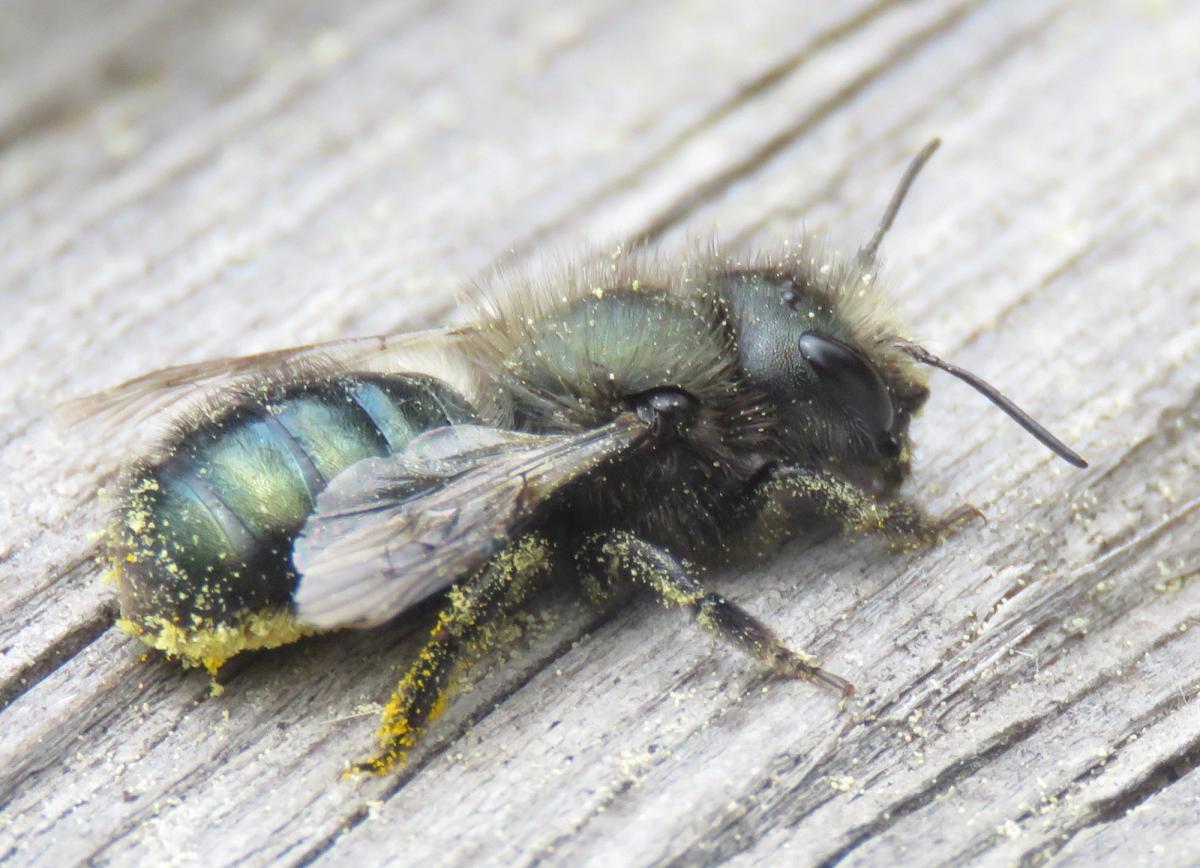
- Mining/ground‑nesting bees (Osmia and many other genera) – Solitary bees that dig small tunnels in bare or lightly vegetated soil; they are vital early‑season pollinators of trees, shrubs, and wildflowers.
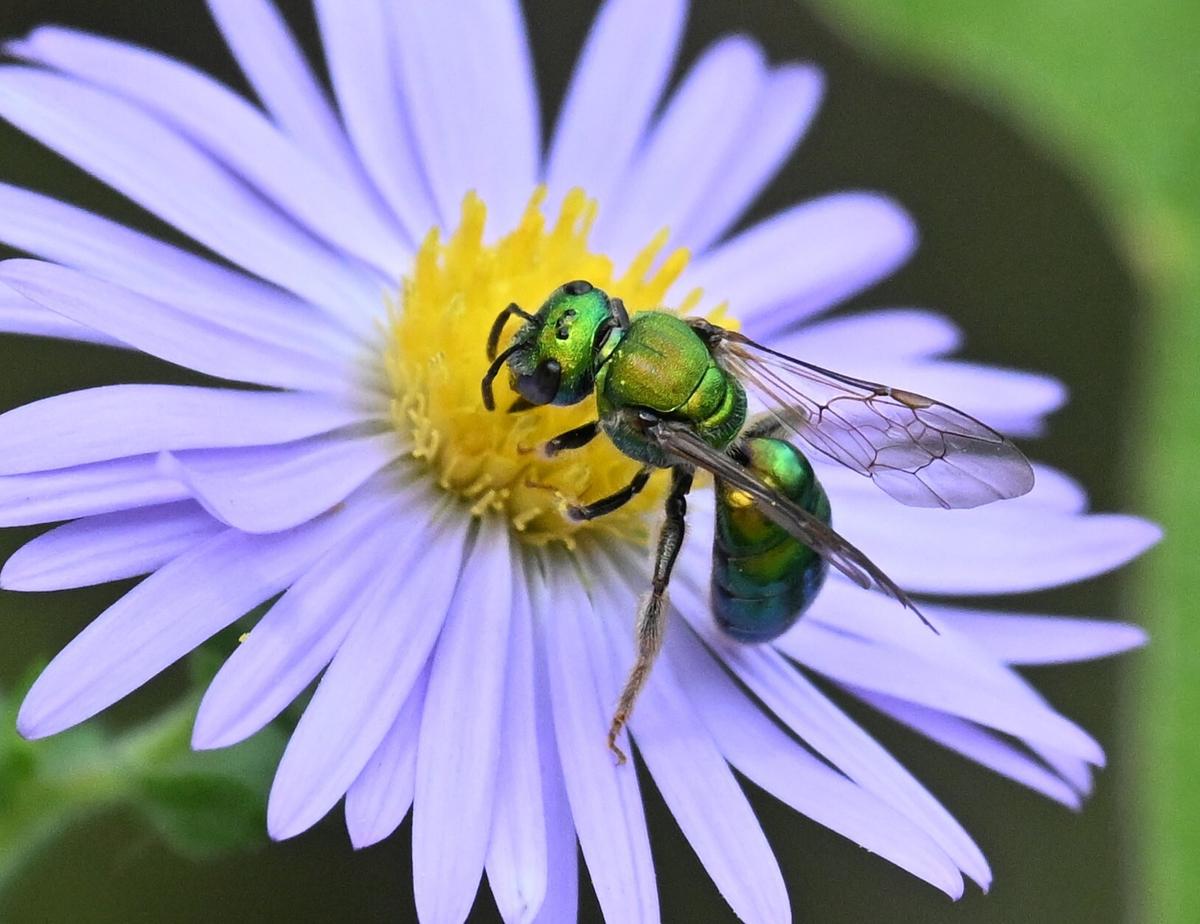
- Sweat bees (family Halictidae) – Small, often metallic green or dark bees that are important pollinators of many wildflowers; most are solitary or loosely social and are generally non‑aggressive, nesting in bare or lightly vegetated soil.
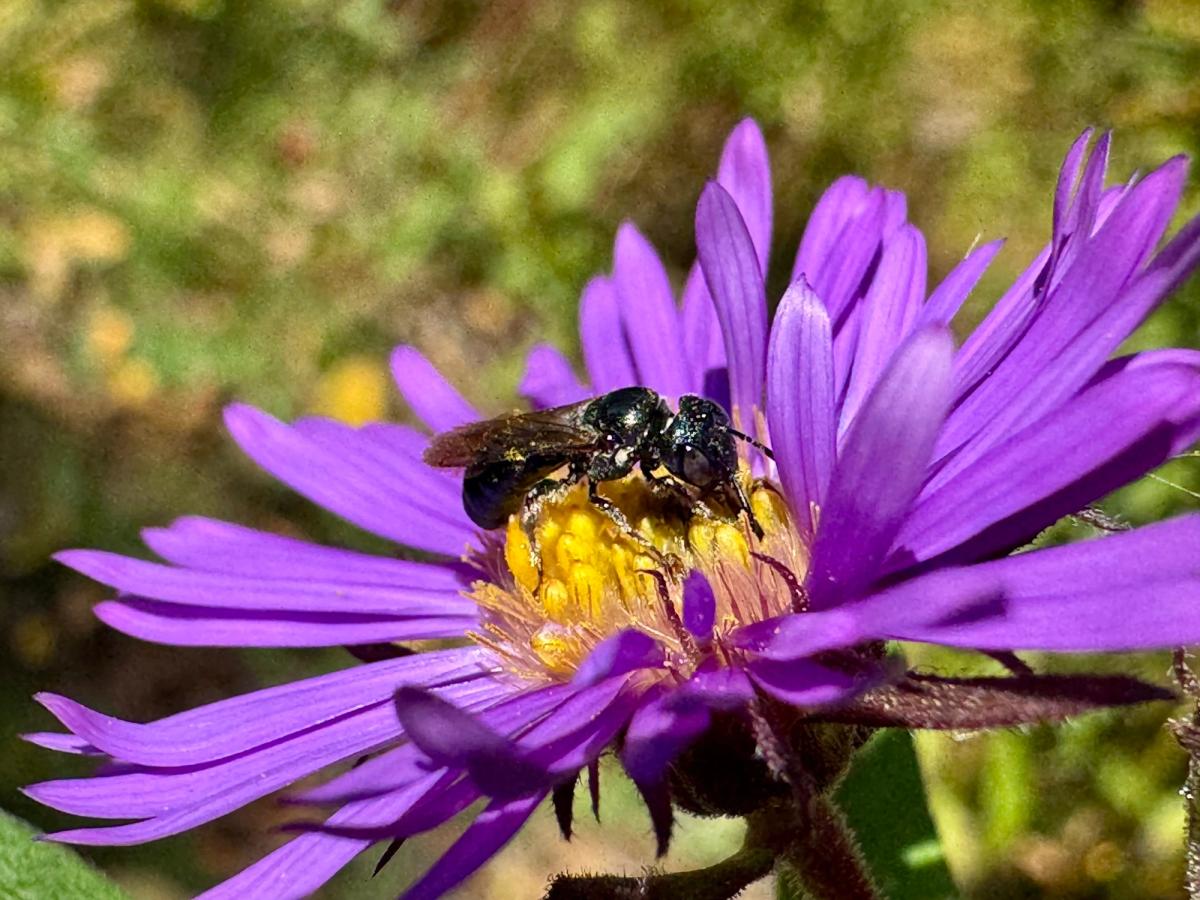
- Small carpenter bees (genus Ceratina) – Tiny, slender bees that nest in the dead, pithy stems of plants like native wildflowers and shrubs; they are solitary, rarely sting, and benefit from gardeners leaving some hollow stems standing over winter.
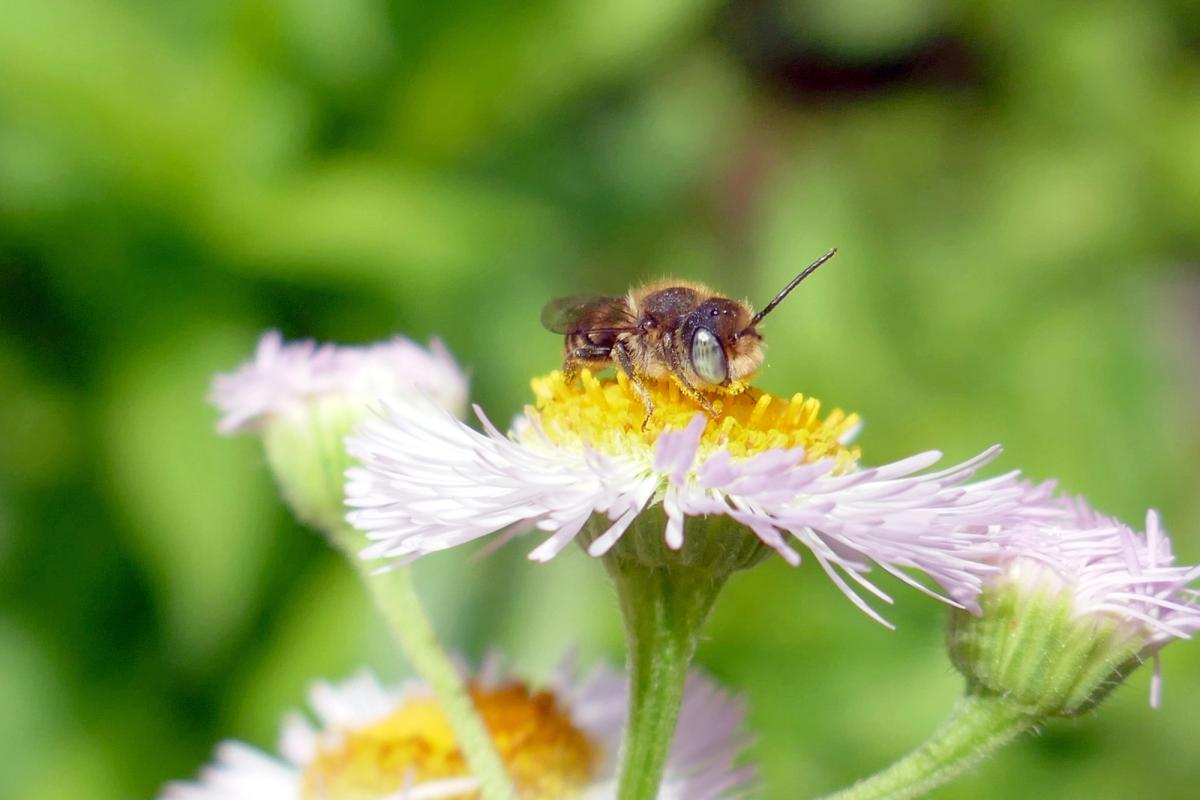
- Leafcutter and mason bees (family Megachilidae) – Solitary cavity‑nesters that use hollow stems, old beetle holes, or bee hotels, carrying pollen on the underside of their abdomen and efficiently pollinating many native perennials and shrubs.
Designing plantings and nest opportunities with these groups in mind helps ensure your garden supports a wide variety of pollination strategies.
Meet some beneficial native wasp groups
Many native wasps are solitary hunters that rarely sting people and focus on insect prey. Key groups include:
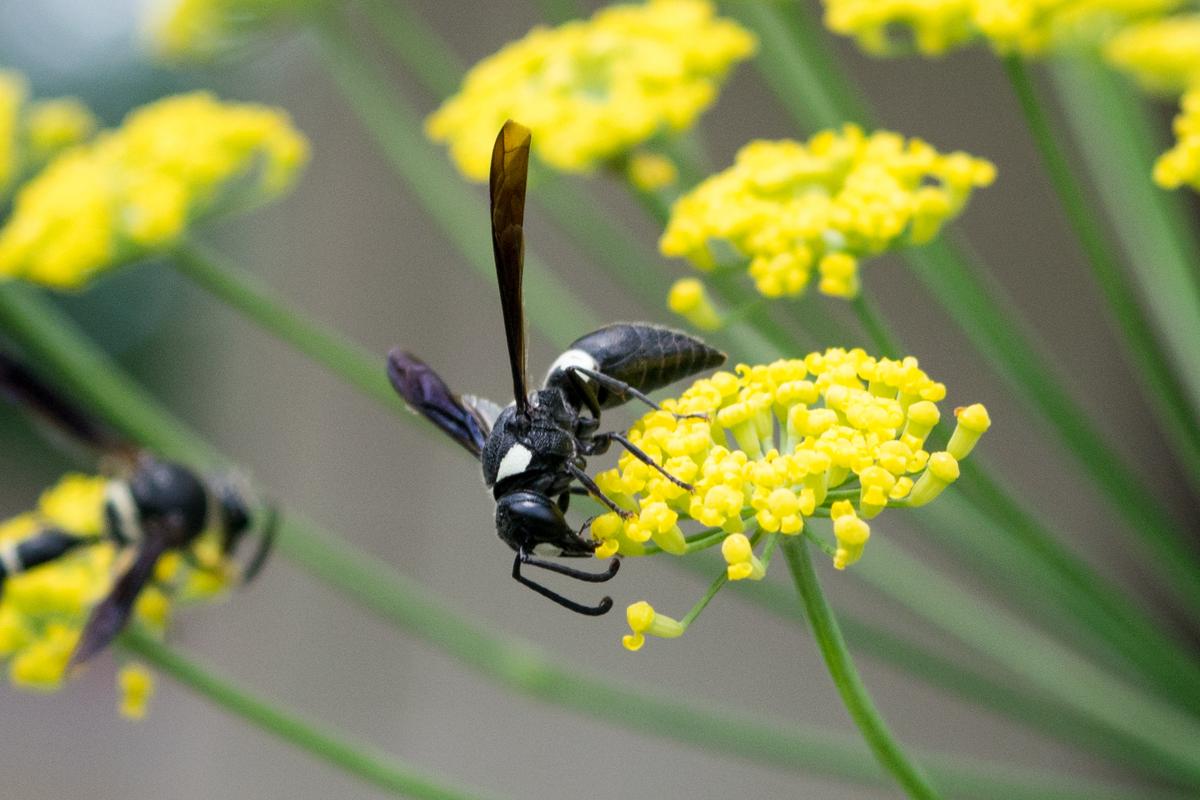
- Potter and mason wasps (Eumeninae) – Small solitary wasps that hunt caterpillars and other soft‑bodied insects, often nesting in mud pots or cavities and visiting flowers for nectar as adults.
- Parasitoid wasps (tiny species) – Very small wasps that lay eggs in or on pests such as aphids or caterpillars, providing critical biological control with minimal human notice.
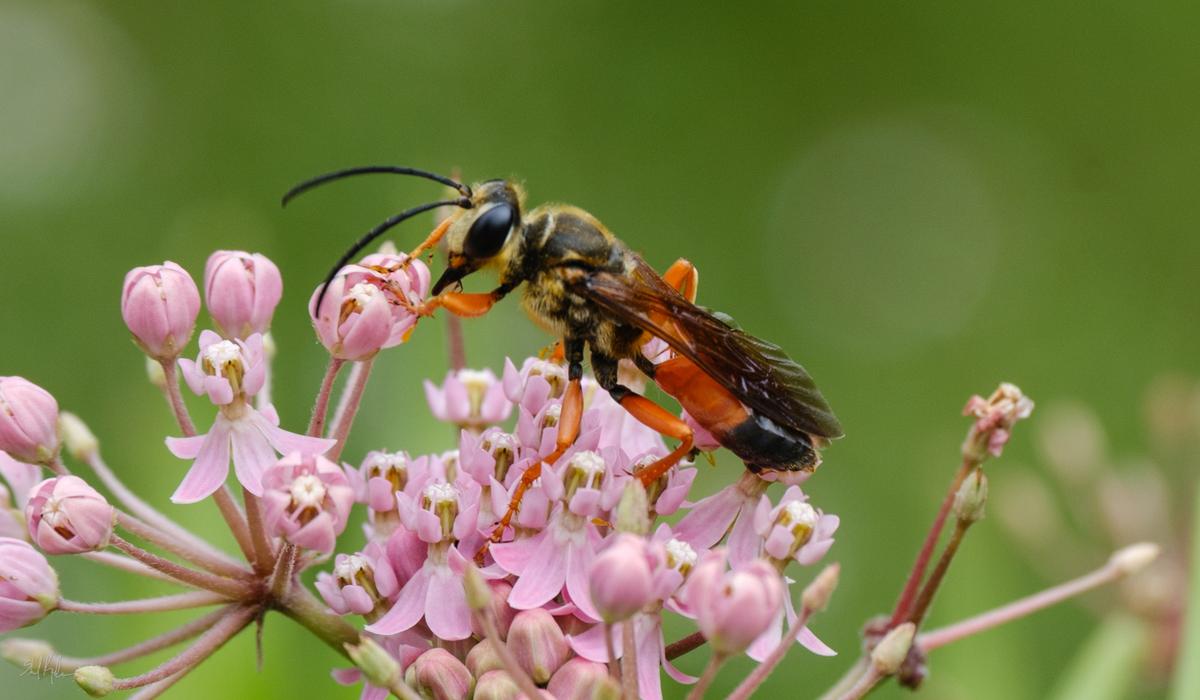
- Digger wasps (Sphecidae) - Slender-bodied solitary wasps that also hunt caterpillars and other soft-bodied insects; shy and docile despite their large and intimidating appearance.
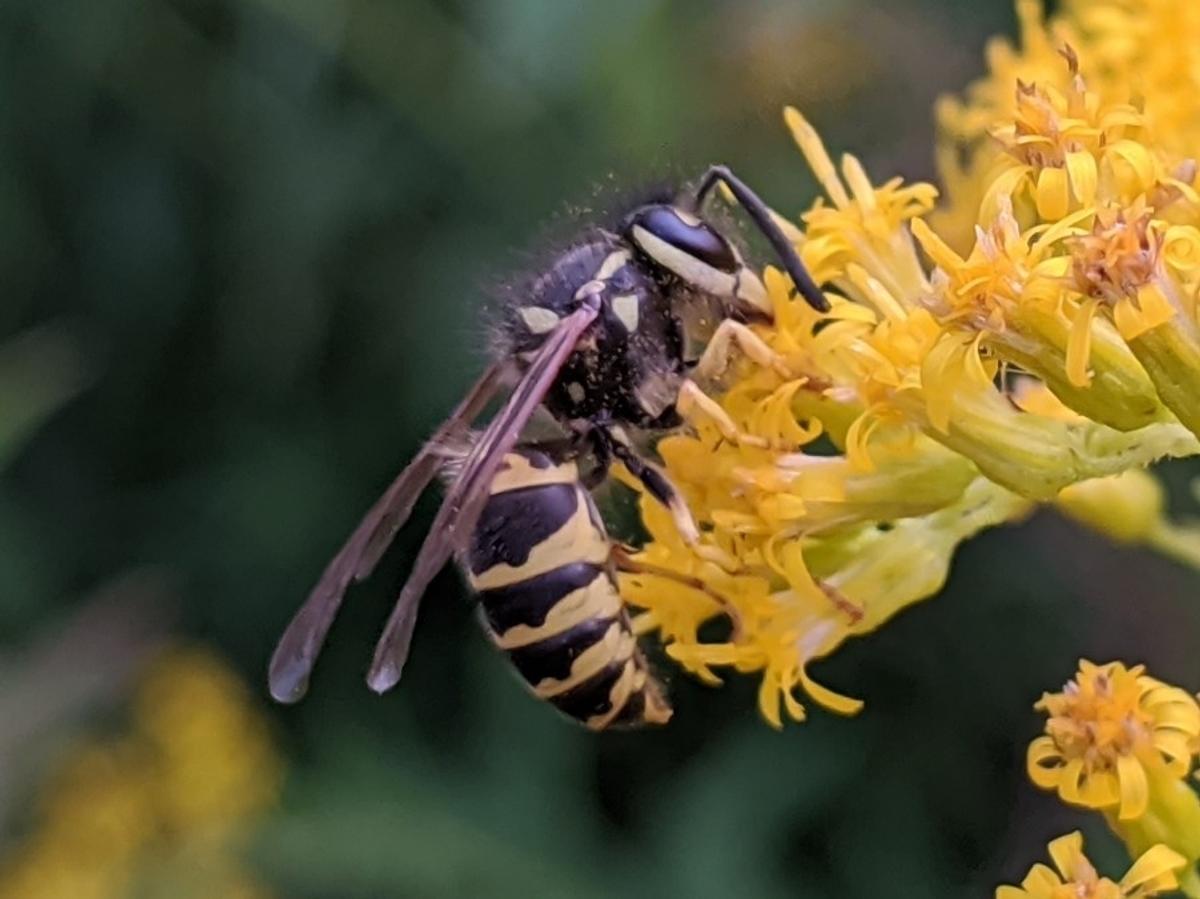
- Paper wasps (Vespidae) – Some species build the familiar open comb nests, but as long as nests are not near your main property they can be valuable predators of caterpillars in gardens.
Recognizing these wasps as allies rather than enemies encourages a more nuanced approach to “pest control” in a native garden.
Flower shapes and plant partners for native bees and wasps
To support diverse bees and wasps, include:
- Deep or tubular flowers for bumble bees and longer‑tongued solitary bees.
- Open, flat flowers for small sweat bees and many wasps.
- Native groups like asters, goldenrods, milkweeds, mountain mints, bee balms, coneflowers, and regional shrubs.
- A mix of flower shapes and bloom times from spring through fall.
Different bee and wasp groups favor different flower types. Bumble bees and many solitary bees excel on deep or tubular flowers where their size and tongue length let them reach nectar, while small sweat bees and wasps often prefer open, flat flowers rich in accessible pollen.
Native plant groups that tend to support wide insect diversity include asters and goldenrods (late‑season composites), milkweeds, mountain mints, bee balms, coneflowers, and many regionally common wildflowers and shrubs. Choosing a mix of flower shapes - tubular, flat, clustered, and composite - and staggering bloom times gives native bees and wasps reliable forage from spring through fall.
Nesting habitat: soil, stems, and small cavities
Provide nesting habitat by:
- Leaving some sunny patches of bare or lightly vegetated, well‑drained soil for ground‑nesting bees.
- Avoiding heavy mulch everywhere so bees can still access soil.
- Keeping some dead or hollow stems and pithy branches for cavity‑nesting bees and wasps.
Many native bees nest in the ground, so maintaining some areas of bare or sparsely vegetated, well‑drained soil is important. Avoiding heavy mulch everywhere and leaving small patches of exposed soil in sunny places gives ground‑nesting bees room to dig their tunnels.
Cavity‑nesting bees and wasps use hollow stems, pithy branches, and existing holes in wood or plant material. Leaving some dead stems standing over winter, cutting them back gradually, and incorporating shrubs or perennials with hollow or pithy stems can create abundant nesting sites without needing elaborate bee hotels.
Reduce chemical and physical threats
To protect native bees and wasps:
- Avoid broad‑spectrum insecticides and minimize herbicide use around flowering plants.
- Rely on healthy soils, diverse plantings, hand‑weeding, and spot treatments instead.
- Time mowing and heavy disturbance to avoid peak nesting/foraging in key habitat zones.
Broad‑spectrum insecticides can directly harm native bees and wasps or remove the insect prey that many wasps depend on. Herbicides that drastically reduce floral resources and weedy patches also reduce foraging options.
A native‑bee‑ and wasp‑friendly yard relies on cultural and mechanical controls first, like healthy soils, diverse plantings, hand‑weeding, and spot treatments where truly needed. Mowing or heavy disturbance can be timed to avoid peak nesting or foraging periods in key areas, keeping core habitat zones more stable. Read Pesticide‑Free and Wildlife‑Safe Yard Practices for more tips.
Make native bee and wasp habitat look intentional
To integrate bee and wasp habitat into a tidy yard:
- Group nectar‑rich natives in defined beds with clear edges and repeated species.
- Reserve discrete “messier” zones (back corners, side yards, under trees) for stems, bare ground, and denser structure.
- Place bee hotels or stem bundles in sun‑facing but unobtrusive spots, and use a small sign to explain their purpose.
Habitat for native bees and wasps can be integrated into tidy designs. Grouping nectar‑rich native plants in clear beds with defined edges and repeating them across the yard keeps plantings cohesive, while designated “messier” zones, like back corners, side yards, or under‑tree areas, can host stems, bare ground, and denser structure for nesting.
Bee hotels or bundles of stems can be mounted in discrete, sun‑facing spots where they are visible enough to appreciate but not intrusive. A small sign indicating that the area supports native bees and beneficial wasps helps neighbors understand that these features are deliberate and valuable.
How My Home Park helps with native bees, native wasps, and plant partners
My Home Park can help you:
- Choose native plants with strong pollen/nectar value and complementary bloom seasons.
- Use predesigned gardens and custom layouts that weave nesting habitat into a livable design.
My Home Park highlights native plants that provide especially strong pollen and nectar resources for pollinators and other wildlife. Predesigned regional gardens are sold and shipped as readymade combinations that cover multiple flower forms and bloom seasons. In any of our catalogs, be sure to explore our extensive filter system to identify species or collections that will be the best fit for your yard and the species you’d like to support.
Custom design support can focus on weaving nesting habitat - bare soil patches, stem‑rich beds, and woody structure - into your overall layout in ways that still feel tidy and livable. This makes it easier to create a yard where native bees and wasps are visible as part of the garden’s life and function, not hidden or treated as a nuisance.
Common questions about native bees, wasps, and safety
This FAQ covers safety around kids and pets, telling native bees from honey bees, when to remove wasp nests, and whether bee hotels really help.
Are native bees and wasps dangerous to have around kids and pets?
Most native bees and solitary wasps are non‑aggressive and sting only if directly handled or trapped. They focus on flowers and nests, not people, so giving nests a bit of space and locating higher‑traffic play areas slightly away from the densest habitat zones keeps interactions low‑risk.
How can I tell native bees from honey bees?
Honey bees are usually amber‑brown with a more elongated body and are often found in larger numbers on flowers or near hives. Native bees vary widely in size and color, from tiny metallic or dark bees to fuzzy bumble bees, and are often seen foraging singly or in very small groups.
Should I remove all wasp nests from my yard?
Conspicuous paper wasp nests in high‑traffic or confined areas may need to be relocated or removed for safety. However, many small, discreet nests in out‑of‑the‑way places belong to solitary or less aggressive species that provide significant pest control and can often be left undisturbed (if you even see them in the first place).
Do bee hotels really help native bees?
Well‑designed, properly maintained bee hotels can support some cavity‑nesting bee species, but they are only one part of the picture. Providing diverse native plants, leaving some stems and natural cavities, and maintaining clean nesting materials over time are just as important for healthy native bee populations.
Ready for more? Check out our guide on establishing Soft Landings and Caterpillar Habitat or explore our Native Plants 101 and Backyard Ecology & Environmental Impact sections to cover more related topics.
Share this article