How to Grow California Fuchsia

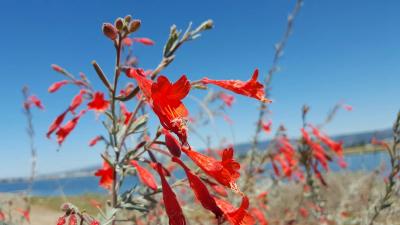
California fuchsia is the hummingbird plant of fall. When most of the garden is winding down, this drought tolerant California native lights up with brilliant red, trumpet-shaped flowers that hummingbirds visit all day, over soft gray-green leaves. Gardeners have long called it the hummingbird flower, and it is one of the easiest natives to grow.
The short answer on how to grow it: give California fuchsia full sun, lean well-drained soil, regular water through its first year, and a hard cut back in winter. This guide is for California gardeners with a sunny, dry spot who want more hummingbirds and less watering. It walks you through when and how to plant, care by season, pruning, varieties, the best companion plants, and answers to common questions. Get it right once and you will have a low-water plant that feeds hummingbirds every fall for years.
California fuchsia plants at a glance
- Sun: Full sun; part shade in hot inland gardens
- Water: Very low; a little summer water means more flowers
- Size: Low groundcovers to upright subshrubs, 6 inches to 3 feet tall and up to 4 feet wide
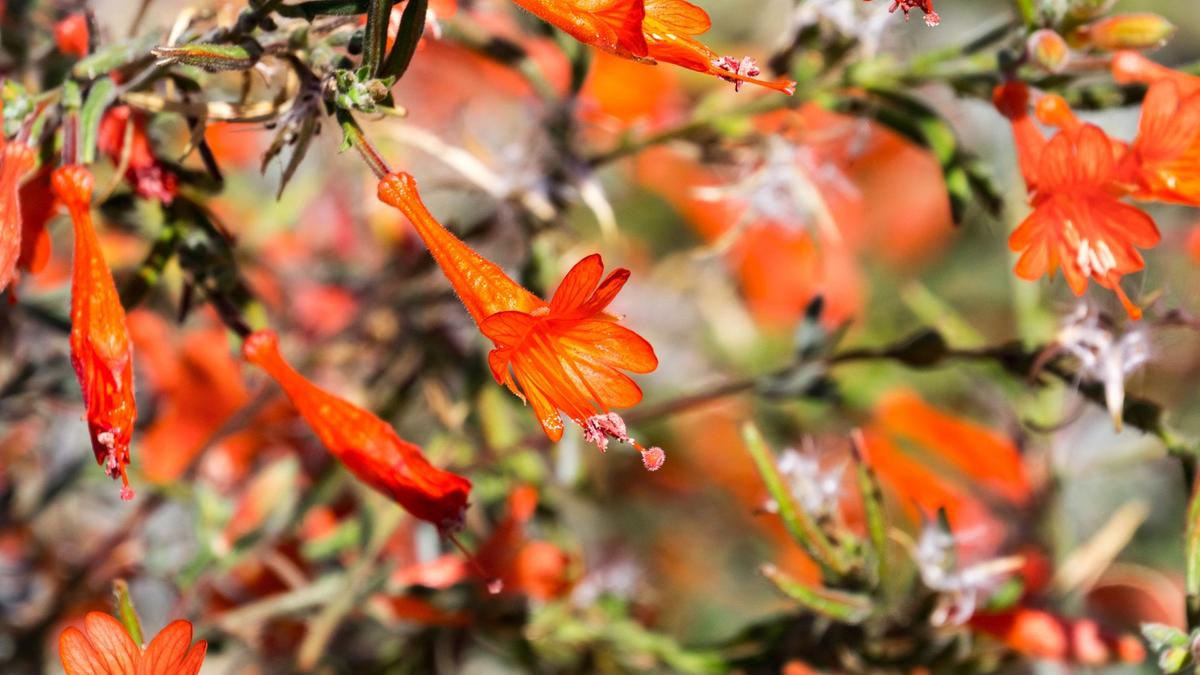
- Flower color: Red to red orange trumpets, about 1.5 inches long, late summer through fall
- Soil: Lean, well-drained soil
- Attracts: Hummingbirds, its main pollinator
- Foliage color: Lance shaped leaves in gray-green to silver
- Where it grows: Statewide, from Oregon to New Mexico and Mexico
When to plant California fuchsia
In most of coastal and low-elevation California, fall is a great time to plant California fuchsia, while winter rains are on the way. The roots settle in over winter, and plants are ready to flower the next summer. Spring is also a good time to plant, and it is the safer choice at higher elevations and anywhere winters are cold. Either way, water new plantings regularly until they are established.
California fuchsia often looks bare or even dead in winter. It is only resting. Cut it back, leave it alone, and fresh shoots will come up from the roots in spring.
How to plant California fuchsia
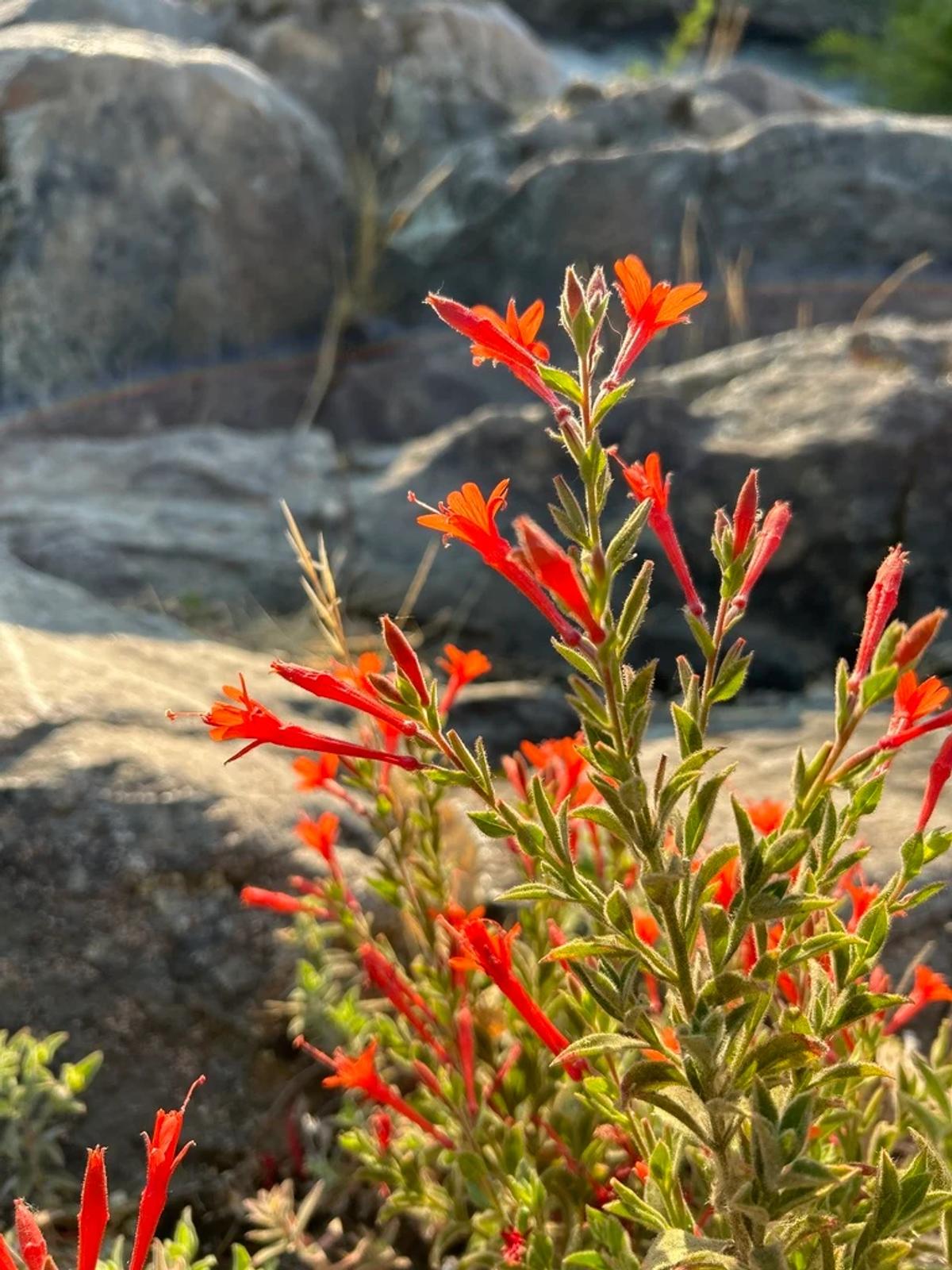
- Find a hot, sunny spot. California fuchsia loves full sun along the coast. In hot inland gardens, a little afternoon shade keeps it looking better. Slopes, rock gardens, path edges, and the tops of walls are all great locations for it, and low forms help with erosion control on banks.
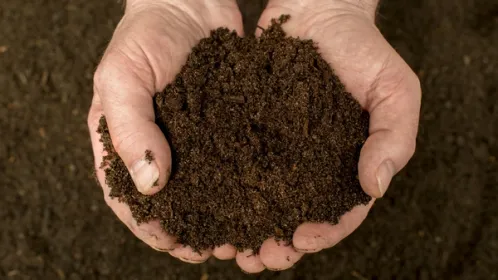
- Keep the soil lean. Plant in well-drained soil with no compost or fertilizer. Rich soil makes it lanky and less floriferous. It handles rocky and sandy ground with ease.
- Leave room to spread. Dig a hole about the size of the root ball, plant at the same depth, and firm the soil. Space plants about 3 feet apart. Low, spreading types can cover 4 to 5 feet over time.
- Water new plantings through the first year. Water deeply at planting and every week or two through the first year's dry season, until plants are established. After that it can generally live on rain, but occasional summer irrigation keeps the foliage fresh and the flowers coming.
California fuchsia care tips by season
Fall
Peak bloom. Hummingbirds visit daily. Fall is also the best time to plant new California fuchsia.
Winter
Plants rest and may look bare. Once they are straggly, cut low types back hard, to 1 to 2 inches above the ground.
Spring
Fresh gray-green shoots come up from the roots, and self-sown seedlings may appear. Take cuttings now if you want more plants.
Summer
Growth fills in from late spring, and the first flowers open by mid to late summer. In many gardens, bloom peaks around late September. Water once or twice a month for a longer, fuller show.
Pollination: why hummingbirds love California fuchsia
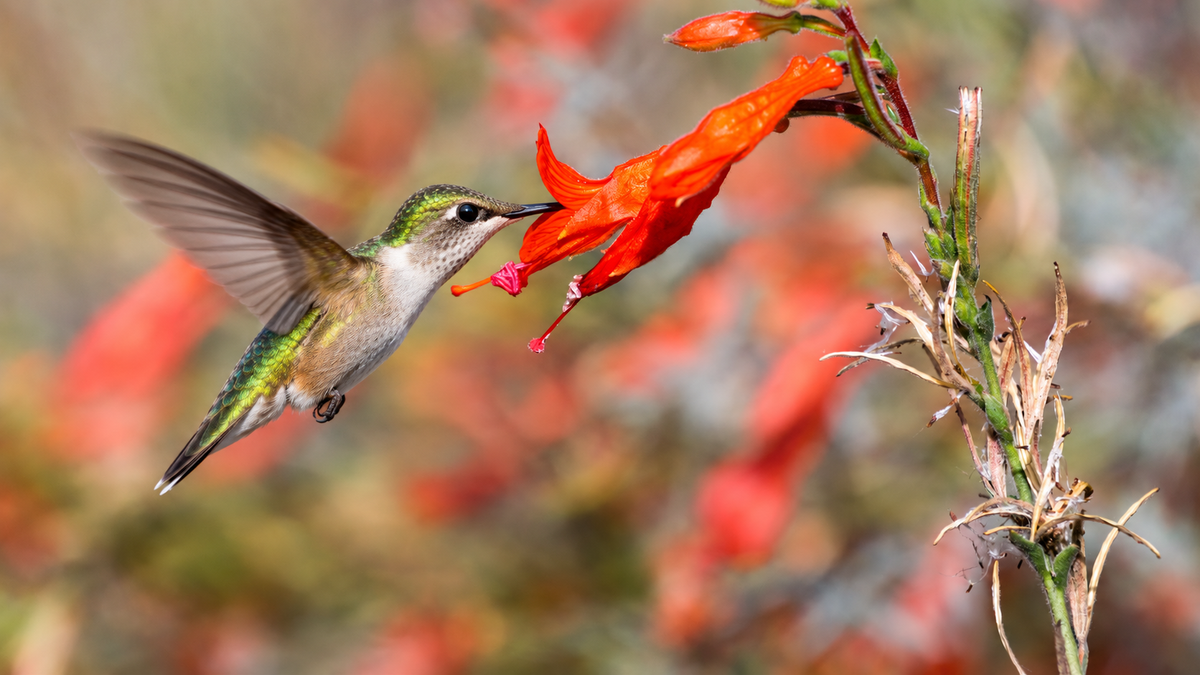
California fuchsia is one of the best plants you can grow for hummingbirds. Its long red tubes are shaped for their bills, and hummingbirds are its main pollinators. They feed on the nectar while carrying pollen from flower to flower. Because it blooms from late summer into fall, it offers nectar during the fall migration, when many other flowers have faded.
Plant it with spring and summer bloomers like hummingbird sage and coyote mint, and hummingbirds will find food in your garden for most of the year. That kind of beauty and wildlife value is hard to beat. Browse more California native plants to fill in the gaps.
Where California fuchsia grows wild, from Oregon to Mexico
California fuchsia grows on dry, rocky slopes and in chaparral nearly statewide in California, and its range reaches north into Oregon and east into Arizona and New Mexico, with populations in Mexico too. Plants from higher elevations tend to be lower and tougher in cold winters. In the wild it often spills over boulders and road cuts, which is a good hint for how to use it at home: on slopes, in rock gardens, or anywhere it can hang over an edge.
What to plant with California fuchsia: native grasses, sages, and shrubs
These natives share California fuchsia's love of sun and lean, dry soil. Native grasses, buckwheats, native sages, and other plants like low-water shrubs make the red flowers stand out, and together they help the whole planting thrive.
- Deergrass: A soft fountain of grass behind the red flowers
- Coyote mint: Summer blooms that hand off to fuchsia in fall
- California buckwheat: Rusty seed heads that glow next to red flowers
- Purple sage: Silver leaves that make the red pop
California fuchsia varieties and cultivars
California fuchsia is one species with a lot of variety. Growth habits range from low groundcovers to upright subshrubs, and nurseries offer many named cultivars, often grown as clones of standout wild plants. Native nurseries such as Tree of Life Nursery and Las Pilitas carry several. A few you may see:
Hoary California fuchsia (Epilobium canum ssp. canum)
A compact form with fuzzy gray leaves and a late bloom time. Its older name is Zauschneria cana.
Catalina
A taller selection, about 1 to 3 feet, with grayer leaves.
Everett's Choice
A low grower with dark orange-red flowers that can last about three months.
Other varieties come in pink, salmon, orange, and white, including names like Calistoga and Select Mattole. Our plants bloom in the classic red.
California fuchsia FAQ
When does California fuchsia bloom?
From late summer through fall. Depending on the plant and your area, flowers can start around July and keep going into November or even December. A little summer water stretches the bloom season.
How do I cut back California fuchsia?
Once flowering ends and the plant looks straggly in late fall or winter, cut low, spreading types hard, to about 1 to 2 inches above the ground. Taller types only need a light shearing. Pruning keeps stems from getting long and floppy and brings fresh growth in spring.
Why does my California fuchsia look dead in winter?
That is normal. California fuchsia is semi-deciduous and often goes partly or fully dormant in winter, especially in colder spots. Cut it back and wait. New shoots come up from the roots in spring.
Does California fuchsia spread?
Yes. It spreads by underground rhizomes and can form a patch several feet wide. It can also seed itself, since its tiny seeds have fluffy tufts that drift on the wind. If it wanders where you do not want it, pull or dig the extra shoots.
Is California fuchsia invasive?
No. It is a California native, so it is not invasive here. It can spread by rhizomes and seed, though, so give it room or pull extra shoots if it wanders beyond where you want it.
What is the winter hardiness of California fuchsia?
It depends on the clone and where its parents grew. Forms from higher elevations are much hardier, and some are rated to about USDA zone 5. Most coastal and low-elevation forms prefer milder winters. In cold areas, plant in spring and give it excellent drainage.
Is California fuchsia deer resistant?
Generally, yes. Its fuzzy foliage and aromatic oils make it unappealing to deer, though hungry deer will taste almost anything.
Is California fuchsia the same as Zauschneria?
Yes. Zauschneria californica and Zauschneria cana are older scientific names. Botanists now place it in the genus Epilobium as Epilobium canum, but many nurseries, garden centers, and books still use Zauschneria. You may also see it called hummingbird trumpet or hummingbird flower.
Is California fuchsia related to the fuchsias in hanging baskets?
Distantly. Both belong to the evening primrose family, but they are different plants. Garden fuchsias come from Central and South America and need regular water, while California fuchsia is a drought tolerant native.
Can I grow California fuchsia in a pot or container?
Yes. Use a pot with drainage holes and a fast-draining mix, and give it full sun. Its spreading stems and branches spill nicely over the edge. Plants grown in a container need more water than plants in the ground, so water when the top couple of inches are dry.
Can I grow California fuchsia from seed or cuttings?
Yes, both are easy. Sow seed on bare soil in fall, or take stem cuttings in spring and root them in a moist, sandy mix. Starting with young plants gets you flowers the same year.
Give hummingbirds a fall feast
Our California fuchsia plants are grown in California and ready for your sunniest, driest spot. Shop California fuchsia.
California fuchsia and native plants resources
- University of California Agriculture and Natural Resources: California Fuchsia: A home gardener's experience growing it, with variety notes
- San Diego Horticultural Society: California Fuchsia, a Native Fall Bloomer: Bloom timing, pruning, and propagation
- How to Grow Hummingbird Sage: Read our guide to a spring-blooming hummingbird favorite
- More California native plants from My Home Park: Drought tolerant natives that ship to your door
Sources: UC ANR, Under the Solano Sun; San Diego Horticultural Society; Wikipedia, Epilobium canum
Share this article