Plant in full sun with sharp drainage, and avoid overwatering once established. Remove spent flower stalks after bloom if desired, and trim old foliage only as needed to keep the rosette tidy.
Hummingbird Plants
Red Yucca
Hesperaloe parviflora
$29.99
$34.99
You Save 15%
Reserve Now
Ships the week of October 12.
Select Quantity
3-Pack
3 Plants
$10.00/plant
6-Pack
6 Plants
$9.17/plant
Verify Availability
Show Native Range
Enter your ZIP code to verify if these plants are available in your area.
Quantity
Sourced ecologically
Delivered to Your Door
Easy Planting
About this Plant
Red Yucca brings dramatic height, movement, and long-lasting color to water-wise landscapes. Despite its name, it is not a true yucca; instead, it forms a tidy rosette of narrow, arching leaves edged with delicate curling fibers, creating the look of an ornamental grass with the toughness of a desert succulent.
From late spring into summer, slender flower stalks rise several feet above the foliage, carrying tubular blooms in shades of coral red, rose pink, and salmon. Hummingbirds frequently visit the nectar-rich flowers, while bees and other pollinators also stop by throughout the long bloom season. Native to Texas and northeastern Mexico, Red Yucca thrives in intense sun, reflected heat, and lean, well-drained soil, making it an excellent choice for gravel gardens, dry slopes, driveway borders, and architectural accents.
Why Choose Red Yucca?
- Long-lasting tubular flowers attract hummingbirds
- Evergreen or semi-evergreen foliage provides year-round structure
- Thrives in heat, drought, and reflected sun
- Excellent for gravel gardens, dry slopes, and low-water landscapes
-
Architectural form adds structure without overwhelming nearby plants
Maintenance Tips
- Plant Red Yucca in full sun and sharply drained soil, allowing the soil to dry between waterings once established.
- Remove spent flower stalks at the base and trim away damaged older leaves as needed, but avoid cutting back the entire rosette.
- Mature clumps can be divided or unwanted offsets removed to manage their size.
Details
Soil Types
-
Soil Moisture
-
Sun Exposure
-
Hardiness Zone
USDA 5–10
Plant Type
Succulent
Mature Height
-
Mature Width
-
Bloom Color
Red
Bloom Time
-
Root Type
Rhizome
Red Yucca
$29.99$34.99
Ecological Benefits
Attracts Pollinators
Provides nectar and pollen for bees and other pollinators.
Attracts Butterflies
A nectar source that draws butterflies throughout the season.
Drought Tolerant
Thrives with minimal watering once established.
Butterfly Host
Supports butterfly caterpillars as a host plant.
Birds
Seeds or berries provide food for birds.
Attracts Hummingbirds
Nectar-rich blooms that draw hummingbirds to your garden.
What Folks Are Saying
“It's like following a recipe. Choosing from multiple designs is fun.” - Kari
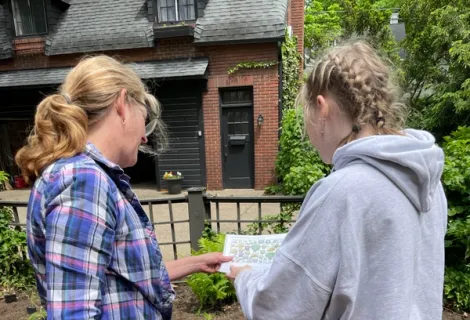
“The process from the website to getting the plants, could not have been easier or more seamless.” - Justin

“I can't believe that we are the house with this beautiful garden.” - Howard
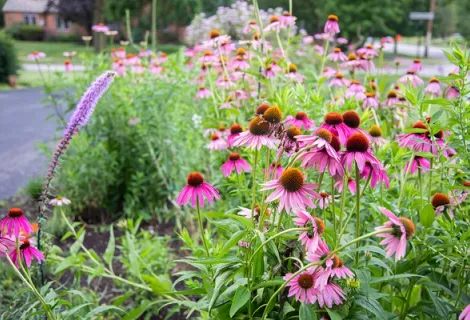
“I've never planted anything in my life. And this was actually quite fun.” - Steve
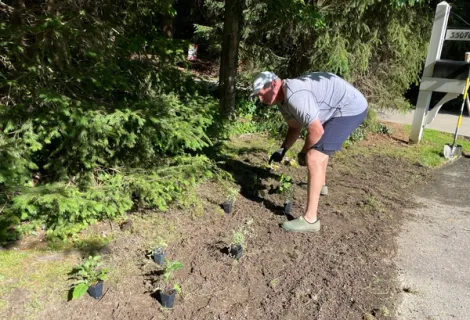
Shop Additional Species

Coral Honeysuckle
Lonicera sempervirens
From $5.28/plant
Save 15%

White Sage
Salvia apiana
From $9.17/plant
Save 15%

Scarlet Sage
Salvia coccinea
From $5.28/plant
Save 15%

Butterfly Milkweed
Asclepias tuberosa
From $3.98/plant
Save 15%

Hummingbird Sage
Salvia spathacea
From $9.17/plant
Save 15%

Coyote Mint
Monardella villosa
From $9.17/plant
Save 15%

Dense Blazing Star
Liatris spicata
From $4.66/plant
Save 15%

Island Bush Snapdragon
Galvezia speciosa
From $9.17/plant
Save 15%

Great Blue Lobelia
Lobelia siphilitica
From $4.66/plant
Save 15%

Eastern Smooth Beardtongue
Penstemon laevigatus
From $5.28/plant
Save 15%

Royal Catchfly
Silene regia
From $4.66/plant
Save 15%

Big Blue Sage
Salvia azurea
From $4.66/plant
Save 15%

Bush Monkeyflower
Diplacus aurantiacus
From $9.17/plant
Save 15%

Black-Eyed Susan
Rudbeckia hirta
From $5.28/plant
Save 15%

Cardinal Flower
Lobelia cardinalis
From $3.98/plant
Save 15%

Lyreleaf Sage
Salvia lyrata
From $5.28/plant
Save 15%

Obedient Plant
Physostegia virginiana
From $9.17/plant
Save 15%

Swamp Milkweed
Asclepias incarnata
From $3.98/plant
Save 15%

Dense Blazing Star
Liatris spicata
From $5.28/plant
Save 15%

Southern Blue Flag Iris
Iris virginica
From $9.17/plant
Save 15%
Scarlet Sage
Salvia coccinea
From $9.17/plant
Save 15%

Texas Lantana
Lantana urticoides
From $9.17/plant
Save 15%

Texas Betony
Stachys coccinea
From $9.17/plant
Save 15%
Obedient Plant
Physostegia virginiana
From $9.17/plant
Save 15%