Rabbits, Groundhogs, and Other Small Mammals in Native Beds

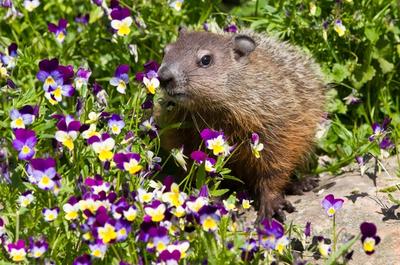
Rabbits, groundhogs, and other small mammals can reset native beds again and again, especially while plants are young. With a few layout tweaks, smart plant choices, and low, humane barriers, you can protect your most vulnerable plantings while still keeping your yard welcoming for wildlife overall.
How rabbits and groundhogs impact native beds
In native beds, small mammals can:
- Rabbits: Clip tender stems and foliage near ground level and strip bark from young woody plants.
- Groundhogs: Remove entire patches of plants and disturb soil with burrows near beds and structures.
Rabbits tend to clip tender stems and foliage near ground level and will also strip bark from young woody plants, especially in winter. Groundhogs (woodchucks) can remove entire patches of plants and create burrows that disturb roots, lawns, and even structures near beds.
In a native planting, much as in a veggie patch, that can mean missing flowers, repeatedly “reset” perennials, or entire sections that never fill in. Understanding which animal is doing the damage helps you tailor protection so beds can mature into dense, resilient habitat.
Recognizing rabbit vs. groundhog damage
Typical signs:
- Rabbits: Clean, angled cuts (~45°) on low stems/leaves, small round droppings, gnaw marks on bark a foot or two above ground.
- Groundhogs: Larger swaths eaten down, obvious burrow entrances with soil mounds, runs between dens and feeding areas.
Rabbit browsing usually leaves clean, angled cuts - often around 45 degrees - on stems and leaves, with small round droppings nearby and gnaw marks on bark a foot or two above the ground. Damage often appears suddenly on low, tender growth around the edges of beds or on young shrubs and trees.
Groundhog damage tends to involve larger swaths of plants eaten down, obvious burrow entrances with soil mounds, and trails or “runs” between den sites and feeding areas. Their digging can create soft spots and holes in or near beds, which is a safety issue as well as a planting problem.
Think it may be deer? Be sure to check out our Humane Deer Deterrents and Exclusion Options as well.
Plant and layout choices that reduce pressure
To reduce pressure:
- Use more aromatic, coarse, or less‑palatable natives (e.g., many mints, scented perennials, tough grasses) at exposed edges.
- Keep edge vegetation a bit more open so animals feel less hidden while feeding.
- Concentrate denser cover in zones away from your highest‑value plantings.
As with deer, choosing more aromatic, coarse, or less‑palatable natives for exposed edges makes beds less attractive to rabbits and groundhogs. Many mint‑family herbs, strongly scented perennials, and tougher grasses can form a buffer around more appealing plants.
Keeping vegetation near bed edges a bit more open - while still ecologically useful - reduces the “cover” that makes small mammals feel safe while feeding. Dense cover can instead be concentrated in selected zones away from your highest‑value plantings so wildlife has places to hide that are not right in the middle of sensitive beds.
For more plant selection tips, check out our guide on Deer-Tolerant Native Plants for Home Gardens.
Humane physical barriers for small mammals
Effective small‑mammal barriers include:
- Low fences (2–3 feet) of hardware cloth or welded wire with small mesh, secured at or slightly below ground for rabbits.
- For groundhogs: Fencing buried with an outward L‑shaped bend to deter digging under.
- Individual cages of wire/mesh around new perennials and shrubs in hot spots.
- For climbing groundhogs that breach fences, a “floppy” top section of loosely supported wire can be more discouraging than rigid tops.
Low fences of hardware cloth or welded wire, with mesh small enough to block rabbits, are one of the most reliable ways to protect entire beds. For rabbits, fences 2–3 feet tall with the bottom edge secured to the ground (or bent outward and pinned) can greatly limit access.
Where groundhogs are a problem, barriers need to extend below grade with an outward L‑shaped bend to deter digging under, especially around high‑value beds. Individual cages around newly planted perennials and shrubs, made from wire or mesh, offer a flexible, small‑scale option in specific hot spots. Groundhogs are surprisingly good climbers: if you know you’re dealing with groundhogs and they’re getting into your bed despite fencing, try a “floppy” topped fence (e.g. chicken wire anchored for all but the top foot or two) as the softer structure may counterintuitively work better to put them off the bed.
Managing burrows and access points
For burrows and access:
- Seek humane wildlife help where required by regulations before collapsing or filling burrows.
- After animals leave, properly fill and close burrows near beds and structures.
- Block dig‑under spots, tighten fence gaps, and place temporary deterrents along active runs while offering alternative cover elsewhere.
Groundhog burrows near key beds or structures may need active management, ideally with help from humane wildlife professionals where required by local regulations. After animals leave, properly filling and collapsing burrows reduces safety hazards and discourages reuse by new occupants. Note that groundhog burrows may be located nearer to or under a shed or porch as these structures often offer fantastic year-round coverage.
Around beds, blocking obvious dig‑under spots, tightening gaps under fences, and placing temporary deterrents near active runs can nudge animals away from your most sensitive plantings. These steps work best in combination with alternative cover and forage areas elsewhere in the yard or nearby.
Repellents and scare tactics: where they fit
Repellents and scare tactics can:
- Help reduce rabbit browsing when combined with fencing and plant choice.
- Provide short‑term relief during establishment or pressure spikes.They work best when:
- Reapplied and rotated regularly.
- Used as one layer, not the only line of defense.
Scent‑based repellents and homemade mixes can help reduce rabbit browsing in some situations, especially when combined with fencing and plant choice. Motion‑activated sprinklers, lights, or occasional visual scare devices may also offer short‑term relief, but animals often adjust if nothing else changes.
These tools are most effective when used strategically - for example, during the establishment of new beds or during a surge in pressure - rather than as the only or ritual line of defense. Regular re‑application and rotation are important for any repellent‑based approach so consistency and persistence is key.
How My Home Park helps you design with small mammals in mind
My Home Park can help you:
- Place vulnerable plants where shielding is easiest and use tougher natives at bed edges.
- Identify regionally suitable species with good browse resistance to form “green barriers.”
Balancing habitat for birds, pollinators, and other wildlife with protection from rabbits and groundhogs can feel complicated. My Home Park designs, especially through our custom design service, can place more vulnerable plants where they are easier to shield, lean on tougher native species at bed edges, and suggest where low fencing or cages will provide the most benefit during establishment. Our list of regionally suitable native plant species includes many that have great browse resistance which also provides a good base to build out your own beds or add some “green barriers” to an exposed garden.
There’s unfortunately no true guarantee that your plants - even your native plants - will go unbrowsed. Accepting this as a reality of gardening and starting with a planting plan that assumes some level of animal pressure lets you build native beds that welcome wildlife broadly while still keeping key plantings intact. That way, you spend less time reacting to damage and more time watching and enjoying the ecosystem you’ve created.
Share this article