Florida does not really have one “flower season.”
Spring may bring the biggest flush of wildflowers, but native blooms can keep appearing well into summer and fall—and in parts of the state, even through winter.
That long season is one of the best reasons to garden with native plants.
Instead of relying on a single spring display, you can build a landscape where something new takes over as another plant finishes. Yellow Coreopsis can give way to orange Butterfly Milkweed, red Tropical Sage, summer beach flowers, and late-season asters that keep feeding pollinators when much of the garden is winding down.
The trick is choosing flowers in Florida that fit your region and your yard. North Florida, Central Florida, and South Florida do not share exactly the same bloom calendar, and a plant that loves sandy full sun will not perform the same way beneath a Southern Live Oak or in a wet low spot.
Start with the site, then build the bloom sequence around it.
Find Native Flowers for Your Florida Garden
Make sure Florida is selected as your location, then explore native flowers and companion plants available for your area.
Florida Native Flowers Can Bloom Across Much of the Year
Florida’s climate gives gardeners an unusually long window for flowers.
UF/IFAS organizes native wildflowers by winter, spring, summer, fall, and multi-season bloom periods, while also noting that flowering times change dramatically across the state. A plant that flowers for months in South Florida may bloom for only a short period in the Panhandle.
That is why seasonal lists should be treated as a framework, not a calendar carved in stone.
Temperature, rainfall, soil moisture, and local climate all affect when a plant starts and stops flowering.
The more useful strategy is to combine several native species with overlapping bloom times.
That way your garden is not dependent on one plant carrying the whole season.
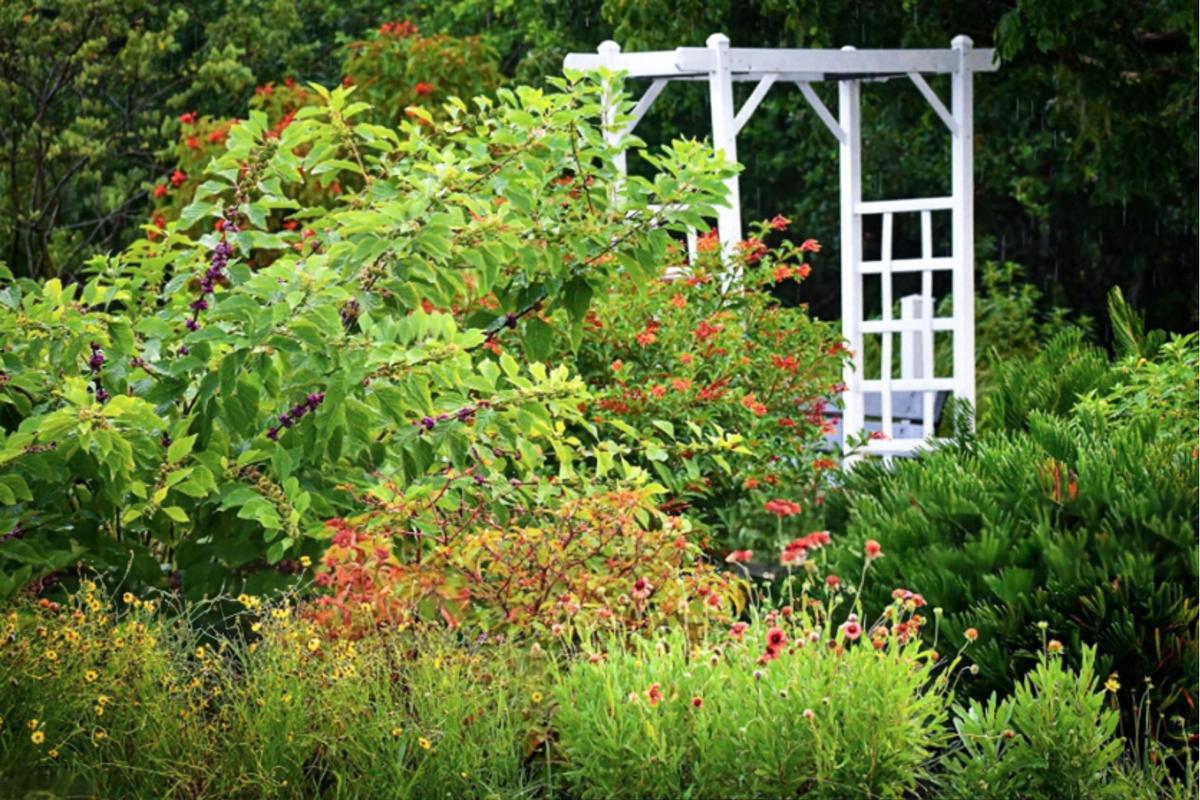
Why Start With Native Flowers?
A colorful flower is not automatically an ecologically useful flower.
Florida native plants have relationships with local insects, birds, and other wildlife that go beyond simply producing nectar.
Some flowers attract native bees. Some provide nectar for adult butterflies and hummingbirds. Others are paired with host plants that allow caterpillars to complete their life cycles.
Native species are also adapted to Florida’s particular combinations of heat, humidity, rainfall, and often nutrient-poor sandy soils.
That does not mean every Florida native plant belongs in every Florida yard.
It means native flowers give you an excellent starting palette—then light, soil moisture, salt spray, mature size, and regional native range decide which ones actually fit.
For the broader picture, check out our Florida native plant guide.
Winter Flowers Keep the Garden From Going Quiet
Winter is quieter than spring, but Florida native gardens do not have to become flowerless.
Lyreleaf Sage (Salvia lyrata) can begin flowering during the cooler part of the year in suitable sites, bringing blue-purple color close to the ground.
Butterweed (Packera glabella) is another native that can provide yellow flowers during the winter-to-spring transition.
In North and Central Florida, additional native wildflowers may begin showing before gardeners farther north would even think of spring.
Winter flowers matter disproportionately to wildlife because fewer nectar and pollen sources may be available at that time.
Even a modest patch of early blooms can help bridge the gap until the larger spring flush begins.
Spring Belongs to Tickseed
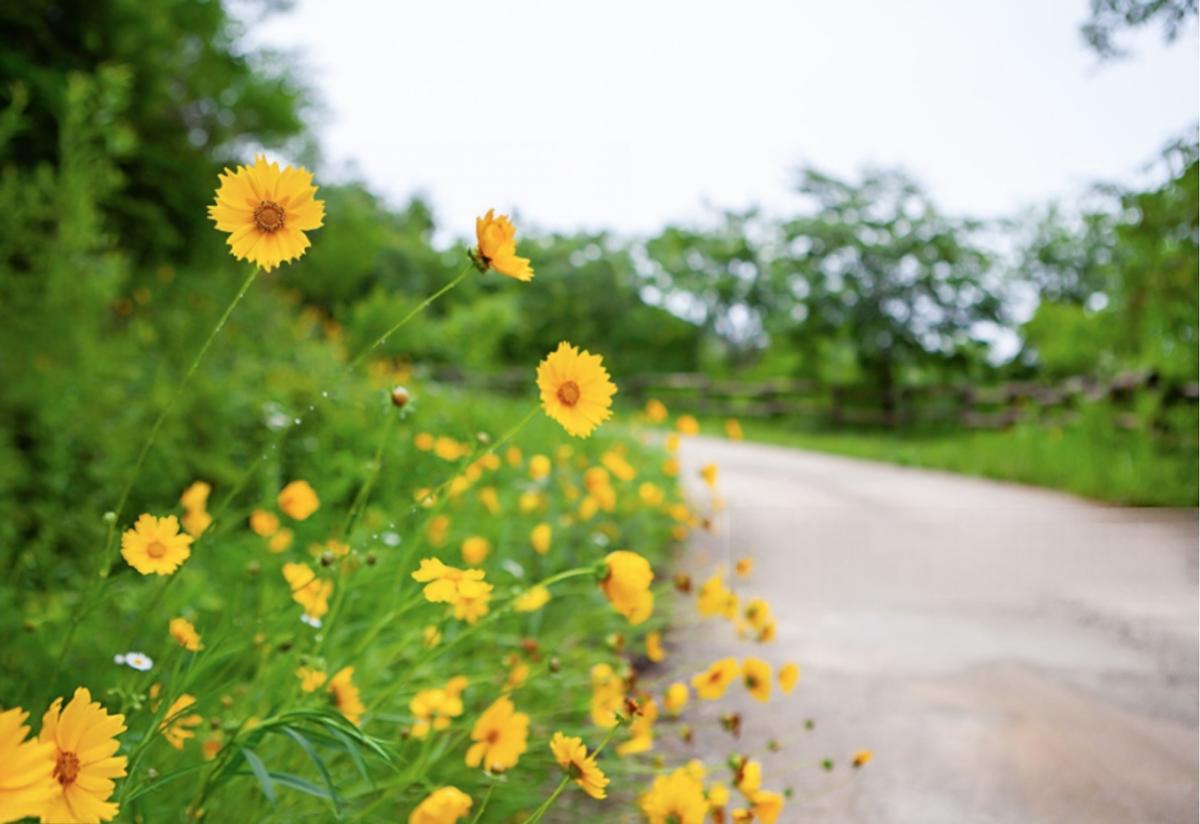
If there is one flower group that feels especially connected to Florida, it is Coreopsis, commonly called tickseed.
Coreopsis is Florida’s state wildflower, and different native species occur under different conditions across the state.
Many produce the bright yellow flowers people associate with roadside wildflower displays.
Lanceleaf Tickseed (Coreopsis lanceolata) is a familiar option for sunny gardens and butterfly plantings, while other Coreopsis species extend the genus into different moisture conditions and bloom windows.
Rather than treating “Coreopsis” as one interchangeable plant, choose the native species that fits your part of Florida and your site.
Used in masses, its bright yellow flowers can create a much stronger landscape effect than isolated individual plants.
External link: Florida Native Plant Society — Coreopsis / Tickseed
Black-Eyed Susan Can Carry Color Beyond Spring
Black-Eyed Susan (Rudbeckia hirta) is another useful native flowering plant for gardeners who want a recognizable, cheerful look.
Its yellow petals and dark centers work naturally in sunny mixed beds and butterfly gardens.
Depending on conditions and region, Black-Eyed Susan can bloom across a long stretch of the growing season rather than disappearing immediately after spring.
It also handles tougher conditions better than its cheerful appearance might suggest, including periods of drought.
Pair it with native grasses or later-blooming flowers so that the bed keeps changing after its main display.
Butterfly Milkweed Brings Orange Into the Mix
Yellow dominates many spring wildflower plantings.
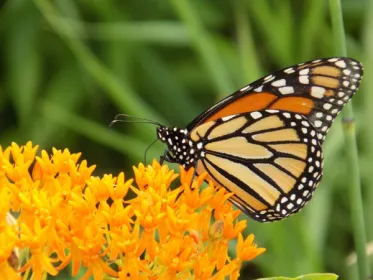
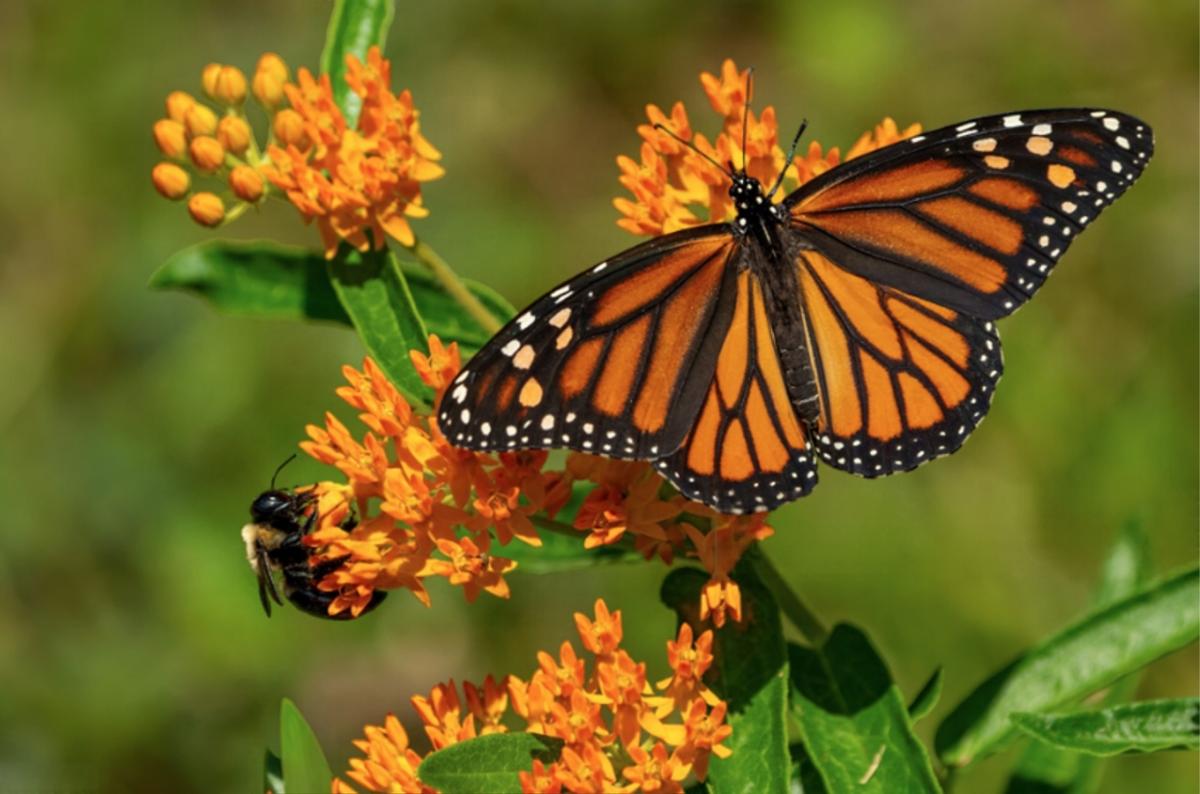
Butterfly Milkweed (Asclepias tuberosa) gives you a completely different color.
Its bright orange flowers work especially well in full sun and well-drained sandy or loamy soil.
Butterfly Milkweed also functions as a larval host plant for monarchs and other milkweed-feeding butterflies, while its flowers attract a variety of pollinators.
It is one of several Florida native milkweeds, so gardeners should still choose milkweed species according to local native range and moisture conditions.
A dry, sunny garden may suit Butterfly Milkweed. A consistently wet site may call for a different Asclepias entirely.
Tropical Sage Is a Long-Season Hummingbird Flower
Tropical Sage (Salvia coccinea), also called Scarlet Sage, is one of the most useful native flowers for adding red to a Florida planting.
Its tubular blooms are visited by hummingbirds, butterflies, and native bees.
Flower color can range through red, pink, and white, and the plant can flower over a long season when conditions are favorable.
Tropical Sage performs especially well where it receives enough light to bloom strongly, including full sun and brighter part-shade situations.
That makes it useful at the edge of a woodland garden, beside shrubs, or mixed into a sunny pollinator bed.
Florida Summer Flowers Need to Handle the Real Heat
By summer, Florida gardens are not dealing with gentle sunshine.
They are dealing with heat, humidity, heavy rain, and sometimes abrupt dry periods between storms.
Flowers that succeed here need to tolerate those conditions rather than merely survive a mild spring.
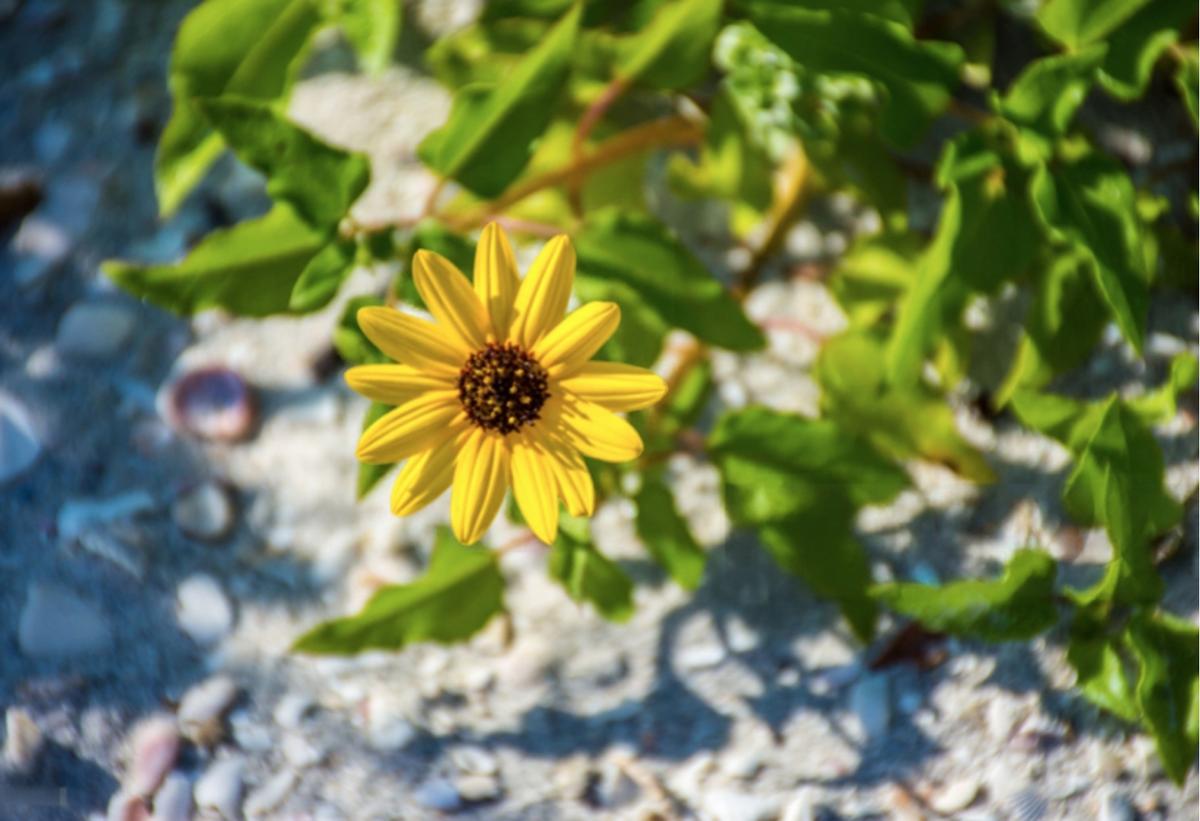
Beach Sunflower (Helianthus debilis) is particularly useful in appropriate coastal and sandy landscapes.
Its yellow flowers bring color to low, spreading plantings, while its tolerance of sandy soil and coastal exposure makes it valuable where more delicate species struggle.
That does not make Beach Sunflower a universal statewide ground cover.
It is a good example of why the best native plants are the ones that fit the habitat already present.
Moist Florida Gardens Have Their Own Flowers
Not every Florida garden is dry and sandy.
Low spots, rain gardens, pond edges, and poorly drained areas can support an entirely different flower palette.
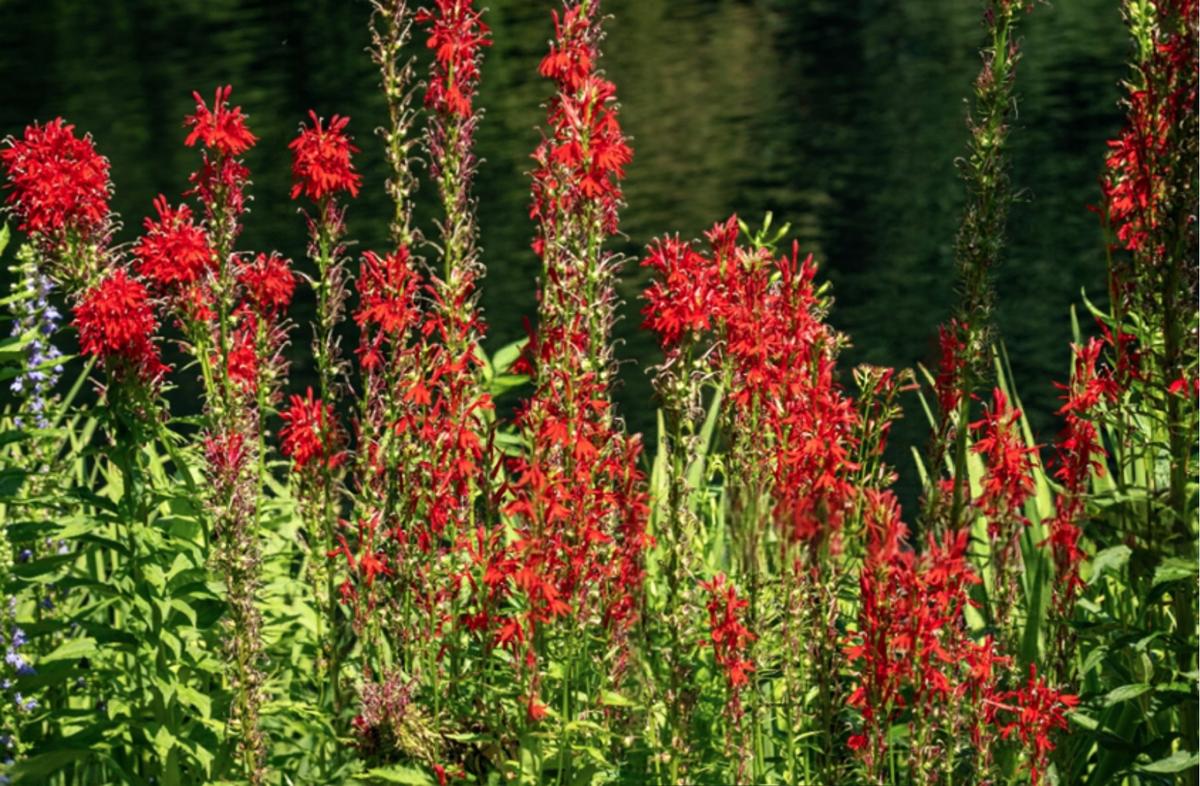
Cardinal Flower (Lobelia cardinalis) is one of the showiest examples.
Its vivid red flower spikes can attract hummingbirds and stand out dramatically against green foliage.
Cardinal Flower prefers moisture, so it belongs in wet or reliably damp conditions rather than a dry sunny border.
Swamp Milkweed (Asclepias incarnata) can fill a similar moisture-loving role while adding monarch host-plant value and flowers attractive to native bees and other pollinators.
The important point is not that wet areas are a landscaping problem.
With the right native species, they can become one of the most interesting parts of the garden.
Read More: Shade Flowers for Florida →
Fall Flowers May Be the Most Important Ones You Plant
Spring flowers are easy to appreciate because everything else is waking up at the same time.
Late-season flowers can be more important ecologically.
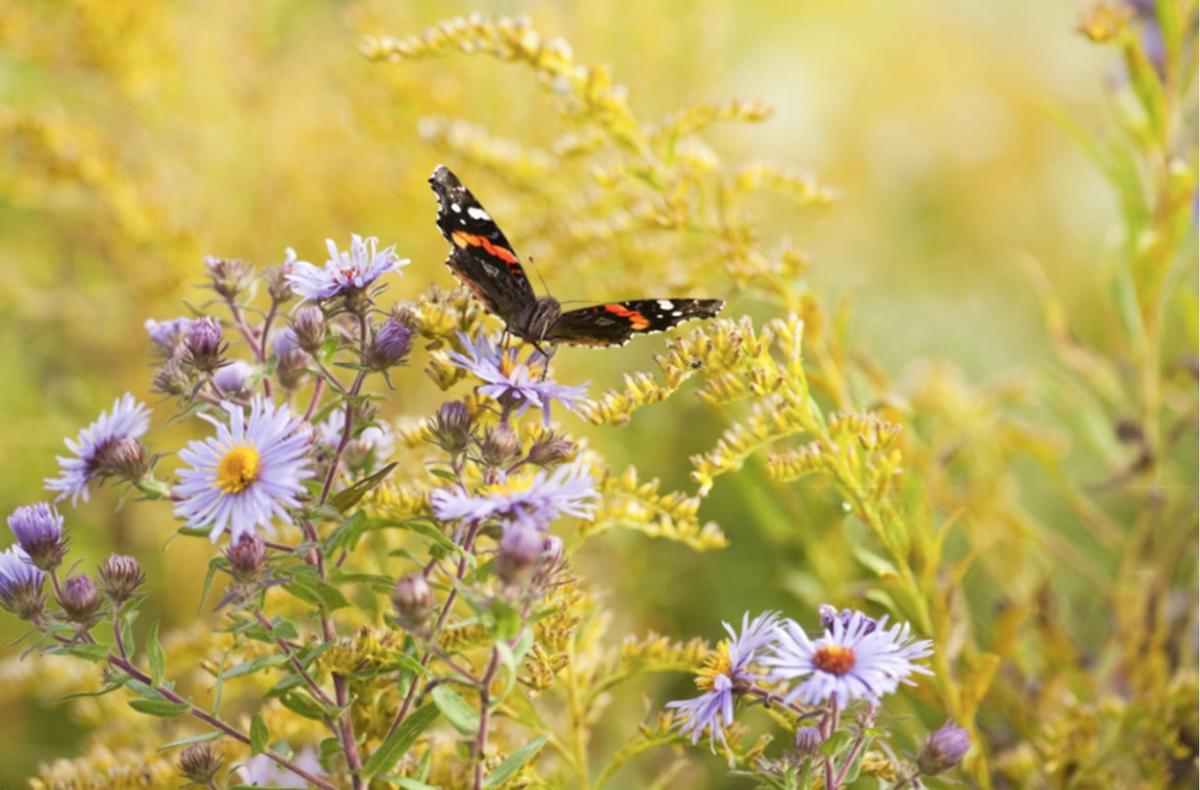
By early fall and late fall, migrating butterflies and other pollinators still need nectar even as some summer flowers begin to fade.
Native asters, including species such as Elliott’s Aster where regionally and hydrologically appropriate, can provide valuable late-season blooms.
Goldenrods and other fall-flowering native species can extend that nectar supply even further.
This is why a good pollinator garden should never be designed around spring alone.
Plan backward from fall, too.
Ask what will still be blooming after the first wave of color is finished.
Some Florida Flowers Bridge Several Seasons
The easiest way to create reliable color is to combine seasonal specialists with flowers that bloom over longer periods.
Black-Eyed Susan can provide an extended display.
Butterfly Milkweed may flower from spring into later portions of the growing season depending on region and conditions.
Tropical Sage can provide repeated flushes of red flowers.
Some Coreopsis species also flower much longer than others.
This is where a plant’s exact species matters.
“Tickseed,” “milkweed,” or “sage” can describe plants with very different bloom calendars and growing requirements.
Use the common name as an introduction not as the end of the research.
North Florida Flowers Follow a More Seasonal Rhythm
North Florida experiences cooler winters and a more pronounced seasonal cycle than the southern end of the state.
Spring therefore tends to feel more like a distinct event.
Native violets, Coreopsis, Black-Eyed Susan, native milkweeds, asters, and numerous other wildflowers can move through the landscape in waves.
Some flowers that bloom almost continuously farther south may have a much shorter window here.
That is not a disadvantage.
A more seasonal garden can create dramatic succession if you deliberately overlap early-, mid-, and late-season species.
Central Florida Can Mix Northern and Southern Influences
Central Florida sits in an especially interesting position.
Its native flora includes plants familiar from farther north as well as species associated increasingly with warmer landscapes.
That makes the bloom palette unusually broad.
Coreopsis, Butterfly Milkweed, Tropical Sage, Florida Greeneyes, Carolina Wild Petunia, native asters, and other flowering plants can all play roles depending on the site.
The bigger challenge is often not climate but soil and moisture.
A dry sandy ridge and a wet depression in the same Central Florida yard may need completely different flowers.
South Florida Can Keep Color Moving for a Long Time
In South Florida, warm conditions can extend flowering seasons dramatically.
But long bloom does not mean every flowering plant should be treated as a perennial color machine.
Regional native range still matters, as do rainy-season moisture, dry-season conditions, salt exposure, and intense summer heat.
Native shrubs also become increasingly useful here.
Wild Coffee, for example, contributes small white flowers followed by bright red fruits beneath tree cover.
Firebush can add orange-red flowers attractive to hummingbirds and butterflies.
Evergreen shrubs and foliage plants give South Florida gardens structure between bloom peaks so flowers do not have to do all the work.
Coastal Flowers Need to Handle Sand and Salt
A Florida coastal landscape adds another filter: salt spray.
Plants that perform beautifully inland may struggle only a few blocks from the coast.
Beach Sunflower is one example of a flowering native associated with sandy coastal conditions.
Other salt-tolerant native species can be combined with grasses, shrubs, and palms to create a landscape adapted to wind and exposure.
If you garden near the coast, do not choose plants based on flower color alone.
Salt tolerance is part of the design brief.
Partial Shade Changes the Flower Palette
Not every flower bed receives full sun.
Under open tree canopies or around the east side of a house, partial shade can support native flowers that would struggle in either blazing sun or deep shade.
Carolina Wild Petunia, Tropical Sage, native violets, Cardinal Flower in moist conditions, and other species can help fill those middle-light spaces.
Coral Honeysuckle can also bring flowers into the brighter edge of a shade garden by climbing a fence, trellis, or arbor.
For true full or deep shade, foliage and structure become more important because fewer plants will flower heavily.
Read More: Shade Flowers for Florida →
Flowers Are Only One Layer of a Florida Garden
An entire yard made from flowering perennials can become visually noisy.
Flowers look better when something quieter surrounds them.
Muhly Grass or Purple Lovegrass can provide fine texture and pink-purple seasonal plumes.
Beautyberry contributes brilliant purple fruits after its tiny flowers fade.
Southern Wax Myrtle and other evergreen shrubs can provide year-round green structure.
Wild Coffee brings dark green leaves and bright red berries into shady Central and South Florida landscapes.
Even larger plants such as Southern Live Oak, cabbage palm, and native pines can form the backdrop that makes colorful flowers read as part of a landscape rather than a flower collection.
That layered approach also creates more habitat for bird species, insects, and other wildlife.
Plant for Pollinators From Spring Through Fall
If butterflies and bees are one of your goals, think about continuity.
A butterfly garden with spectacular flowers for three weeks and nothing for the next two months is not providing the same value as a garden with overlapping bloom periods.
Plant early flowers, summer flowers, and late-season nectar sources together.
Then include host plants.
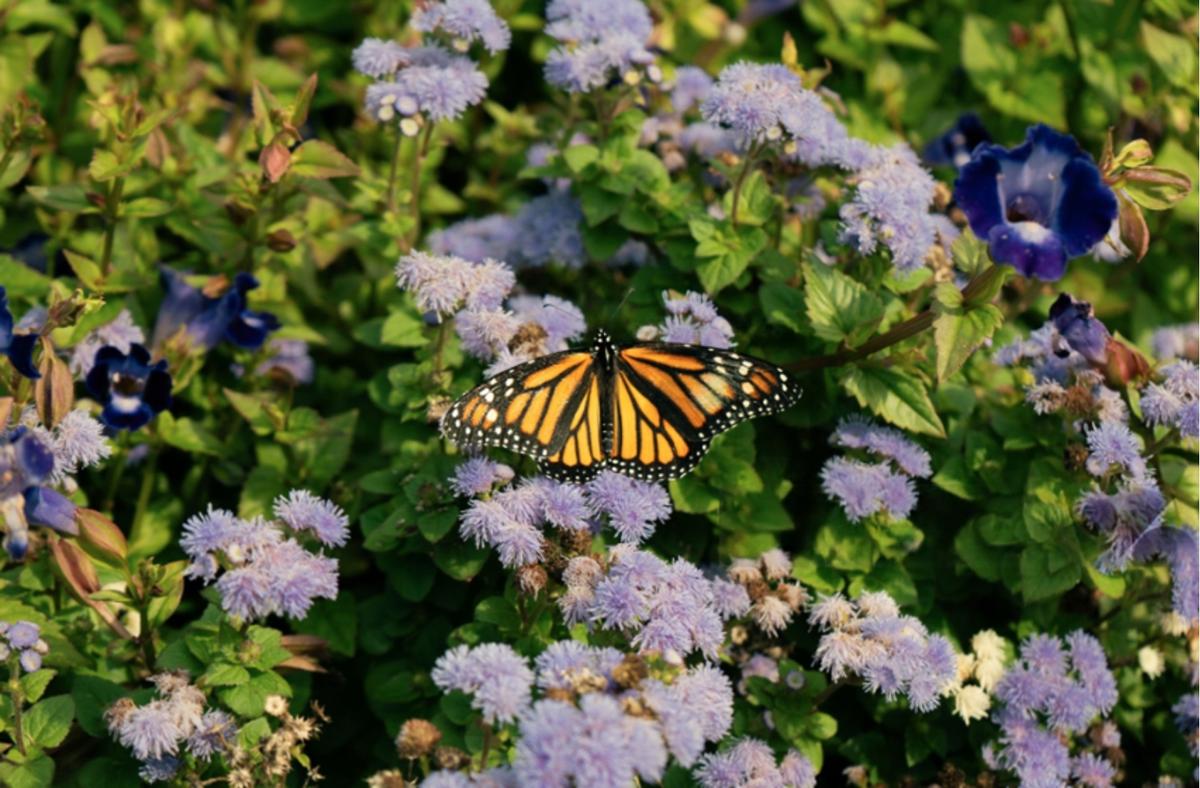
Milkweed is essential for monarch caterpillars. Other native plants support other butterfly and moth species.
Flowers feed the adults.
Host plants make the next generation possible.
The strongest wildlife garden does both.
Design Native Flowers in Groups
There is one simple design move that improves both appearance and ecological function:
Plant more than one of each flower.
A single Black-Eyed Susan can disappear visually.
A patch reads as a design element.
The same applies to Coreopsis, Tropical Sage, Butterfly Milkweed, and most other flowering perennials.
Repeat a few species rather than buying one of everything.
Use grasses, ground cover, evergreen plants, and shrubs between flower groups.
Then let different plants take turns carrying the color as the seasons change.
For a broader landscape-design approach, check out our Florida landscaping guide.
Build a Florida Garden That Always Has Something Coming Next
You do not need every native wildflower Florida has to offer.
You need a sequence.
Maybe winter begins with Lyreleaf Sage.
Spring brings yellow Coreopsis and Black-Eyed Susan.
Butterfly Milkweed adds orange as the season warms.
Tropical Sage keeps hummingbirds visiting through the heat.
Beach Sunflower carries exposed sandy areas.
Cardinal Flower lights up a wet corner.
Asters and goldenrods take over late in the year.
That is what makes gardening with Florida native flowers so satisfying.
The garden never has to look exactly the same for very long.
Ready to start planting?
Build a native garden that fits your yard
Whether you want to pick every plant yourself or would rather have the planning handled for you, there’s an easy way to get started.
Browse Native Plants
Shop individual native flowers, grasses, shrubs, and more available for your area.
Explore native plantsBuild Your Own Garden
Choose the native plants you want and build a complete garden tray.
Build your gardenLet Us Design It
Want a garden planned around your space? Start with a custom native planting design.
Explore custom designsShare this article