Michigan Native Plants: 14 Amazing Landscaping Choices

Gardening in Michigan means working with real variety. Along the Great Lakes you get lake‑effect snow and strong winds, in the southern Lower Peninsula you might be dealing with rich loams or heavy clays, and farther north the growing season can feel short and unpredictable. It’s easy to see why some “standard” landscape plants look tired or stressed after a season or two.
Michigan native plants are built for those realities. They evolved in the state’s dunes, forests, prairies, and wetlands, so they’re already adapted to our mix of temperature swings, moisture patterns, and soil types. Bring them into your yard and you get plants that tend to be tougher, easier to care for, and much more valuable to pollinators and birds than most imported ornamentals.
This guide introduces 14 standout Michigan native plants you can use in home landscapes—from sunny front yard plantings to part‑shade foundations and more naturalized back corners. You’ll see options for different light and moisture conditions, so you can match plants to the spaces you actually have, not an idealized blank slate.
What do we mean by “Michigan native plants”?
In this article, “Michigan native plants” refers to species that occur naturally within the state and broader Great Lakes region—plants that were part of Michigan’s original prairies, forests, and wetlands long before lawns, ornamentals, and street trees reshaped the landscape. They developed alongside the insects, birds, and other wildlife that make up Michigan’s food webs.
Because they’re adapted to local conditions, these plants tend to handle Michigan realities better than many common imports: freeze–thaw cycles, lake‑effect snow loads, summer humidity, sandy or rocky soils in some areas and heavier clays in others. In practice, that often means less watering once they’re established, fewer fertilizer needs, and far more ecological value per square foot of garden.
Why plant native in Michigan?
Michigan has seen significant changes in land use over the last century, from conversion of prairies and wetlands to agriculture and development, to the spread of lawns and non‑native ornamental plantings in neighborhoods. Those shifts reduce the amount of habitat available for pollinators, songbirds, and other wildlife that depend on native plants for food and shelter. A typical yard with mostly turf grass and a few non‑native shrubs doesn’t offer much help.
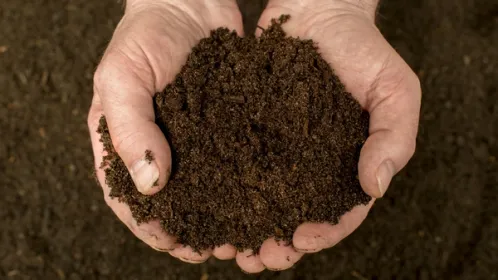
Adding native plants lets you restore some of what’s been lost, right outside your door. Deep‑rooted Michigan natives help rebuild soil structure, filter runoff before it reaches local waterways, and provide nectar, pollen, seeds, and cover for a wide range of beneficial insects and birds. Many are also surprisingly low‑maintenance once they settle in because they’re adapted to Michigan’s climate, not fighting against it.
Whether you’re working with a small city lot or a larger suburban or rural yard, weaving native plants into your existing beds—or designing a new area around them—turns your landscape into a more resilient, wildlife‑friendly space that still looks good every time you step outside.
How to use this Michigan native plant list
The 14 plants below are chosen to cover a range of Michigan garden conditions, from sunny, well‑drained spots to areas with partial shade or heavier, moisture‑holding soils. Before you pick anything, spend a few days noticing where sun actually falls in your yard and how quickly the soil dries out after a typical rain - that simple observation will do more for your success than any plant tag.
Once you have a sense of your light and soil, use the list like a menu. In each area, combine a few taller “anchor” plants with lower, filling species so you get layers of height, texture, and bloom time. Aim for a mix of spring, summer, and fall flowers so there’s always something happening for you and for the pollinators. You don’t have to overhaul everything at once; starting with three to five Michigan natives can noticeably change the feel and ecological value of even a small planting.
Native Plants for Full Sun
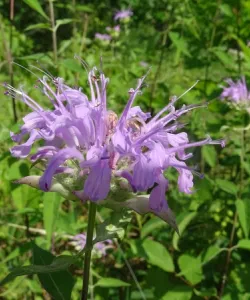
You may already be familiar with Bee Balm (also called Bergamot), which is one of many herbaceous perennials native to Michigan and many other parts of North America. This is an incredibly adaptable plant that will tolerate most soil types (except very wet soil) and will thrive so long as it gets enough sun. Its lovely lavender flowers will attract butterflies, bees, and even hummingbirds during its mid summer bloom. Easy to maintain, this plant requires only rare division to keep in one place.

Wild yarrow is a highly adaptable addition to practically any yard in the country. Its dark green foliage and fragrant white flowers will attract butterflies, bees, and other pollinators to your garden. Although happiest in full sun, it will tolerate light shade. Expect first blooms sometime in early summer.
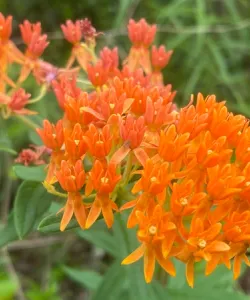
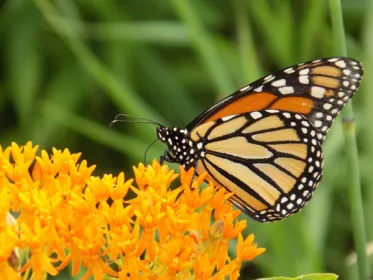
Native to almost every state east of the Rockies, Butterfly Weed is a ubiquitous and amazing herbaceous perennial. Its orange showy flowers are a welcome addition to native plant gardens with tons of sun and very dry soil. Also called Orange Milkweed, this early summer bloomer is a critical host plant for both the monarch and queen butterflies.
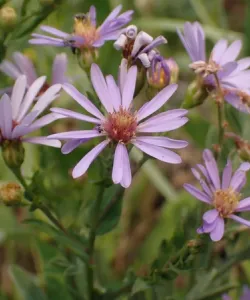
Another awesome herbaceous perennial, Smooth Aster are happiest in full sun and dry soil. Once established, its eruption of purple flowers will invigorate your garden or landscape when it blooms from late summer to early fall and beyond. This plant is a host for the Pearl Crescent butterfly (Phyciodes tharos) and Wavy-Lined Emerald moth (Synchlora aerata).
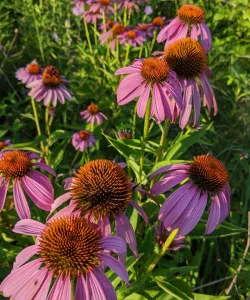
Purple Coneflower is one of a handful of native plants to become so popular as to likely be sold at your local nursery. This is an astoundingly important plant that supports tons of pollinators with its nectar and pollen and will attract birds to its seed-laden flower heads in the fall. Even hummingbirds are drawn to its purple flowers for a quick meal! Happiest in full sun with slightly moist soil. A wonderful addition to any garden or landscaping project that blooms in mid to late summer.
Native Plants for Partial Shade
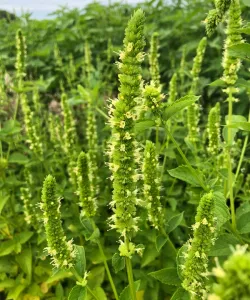
A fast-growing and strong-stemmed herbaceous perennial in the mint family, Yellow Giant Hyssop truly lives up to its name, reaching four to six feet in height. Its greenish and pale yellow flowers will draw in and support heaps of pollinators while it blooms from mid summer to early fall. This is a beautiful and dramatic addition to even a medium-sized garden or landscape.
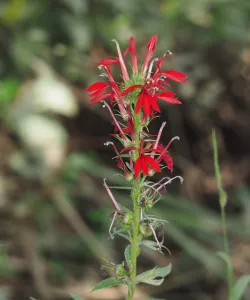
Happy in partial sun and full sun, Cardinal Flowers bloom an incredible deep crimson red in late summer. It's said this plant takes its name from the deep red of the Roman Catholic Cardinal's robe. A wetland plant by nature, Cardinal Flowers are a great landscaping choice to yards with moist soils or even wet soil by a pond or other body of water.
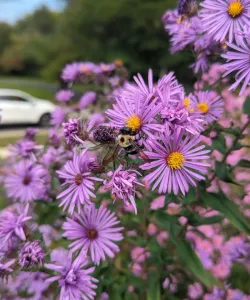
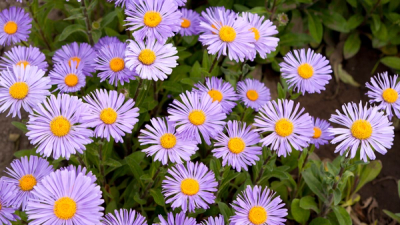
A true stunner in any landscape or garden, New England Aster's profusion of purple flowers are a joy from summer into fall. While monarch caterpillars do not feed on this plant, the adults will absolutely fuel up on its nectar before beginning their annual migration to Mexico. This stunner will thrive in moist soil and full sun to light shade. If it's height (up to 6 feet!) ever threatens to overwhelm, stems can be cut back by mid-July to maintain appearances.
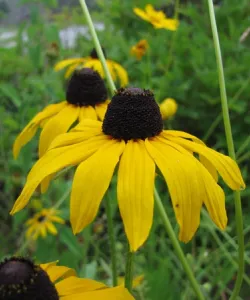
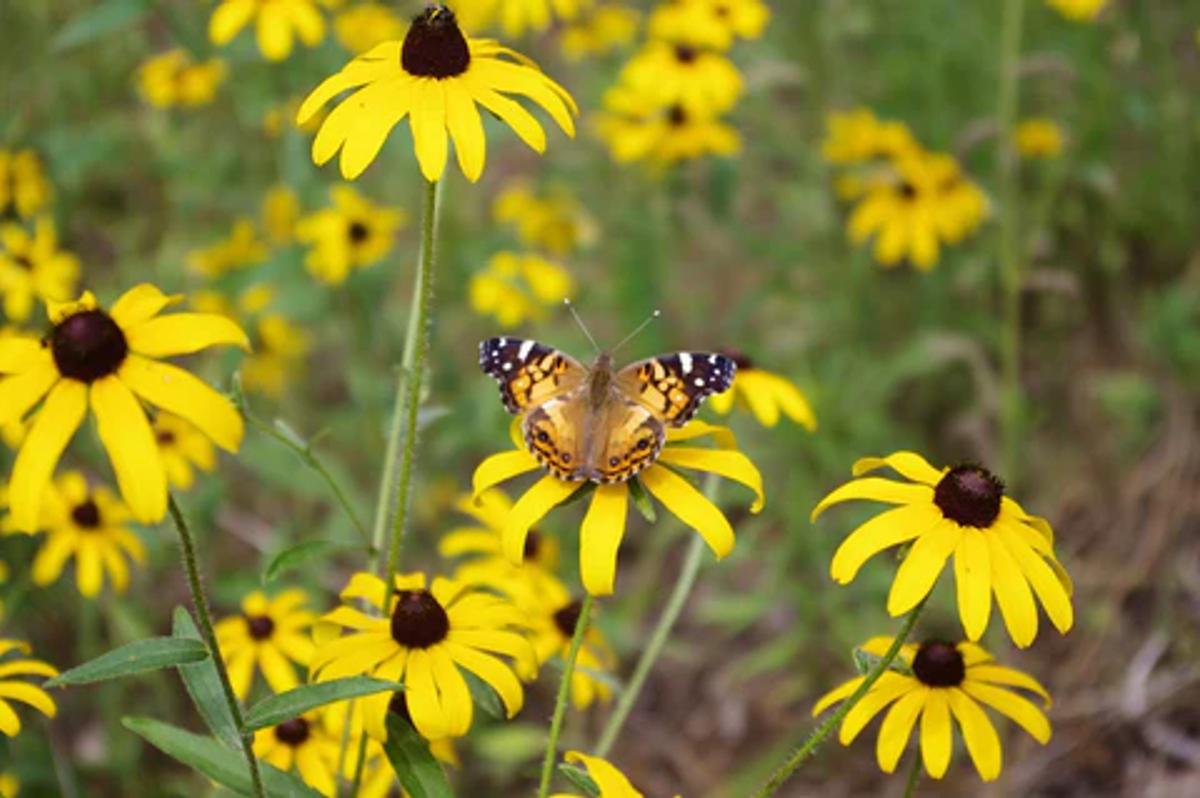
One of the more popular native Michigan plants, Black-Eyed Susan are wonderfully showy and easy to grow in dry to medium soils. Its glorious yellow flowers will invigorate your landscape from early summer on with extended blooms that can last into September. Like other coneflowers, Black-Eyed Susans support myriad pollinators and seed-eating songbirds alike.
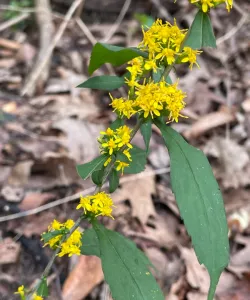
A perfect choice for the partial shade garden, Blue-Stemmed Goldenrod (also called Wreath Goldenrod) is a well-behaved and ecologically important native species. Its yellow flowers decorate long arching stems that compliment many other landscaping features.
Native Plants for Full Shade
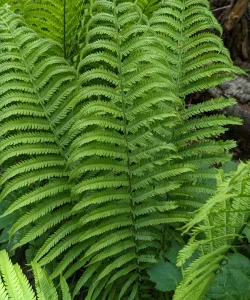
Ostrich Ferns grow to between three and five feet in height, adding texture and moisture retention for full and partial shade landscaping projects. Its emerging fiddlehead shoots are edible if cooked - a perfect way to keep denser colonies in check if desired!
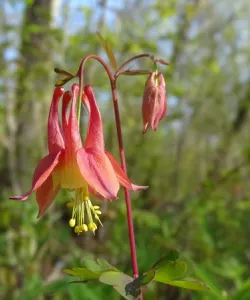
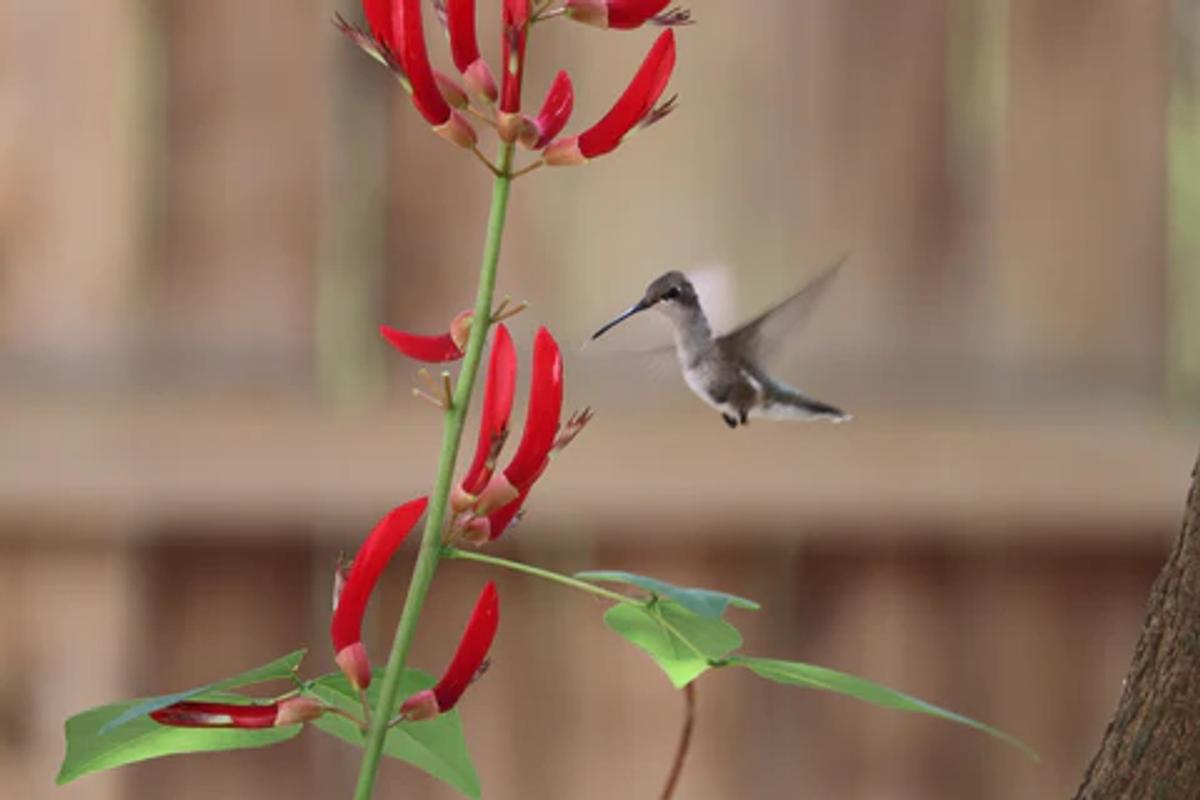
Wild Columbine's yellow and red flowers will attract hummingbirds and other long-tongued pollinators in late spring. This is a highly adaptable plant that will do well in full sun, part shade, and full shade yards alike.
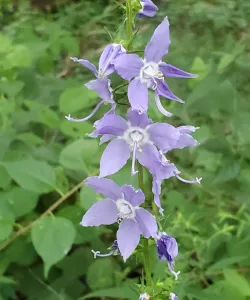
As its name suggests, Tall Bellflower boasts gorgeous blue tubular flowers set on tall attractive spikes - an easy way to enliven part shade and full shade gardens. A self-sowing biennial, Tall Bellflower will attract butterflies and bees alongside hummingbirds.
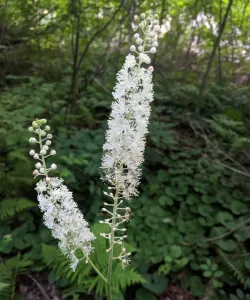
One of the more interesting native Michigan plants, Black Cohosh is a dramatic addition to any full or part shade landscape. Fragrant white flowers shoot up along attractive spikes, pulling in as many butterflies and bees as they do flies, beetles and other beneficial insect pollinators. Black Cohosh blooms anywhere from late spring to fall, but its rich, dark green foliage will add great texture for the whole season.
What you can do today
If you’re ready to bring more Michigan natives into your yard, you can start as big or as small as you like. Our pre‑designed native garden collections for Michigan group compatible species together, so you can install a full planting that looks intentional and supports wildlife without having to puzzle out every combination and spacing detail yourself.
Prefer to build things plant by plant? You can also shop individual Michigan native species in 3‑packs, 6‑packs, and full trays to test new plants, fill in around existing beds, or gradually expand a small native area over time.
Still figuring out where to get started? Visit our Learning Center for practical guides on planning, planting, watering, and long‑term care. Between the plants and the how‑to support, you’ll have everything you need to take a clear next step this season.
Share this article