Driveways, Parkways, and Hellstrips

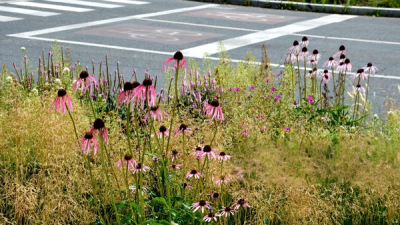
Those skinny, hot strips along streets and driveways are some of the toughest places to grow anything - and also some of the most visible. With the right native plants and a simple, durable layout, you can turn them from weedy or bare edges into tough curbside gardens that handle heat, drought, and foot traffic while boosting curb appeal and creating mini‑wildlife corridors. This guide shows you how to work with compacted soil and runoff, choose resilient native species, and design strips that look intentional from the street and easy to live with day to day.
Why driveways, parkways, and hellstrips are so challenging
Curbside strips are tough because they often have:
- Thin, compacted soil that dries out and heats up quickly next to pavement.
- Road salt, pet traffic, and people stepping out of cars into the planting.
- Stormwater runoff that erodes bare spots and carries pollutants.
Curbside strips and driveway edges typically have thin, compacted soil that dries out quickly and heats up fast in sun and reflected heat from pavement. Add in road salt, occasional flooding, pet traffic, and the risk of people stepping out of cars into the planting, and it is easy to see why turf and many traditional ornamentals struggle here.
These areas are also exposed to stormwater running off the street and driveway, which can carry pollutants and erode bare spots. Without resilient plants and good soil cover, they often become weedy patches, dusty in dry weather and muddy in wet, dragging down overall curb appeal.
How native curbside plantings help (and stay tough)
Native curbside plantings help by:
- Using deeper or fibrous roots that tolerate heat, drought, and compaction better than turf.
- Slowing and soaking up runoff before it reaches storm drains.
- Providing flowers, seeds, and cover for pollinators, beneficial insects, and birds.
- Gradually improving soil health under harsh conditions.
Many regional native grasses, perennials, and low shrubs are naturally adapted to open, sunny, sometimes droughty conditions similar to roadsides and prairies. Their deeper or fibrous root systems help them withstand heat, intermittent moisture, and compacted soils far better than shallow‑rooted lawn grasses.
When planted densely, native curbside gardens slow and soak up runoff from driveways and streets, filtering water before it reaches storm drains. At the same time, their flowers, seeds, and structure provide food and shelter for pollinators, beneficial insects, and birds, turning what was once a narrow strip of lawn into a functioning piece of habitat. Not only that, native plants can also markedly improve soil health, so the right mix can be a win from top to bottom.
Step‑by‑step: designing a driveway, parkway, or hellstrip garden
To design a curbside native strip:
- Observe where car doors open, where people step, and where water flows or pools.
- Reserve low, durable landing zones (plants or permeable hardscape) for feet and wheels.
- Use simple, repeating drifts of a few species to keep the strip looking intentional.
- Keep taller plants closer to the house and low, upright plants near sidewalks and curbs.
Start by observing how people and water move through the space: where car doors open, where people step, where trash bins roll, and where water tends to flow or pool after storms. Use that information to reserve durable, low‑planting or even permeable hardscape “landing zones” for feet and wheels, and concentrate denser planting in the safer in‑between areas.
Next, choose a simple layout that looks intentional from the street often repeating drifts of the same few species along the strip, with taller plants toward the house and lower plants toward the curb. In narrower parkways and true hellstrips, focus on low to medium plants that won’t flop into sidewalks or block sightlines, and reinforce edges with a clean mowing strip, curb, or path so the planting reads as a deliberate design rather than overgrowth. Depending on where you are in the country, My Home Park has some predesigned Hellstrip gardens, but our team can provide you with a great mix of highly durable and beautiful natives wherever you may be. Check out our guides on Front Yards, HOAs, and Curb Appeal and Balancing Curb Appeal, HOAs, and Ecological Native Gardens to learn more.
Focus on species that:
- Are sun‑loving and tolerate heat, drought, and occasional trampling.
- Include tough native grasses/grass‑likes as the backbone.
- Use compact, long‑blooming perennials for nectar and pollen through the season.
- In wider strips, add a few small shrubs or subshrubs for winter structure.
Look for sun‑loving native grasses and grass‑like plants that tolerate heat, dry spells, and occasional traffic, as these form the backbone of most curbside plantings. Intermix tough, long‑blooming native perennials that offer nectar and pollen through as much of the growing season as possible, choosing forms that stay relatively upright and compact near sidewalks and street edges. Hellstrips can be a fantastic place to establish attractive and highly functional wildlife corridors through your neighborhood, especially when your neighbors can be convinced to plant with you (if this sounds good, check out our guide on Creating Wildlife Corridors and Green Networks with Your Neighbors).
In slightly wider strips or along driveway edges, you can add a few small shrubs or subshrubs to give winter structure and anchor the design visually. Prioritizing species known to handle urban conditions, such as poor soils, reflected heat, and road salt, will keep the planting looking good with minimal intervention once established.
For successful curbside plantings:
- Loosen severely compacted soil where feasible and add some organic matter.
- Plant densely to minimize bare soil and use temporary mulch where erosion is likely.
- Water deeply but infrequently in year one to drive roots down, and weed early and often.
- Once established, limit care to occasional weeding, seasonal cutbacks, and light editing.
Before planting, and only if necessary, gently loosen badly compacted soil as much as access allows and mix in organic matter where feasible, while recognizing that roots will still need to cope with tough conditions. Plant more densely than you would in a typical bed, leaving minimal bare soil, and consider temporary mulch in steeper or heavily washed areas until plants knit together (though be sure to keep any mulch or other coverings off new plant stems and leaves).
During the first year, prioritize deep, infrequent watering to encourage roots to grow down rather than staying at the surface, and stay on top of early weeds blowing in from the street. Once plants are established, ongoing care is usually limited to occasional weeding, seasonal cutbacks, and light editing of any species that spread more than you want, keeping the strip both resilient and tidy from the sidewalk and the road. Check out our Watering Native Gardens: Establishment vs. Long‑Term Care and What to Expect in Year 1, 2, and 3 of a Native Garden to calibrate your expectations and get a sense for early care.
Share this article