Pollinator Garden Design

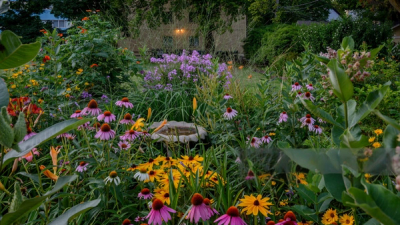
A true pollinator garden is more than “some flowers in a bed.” It’s a deliberately designed planting that gives bees, butterflies, moths, and other insects reliable food, host plants, and safe shelter through the whole growing season while still looking intentional in a real yard. This guide walks you through what pollinators actually need, why native plants are essential, and how to design layered, clumped, season‑long plantings that keep both wildlife and neighbors happy.
Why pollinator garden design matters
Good pollinator design helps you:
- Provide reliable food and shelter throughout the growing season.
- Make foraging efficient by using layers and clumps instead of scattered single plants.
- Keep visible areas looking intentional with clear edges, repetition, and paths.
A pollinator garden is more than a random mix of flowers; it is a planting designed so bees, butterflies, moths, and other insects can reliably find food and shelter throughout the growing season. When you plan for layers, bloom succession, and plant clumps instead of singletons, you make it easier for pollinators to forage efficiently and for your garden to look coherent from the street and from your windows.
Thoughtful design also helps you balance “wild” and “tidy,” especially in visible areas. Clear edges, repeated species, and logical paths let you fit rich pollinator habitat into front yards, side yards, or around patios and decks without the planting feeling chaotic or out of place. On top of this, a well-designed pollinator garden will help to manage itself as “garden guardian” species arrive to feed on flowers and scoop up pest species like grubs and aphids. Check out Pesticide‑Free and Wildlife‑Safe Yard Practices to make sure you don’t harm the habitat you’re building.
Understand what pollinators need
Most pollinators need:
- Nectar (energy) and pollen (protein) from flowers.
- Specific host plants for caterpillars and other larvae.
- Safe places to rest, nest, and overwinter (soil, stems, cavities, leaf litter).
Different pollinators use your garden in different ways, but they share a few key needs: nectar, pollen, and safe places to rest, nest, and overwinter. Bees rely on flowers for both nectar (energy) and pollen (protein), while butterflies and moths seek nectar as adults and specific host plants for their caterpillars.
Many native bees nest in the ground, in hollow stems, or in small cavities, so leaving some bare or lightly vegetated soil, standing stems, and rough structure is part of effective pollinator design. At the same time, diverse flower shapes - flat, tubular, clustered - ensure that a variety of bee sizes and tongue lengths can access resources in your planting. Check out Native Bees, Native Wasps, and Their Plant Partners for more.
Why native plants are essential for pollinator gardens
Native plants are essential because they:
- Match local pollinators’ bloom timing, flower forms, and nectar/pollen chemistry.
- Host many more caterpillars and other larvae than most non‑native ornamentals.
- Make every square foot do double duty for adults and offspring.
Pollinator gardens work best when most of the plants are native to your region, because bees, butterflies, and other insects are adapted to their bloom timing, flower shapes, and nectar and pollen chemistry. Native perennials, grasses, and shrubs also host many more caterpillars and other insect larvae than typical non‑native ornamentals, which boosts the overall “food supply” in your planting.
Using mostly native plants means every square foot of your pollinator bed is doing double duty: feeding adult pollinators at the flowers and supporting their offspring and other wildlife on the leaves, stems, and seeds. When you choose from regional or ecoregional plant lists, you make it much more likely that your garden will be both low‑maintenance and genuinely helpful to local pollinators. Still learning what even qualifies as a “native” plant? Check out Native vs. Non-Native vs. Invasive Plants: What’s the Difference?
Choose the best spots for pollinator beds and borders
Pollinator beds do best where:
- There is at least a half‑day of sun (full or part sun).
- Blooms are easy to see and access (fronts, sides, along paths or drives).
- Watering, weeding, and cleanup are convenient for you.
Pollinator gardens perform best in spots with at least a half‑day of sun, especially for flower‑rich beds and borders. Sunny front yards, side yards, and areas along driveways or fences often make excellent locations where blooms will be visible and easy to access.
When space is tight or shade dominates, containers, patio edges, and small openings in otherwise shady yards can still host high‑value pollinator plantings. The key is to choose locations where you can see and enjoy the activity, and where maintenance, like watering, weeding, and seasonal cleanup, will be straightforward.
Design with layers and clumps, not singletons
For structure and habitat:
- Use low groundcovers and short perennials to knit soil and extend bloom.
- Rely on mid‑height perennials and grasses for most color and movement.
- Add occasional taller species or shrubs for vertical accents and shelter.
- Plant in clumps (3–5+ of a species) and repeat those clumps across the bed.
Layered planting gives pollinator gardens both structure and ecological depth. Low groundcovers and shorter perennials knit the soil and offer early or late blooms, while mid‑height perennials and grasses supply most of the color and movement, and occasional taller species or shrubs add vertical accents and shelter.
Grouping plants in clumps or drifts rather than scattering single plants makes it easier for pollinators to find what they need and creates stronger visual impact. Aim for groups of at least three to five of the same species planted together, then repeat those clumps across the bed to build rhythm and generous foraging patches.
Plan for continuous bloom
Plan for three seasonal waves:
- Early season: Flowers for emerging bees and butterflies.
- Midseason: Peak diversity and activity.
- Late season: Fuel for migrants and pollinators preparing for winter.
Continuous bloom is one of the most important design goals in a pollinator garden. Instead of a single, short‑lived peak, you want overlapping waves of flowers so something is always in bloom from early spring through fall.
A simple way to plan is to list native plants in three seasonal bands - early, mid, and late - and make sure you have multiple species in each band. Early blossoms support emerging bees and butterflies, midseason flowers carry the bulk of activity, and late blooms provide crucial resources for migrants and pollinators preparing for winter.
Include host plants and nesting habitat
To support full life cycles, include:
- Host plants whose leaves caterpillars and larvae can eat.
- Native grasses, composite flowers (asters, goldenrods), and keystone shrubs/trees.
- Some bare soil, stems, tussocky grasses, and leaf litter for nesting/overwintering.
Flowers alone do not support full pollinator life cycles. Host plants - species whose leaves caterpillars feed on - are essential for butterflies and many moths, while a mix of bare soil, stems, and tussocky grasses helps native bees and other insects nest and overwinter.
You do not need exhaustive host lists to start. Including a few well‑chosen native grasses, composite flowers (such as asters and goldenrods), and regional keystone shrubs or trees will support a wide range of caterpillars and other insects. Under and around those woody plants, soft landings of low native groundcovers and leaf litter add extra protection for larvae and pupae. Read Butterflies, Moths, and Host‑Plant Gardens for more tips.
Keep it beautiful and neighbor‑friendly
To keep pollinator gardens neighbor‑friendly:
- Use crisp bed edges and clear paths.
- Place taller or wilder plants slightly back from sidewalks and property lines.
- Repeat a simple plant and color palette and add a few focal points.
- Consider a small sign explaining the garden’s pollinator purpose.
Pollinator gardens can be both vibrant and orderly. Define beds with crisp edges - a mown strip, stone or metal edging, or a clean path - and use repetition to tie the planting together visually. Taller or wilder plants can be set slightly back from sidewalks and property lines, with lower, neater species at the front.
In front yards or HOA contexts, a simple color palette and a few strong focal points - a standout grass, a shrub, or a birdbath - help the garden read as intentional. A small sign explaining that your planting uses native plants to support pollinators can further reassure neighbors and make the purpose of the garden clear. Check out Balancing Curb Appeal, HOAs, and Ecological Native Gardens for next steps
How My Home Park helps with pollinator garden design
My Home Park can help you:
- Use curated kits and plant lists centered on nectar, pollen, host value, and bloom succession.
- Get custom designs tuned to your site, target pollinators, and preferred yard areas.
My Home Park can simplify pollinator garden design by offering curated native garden kits and plant selections focused on nectar, pollen, host‑plant value, and bloom succession. These pre‑planned combinations give you ready‑made layouts and plant mixes that support pollinators through the season while staying regionally appropriate.
If you prefer more tailored help, design services can take your site photos, sun and soil conditions, and goals - such as emphasizing bees, butterflies, or a specific part of the yard - and turn them into a custom plan. You can then implement that plan with kits, individual plants, or a mix of both, knowing the result will look intentional and function as real habitat.
Common questions about pollinator garden design
This FAQ covers safety near doors/play areas, spacing, sun needs, and cleanup timing.
Will a pollinator garden attract more stinging insects near my doors and patios?
Most pollinator activity comes from native bees and other insects that are focused on flowers and are far less defensive than social wasps or honey bees. You can keep dense plantings a bit away from doorways and high‑traffic play areas while still enjoying plenty of pollinators elsewhere in the yard.
How close together should I plant for pollinators?
Closer spacing than traditional ornamental beds is often helpful. Planting perennials and grasses roughly 12–18 inches apart (or closer for smaller species) lets them fill in quickly, reduce weeds, and create the kind of tight clumps and drifts that pollinators use efficiently.
Do I need full sun to have a pollinator garden?
Full or part sun is ideal for many flowering species, but you can still support pollinators in brighter shade or dappled light. Shade‑tolerant native plants, especially woodland flowers and shrubs, provide nectar, pollen, and host‑plant value in less sunny areas. Check out our guide on How to Assess Sun and Shade in Your Yard if you’re unsure of what exposure the various parts of your yard receive.
Can I still do fall or spring cleanup in a pollinator garden?
Yes, but timing and technique matter. Leaving at least some stems, seed heads, and leaf litter over winter - and delaying major cleanup until temperatures are consistently warmer - helps protect overwintering insects and preserves food and cover for birds. Explore our Plant Care, Maintenance & Seasonal Guides for Native Gardens section for more.
Share this article