California Native Flowers: 25 to Grow for Color All Year

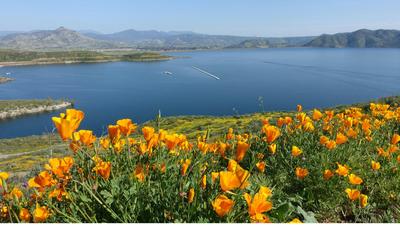
California native flowers are wildflowers, perennials, and flowering shrubs that grew here long before gardens did. California has one of the richest plant landscapes on earth, with thousands of native species, and its Mediterranean climate of wet winters and dry summers shaped them to use water efficiently. Once established, they bloom on little water and feed hummingbirds, butterflies, native bees, and other local wildlife.
The short answer on which to grow: start with California poppy and blue-eyed grass for spring, bush monkeyflower and buckwheat for summer, and California fuchsia and aster for fall. This guide is for California gardeners and new native gardeners who want a flower garden full of bright colors without a high water bill. It covers 25 native flowers by color, a bloom calendar, the best picks for hummingbirds, shade, and the coast, and when to plant. Choose a mix that blooms through the whole growing season and your garden beds will never look bare.
Why grow California native plants for flowers
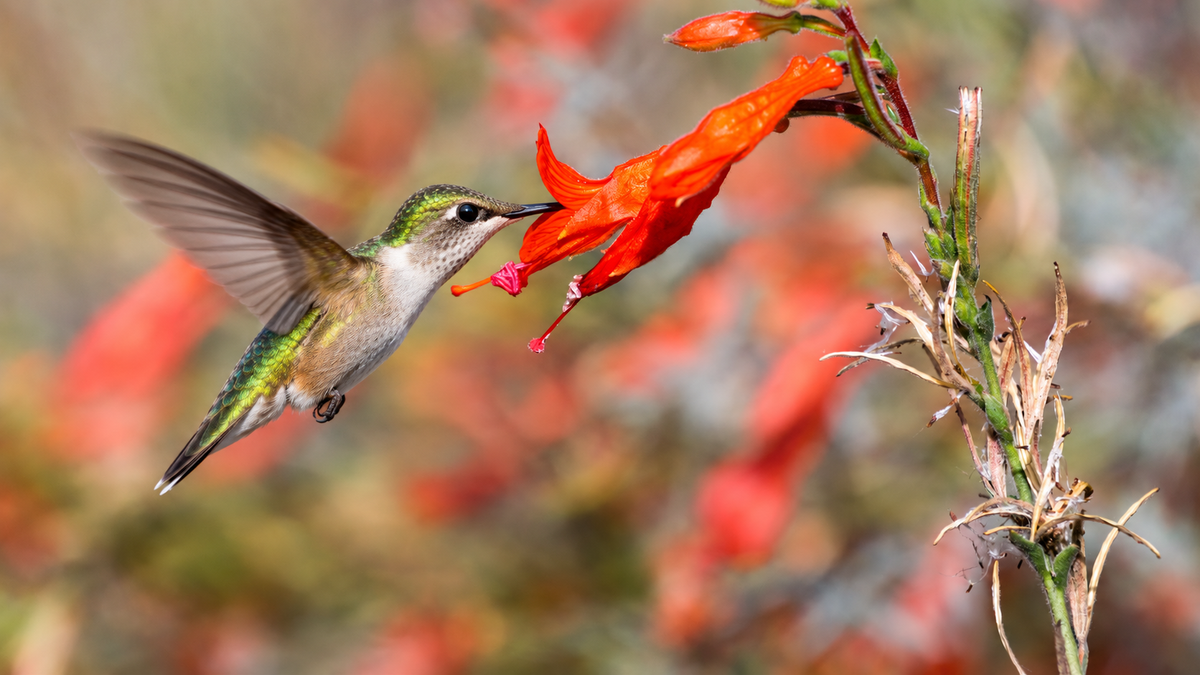
California native plants have co-adapted with local insects, birds, and wildlife for thousands of years, so their showy blooms feed the creatures that live here. Planting them is one of the simplest sustainable gardening practices: once established, native plants generally need no synthetic fertilizer, little water, and no heavy pruning. Many have deep root systems that help stabilize slopes and prevent soil erosion. A yard of native species becomes wildlife habitat that supports local ecosystems, attracts butterflies and beneficial insects, and helps attract birds. That is the heart of native plant gardening.
California native flower bloom calendar
Most California native flowers peak with the spring wildflowers, but a well planned garden blooms from January to November. Use this chart to pick plants that flower in every season. Bloom times are typical and shift with your local climate, rain, and heat.
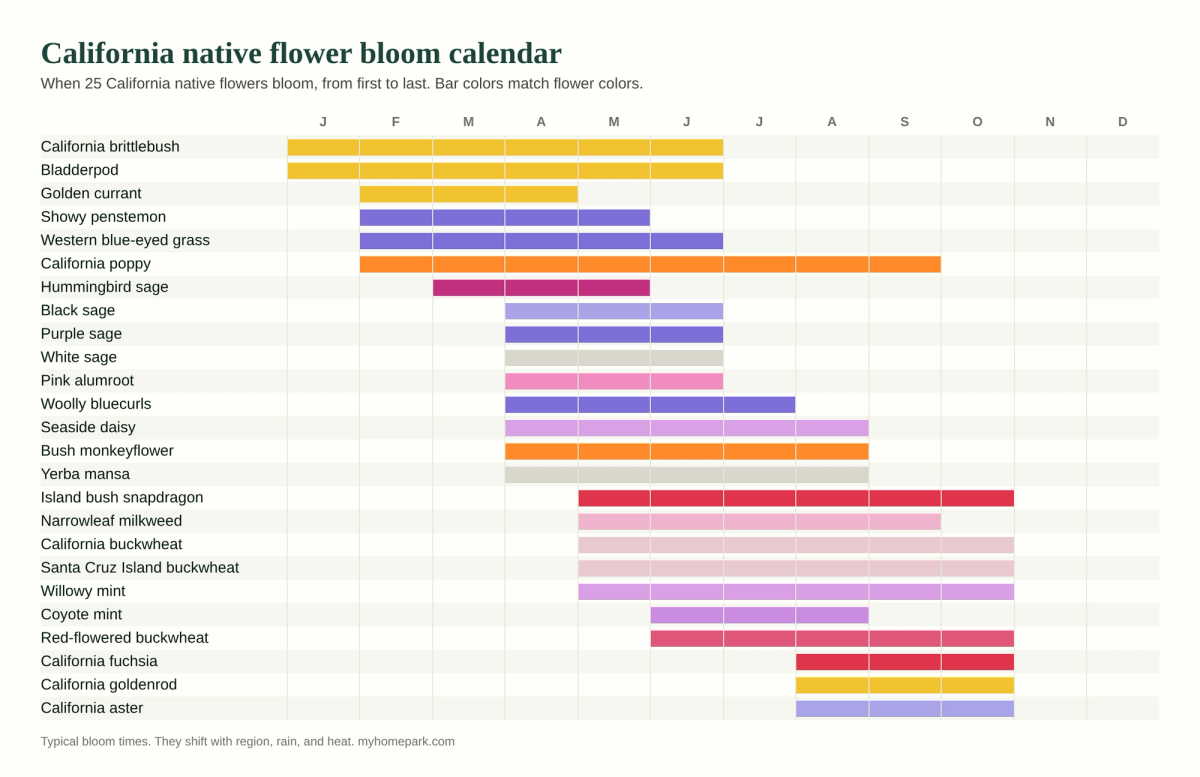
Winter and early spring: California brittlebush, bladderpod, golden currant, showy penstemon, western blue-eyed grass, California poppy.
Spring: hummingbird sage, black sage, purple sage, white sage, pink alumroot, woolly bluecurls, seaside daisy.
Summer: bush monkeyflower, coyote mint, narrowleaf milkweed, California buckwheat, Santa Cruz Island buckwheat, yerba mansa, willowy mint, island bush snapdragon.
Late summer and fall: California fuchsia, California goldenrod, California aster, red-flowered buckwheat.
California native flowers by color
Every flower below is a California native we grow and ship in California. Click a name to shop it.
Orange and yellow California flowers
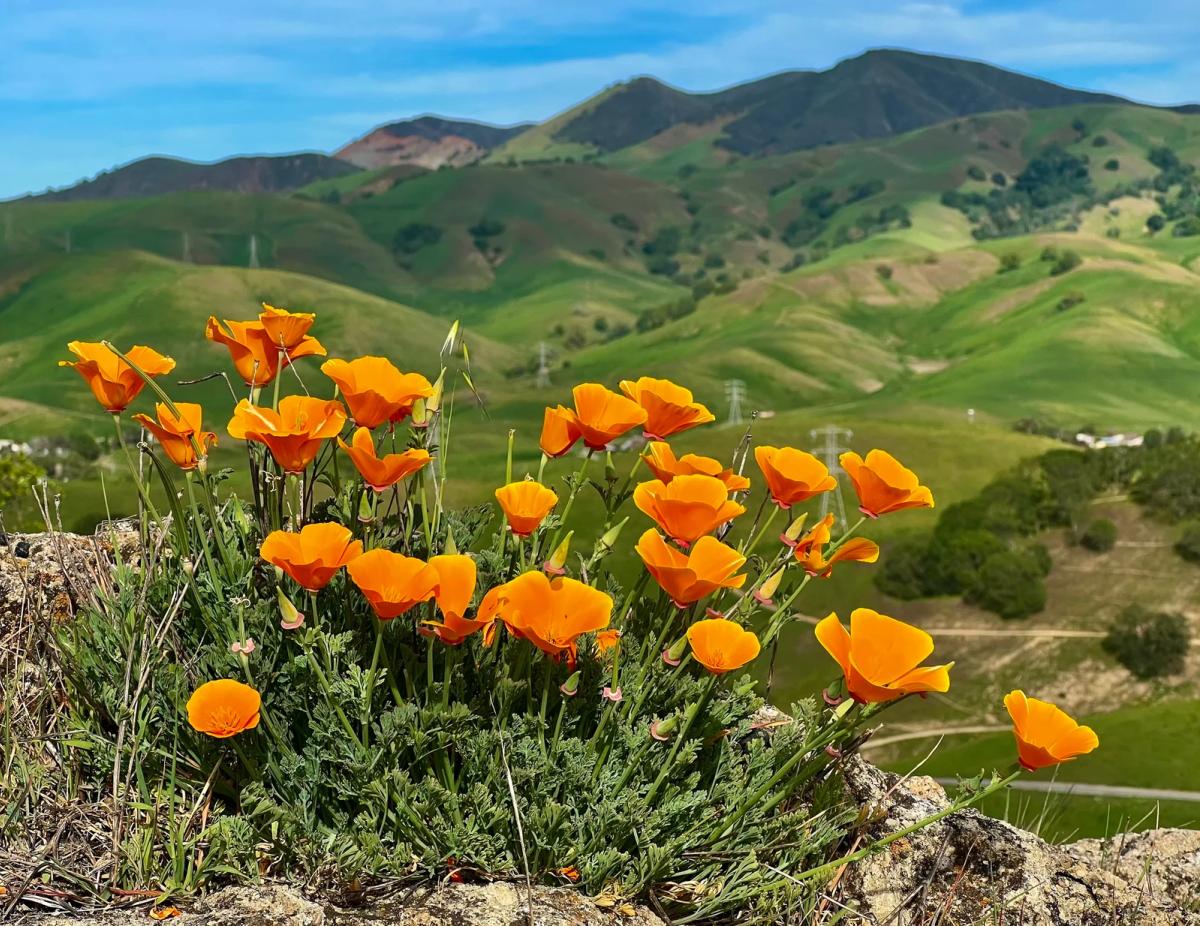
California poppy
Eschscholzia californica is California's state flower, with silky, cup shaped flowers in orange and gold that open in sun and close at dusk. It blooms mainly from February into summer and, in mild areas, as late as September. Poppies self-seed and return each year without becoming invasive. Perfect for sunny gardens and meadows.
Bush monkeyflower
Diplacus aurantiacus, also called sticky monkey flower, has orange tubular flowers from spring through summer that hummingbirds love.
California brittlebush
Encelia californica is a member of the daisy family with bright yellow daisies over silver leaves, starting as early as winter.
Bladderpod
Cleomella arborea has yellow flowers and papery, lantern shaped pods over a long season, and is built for sun and wind.
Golden currant
Ribes aureum has clove-scented yellow flowers in early spring and light green leaves, followed by berries that attract birds.
California goldenrod
Solidago velutina subsp. californica has soft yellow plumes in late summer and fall. It is insect pollinated and does not cause hay fever.
Red and magenta California native flowers

California fuchsia
Epilobium canum has scarlet, trumpet shaped flowers from August into October, a key hummingbird food when little else blooms. An occasional deep watering about once a month in summer keeps it flowering.
Island bush snapdragon
Galvezia speciosa has magenta red snapdragon flowers and bright green leaves nearly all year, peaking late spring to fall.
Hummingbird sage
Salvia spathacea has magenta spikes and aromatic foliage in spring, and is one of the few natives that blooms in dry, shaded garden areas.
Red-flowered buckwheat
Eriogonum grande var. rubescens has pink to red flower clusters on a low silver mat in summer and fall, ideal for rock gardens.
Pink and lavender native California flowers
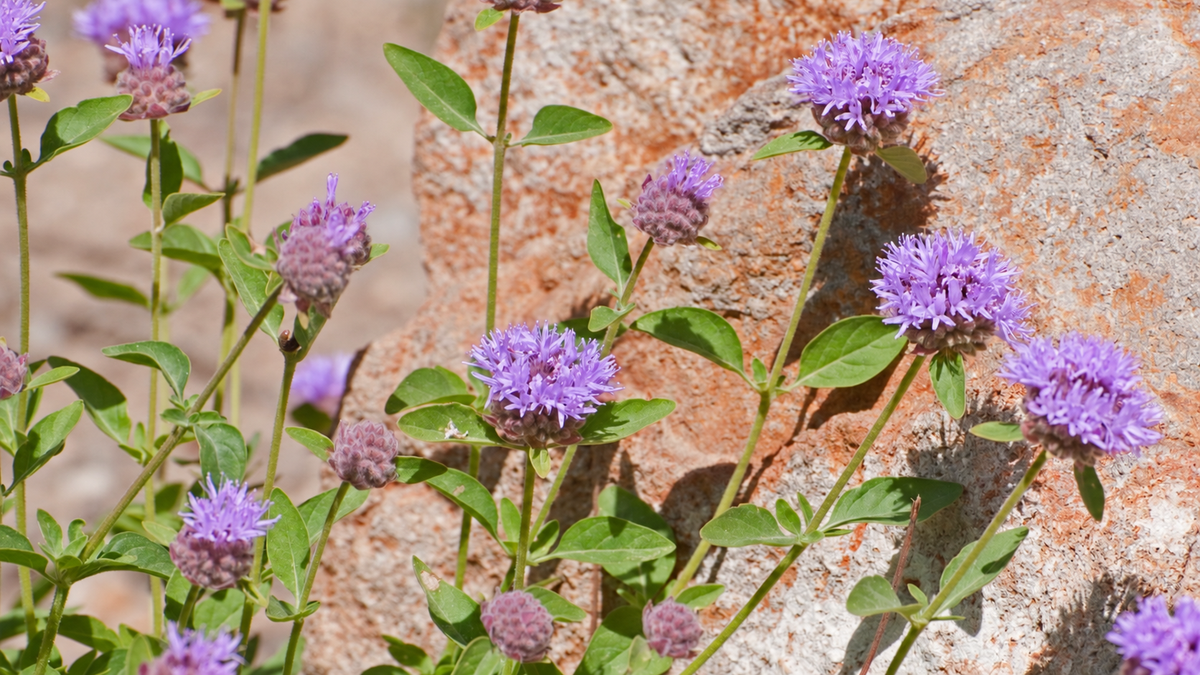
Coyote mint
Monardella villosa grows 1 to 2 feet tall, with ball like clusters of pink purple flowers and minty leaves from June through August. A butterfly favorite.
Willowy mint
Monardella viminea is a rare San Diego native with lavender pink flowers from late spring through fall.
Seaside daisy
Erigeron glaucus has lavender pink daisies with yellow centers from spring into summer, and is tough on the coast.
Pink alumroot
Heuchera rubescens has sprays of tiny pink bells over neat rosettes in late spring, good for partial shade. Its larger cousin, island alum root, is native to the Channel Islands.
Narrowleaf milkweed
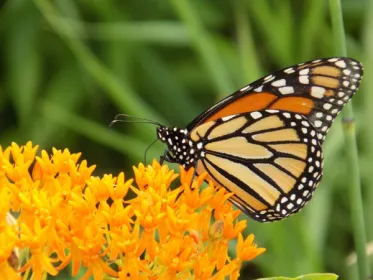
Asclepias fascicularis has soft pink to white flower clusters in summer. California milkweeds are essential for monarch butterfly larvae, and this is the most widespread one.
Purple and blue California wildflowers
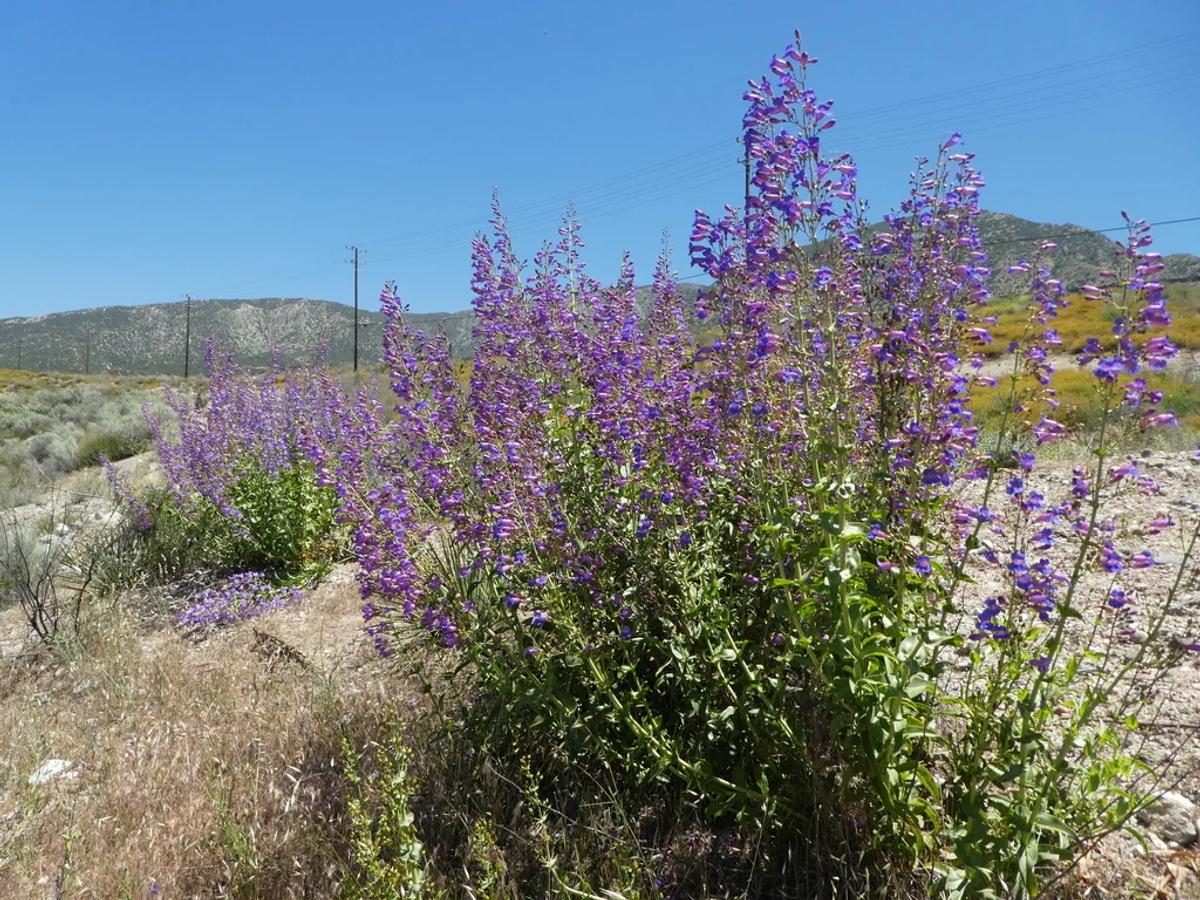
Showy penstemon
Penstemon spectabilis has violet blue spikes over glossy dark green leaves from late winter to spring, and hummingbirds visit again and again.
Blue-eyed grass
Western blue-eyed grass (Sisyrinchium bellum) has violet blue flowers with yellow eyes from about February to June. It is an iris, not a grass, and tolerates partial shade and moist, loamy soil.
Woolly bluecurls
Trichostema lanatum has fuzzy blue purple flower spikes and fragrant dark green leaves from spring into summer.
Purple sage
Salvia leucophylla has rich purple flowers over silver foliage in late spring and early summer.
Black sage
Salvia mellifera has pale lavender flowers in late spring and is one of the top nectar plants in coastal Southern California.
California aster
Symphyotrichum chilense, a daisy family member, has lavender blue flowers from late summer into fall.
White California native flowers
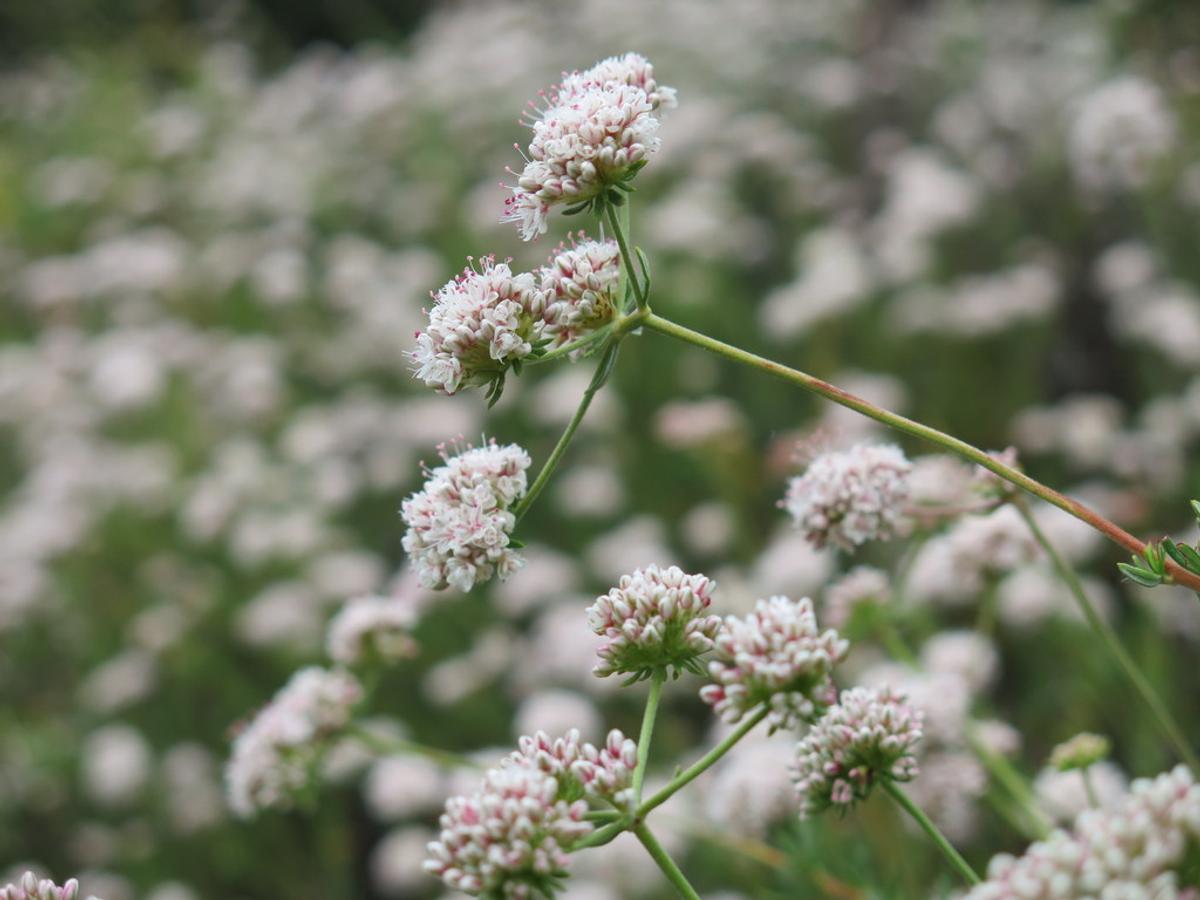
California buckwheat
Eriogonum fasciculatum has ball like clusters of tiny white flowers that turn pink, then rust, from late spring through fall. It is one of the best plants to attract pollinators, and the insects it feeds support a whole food web of birds and other wildlife.
Santa Cruz Island buckwheat
Eriogonum arborescens has pale pink and white flower heads on a silvery shrub, late spring through fall.
White sage
Salvia apiana has tall stalks of pale lavender to white flowers over silver leaves in late spring.
Yerba mansa
Anemopsis californica has white cone flowers for wet spots, rain gardens, and pond edges.
Other classic California native flowers
A few well loved natives are not in our California lineup right now, but they are worth knowing as you plan.
Western redbud
A small tree covered in magenta pink flowers in early spring, before its heart shaped leaves appear.
Douglas iris
A coastal iris with purple, blue, or cream flowers in spring, for partial shade.
Bush anemone
An evergreen shrub with fragrant white flowers and yellow centers in late spring.
Desert sage and Cleveland sage
Silvery sages with blue purple flowers. Cleveland sage wants full sun and very little water once established.
Oregon grape, purple owl's clover, and lupines
Oregon grape has yellow spring flowers and blue berries. Purple owl's clover is a pink purple annual of spring wildflower fields. Native lupines host the endangered mission blue butterfly.
Best California native flowers for every spot
Best flowers to attract pollinators and hummingbirds
California fuchsia, island bush snapdragon, hummingbird sage, bush monkeyflower, and showy penstemon.
For butterfly gardens and monarchs
Narrowleaf milkweed, California buckwheat, coyote mint, and California aster.
For dry shade
Hummingbird sage, pink alumroot, and golden currant.
For coastal gardens
Seaside daisy, island bush snapdragon, California aster, and California brittlebush.
For pots and small spaces
Coyote mint, island bush snapdragon, California fuchsia, and seaside daisy.
For wet spots and rain gardens
For fall color
California fuchsia, California goldenrod, California aster, and red-flowered buckwheat.
California wildflowers vs. perennial native flowers
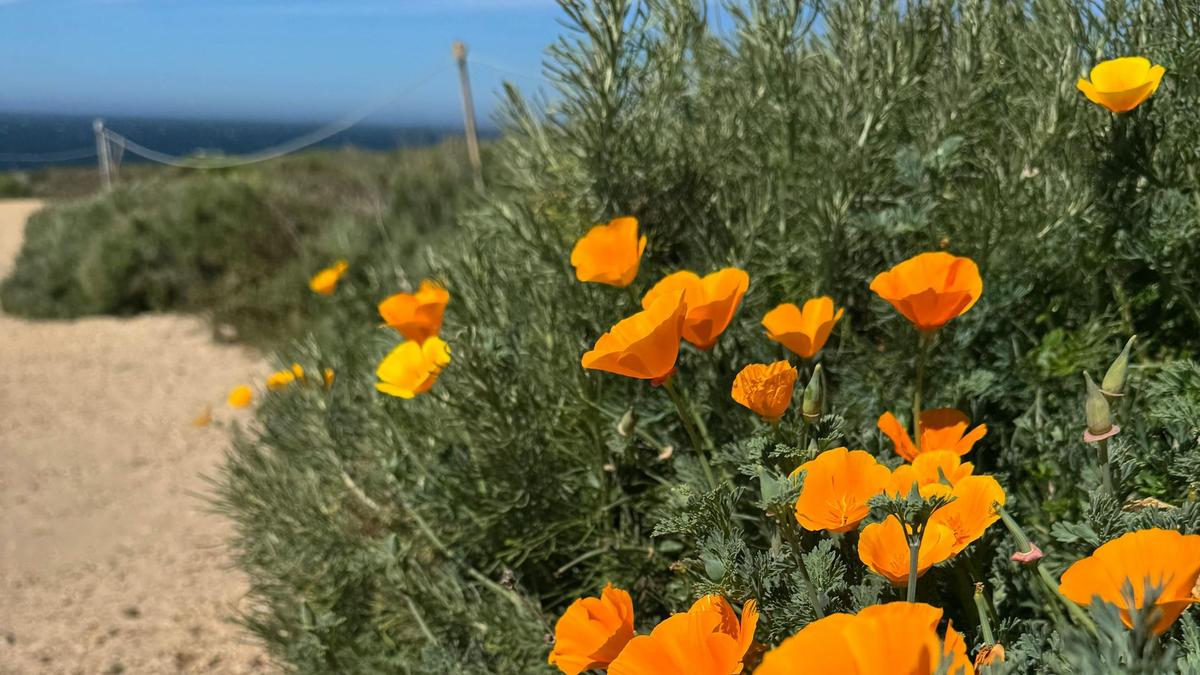
Native California wildflowers such as California poppy and blue-eyed grass grow fast, bloom in spring, and reseed. Perennials and flowering shrubs such as buckwheat, sages, and monkeyflower live for years and give your garden its structure. The best wildlife gardens use both: shrubs for the backbone and wildflowers to fill gaps between other plants.
Starting from plants instead of seed gives you vibrant blooms sooner and fewer weeds. Our California native plants ship in 4 inch pots with established roots.
When to plant California native flowers
Plant in fall through early winter. Cool weather and winter rain help roots grow before summer heat. Water deeply about once a week the first summer, then taper off. Most native flowers need little summer water after a year or two, which makes them ideal for water wise gardens, and none need fertilizer.
Plan a garden that blooms all year
Want color in every season without the guesswork? Our designers can build a custom garden design for your yard that mixes spring, summer, and fall bloomers, with a rendering, planting map, and bloom chart. Your design fee comes back as credit toward your plants. No yard? Our native container gardens bundle California flowers that grow well together in pots.
California native flowers FAQ
What is the state flower of California?
The California poppy (Eschscholzia californica). It became California's state flower in 1903.
Is it illegal to pick California poppies?
There is no law aimed only at poppies. But California law makes it illegal to pick or dig plants on public land or someone else's property without permission, so leave wild poppies for everyone to enjoy and grow your own.
What are the easiest California native flowers to grow?
California poppy, California buckwheat, bush monkeyflower, and California fuchsia are among the easiest. They need full sun, well drained soil, and little water once established.
Which California native flowers bloom the longest?
Island bush snapdragon blooms nearly all year in mild areas. California buckwheat and bush monkeyflower bloom for months, from spring into fall.
What native flowers bloom in fall in California?
California fuchsia, California goldenrod, California aster, and red-flowered buckwheat carry color from late summer into fall.
Which California native flowers grow in shade?
Hummingbird sage and pink alumroot bloom in dry shade, including under oaks. Golden currant and blue-eyed grass handle partial shade.
Are California native flowers drought tolerant?
Most are, once established. Water new plants through their first summer. After that, many survive on winter rain plus an occasional deep watering. Yerba mansa is the exception and wants moist soil.
Are California native flowers good cut flowers?
Some are. California buckwheat and goldenrod work well in arrangements, and buckwheat dries nicely. Poppies wilt quickly once cut, so enjoy them in the garden.
Can I grow California native flowers in pots?
Yes. Compact plants like coyote mint, seaside daisy, and California fuchsia do well in pots at least 12 to 16 inches wide with a fast draining mix.
Do California native flowers attract bees?
Yes. Buckwheats, sages, coyote mint, and goldenrod are some of the best plants for native bees in California.
California native flower resources
- Calscape, California Native Plant Society: Find native plants for your address
- Theodore Payne Foundation Wildflower Hotline: Weekly spring reports on where California wildflowers are blooming
- UC Master Gardener Program: Local gardening help from the University of California
- California native garden planner: Step by step design help and garden plans
- California native plants from My Home Park: Drought tolerant natives that ship to your door
California plant growing guides
Share this article